
Fruiting bodies typically carry higher beta-glucan content and concentrated triterpenes, while mycelium tends to hold different, often species-specific small molecules, like the erinacines found in Lion’s Mane. Neither structure is automatically “better.” What actually determines whether a supplement works is extraction method, substrate quality, and honest labeling. Lion’s Mane makes the case plainly, and it’s worth walking through in detail.
TL;DR:
- Fruitings bodies typically contain higher beta-glucan levels and triterpenes, but their actual content depends heavily on extraction methods and cultivation conditions.
- Mycelium often produces species-specific small molecules, like erinacines in Lion’s Mane, which are more influenced by growth substrate and cultivation technique.
- Extraction processes such as hot water or alcohol significantly impact which bioactives are available for absorption, making tested extraction ratios crucial for verification.
- Labels claiming “mycelium on grain” often hide lower beta-glucan percentages and higher starch content, requiring consumers to scrutinize for clear part specifications and third-party COAs.
- Combining both fruiting body and mycelium extracts can provide a broader spectrum of beneficial compounds, but only if the product’s tested concentrations are verified.
Table of Contents
- Fruiting Body vs Mycelium: Comparing the Biochemistry
- Lion’s Mane: A Case Study in Stage-Specific Chemistry
- Why Extraction Method Decides What You Actually Absorb
- Reading Mushroom Supplement Labels Without Getting Fooled
- How to Choose a Mushroom Supplement for Your Goal
- How CP-1 Applies These Standards
- What Actually Matters When You’re Choosing Between the Two
- Try the CP-1 Approach to Mushroom-Based Wellness
- Sources
- FAQ
Fruiting Body vs Mycelium: Comparing the Biochemistry
The fruiting body is the mushroom you’d recognize on a plate, a log, or a forest floor. It’s the reproductive structure a fungus builds once conditions are right, and it’s where the organism invests heavily in defense compounds and structural polysaccharides. Mycelium is the root-like network of threadlike cells (hyphae) that spreads through soil, wood, or grain, absorbing nutrients and, in the case of many supplement products, the substrate it was grown on. Both are the same organism at different life stages, but their chemistry diverges enough that lumping them together on a label is misleading.
Start with beta-glucans, the polysaccharides most associated with immune modulation. Fruiting bodies generally concentrate these compounds at higher percentages than mycelium grown on grain, largely because the fruiting structure is built from a dense cell wall matrix designed to protect spores. A comparative review of edible fungi metabolites found that fruiting bodies often carry higher concentrations of certain phenolics and indole compounds, while mycelial cultures can match or exceed fruiting bodies on other bioactives depending entirely on how they were grown. That last part matters more than most marketing copy admits: growth conditions, not just tissue type, drive the outcome.
Triterpenes tell a similar story, especially in Reishi. These fat-soluble compounds, responsible for Reishi’s bitter taste and much of its studied activity, accumulate primarily in the fruiting body as the mushroom matures and forms its outer layers. Mycelium simply hasn’t developed the same structures yet, so triterpene content in mycelial products tends to run low unless the mycelium itself has been pushed toward fruiting through specific cultivation techniques.
Minerals and trace nutrients follow a less predictable pattern. Fruiting bodies absorb minerals from whatever substrate or wild environment they grow in, so mineral content varies by location and cultivation method more than by developmental stage. Mycelium, when grown in liquid culture rather than on grain, can concentrate certain water-soluble nutrients efficiently, but when it’s grown on grain and then dried and ground whole, you’re often getting a mix of fungal biomass and leftover starch, not a purified mushroom product.
Here’s what the compound classes tend to break down as:
- Beta-glucans: Concentrated in fruiting bodies; often diluted in mycelium-on-grain products by residual starch.
- Triterpenes (Reishi, notably ganoderic acids): Fruiting body dominant; minimal in unmanipulated mycelium.
- Erinacines and other small metabolites: Frequently mycelium dominant, species-specific, and substrate sensitive (Lion’s Mane is the clearest example).
- Polyphenols and indoles: Split unpredictably between the two, depending on strain and growing conditions.
- Minerals: Driven more by substrate and environment than by fruiting body vs mycelium status.
A narrative review on Hericium erinaceus puts numbers to this variability directly. Hericenones in the fruiting body range anywhere from under 20 to 500 micrograms per gram dry weight, a tenfold or wider spread depending on the specimen. That’s a huge range for a single species, and it shows exactly why a generic label claim like “contains hericenones” tells you almost nothing without a tested percentage attached.
For practical purposes, this means immune-support claims lean more credibly on fruiting body extracts with a stated beta-glucan percentage, while claims tied to cognitive or neurological support (particularly with Lion’s Mane) can legitimately point to mycelium, provided the product actually specifies which compounds it was tested for. Antioxidant claims sit in the middle, since phenolic content shows up in both structures depending on strain and cultivation, which is exactly why the next section on Lion’s Mane matters so much for anyone shopping by ingredient rather than by marketing copy.
Lion’s Mane: A Case Study in Stage-Specific Chemistry
Lion’s Mane (Hericium erinaceus) is the clearest example in the mushroom supplement world of why “fruiting body vs mycelium” isn’t a simple better-or-worse question. The two structures make genuinely different compounds, and those compounds appear to act on different biological pathways.
Mycelium produces erinacines, diterpenoid compounds found at typical concentrations around 150 micrograms per gram in studied samples, according to research on erinacine production and biosynthetic gene expression. That same research found that mycelial tissue expressed the genes responsible for erinacine biosynthesis far more actively than fruiting body tissue, and that substrate composition significantly shifted how much erinacine the mycelium ultimately produced. In other words, not all mycelium is created equal. What it’s grown on changes what it makes.
The fruiting body, meanwhile, produces hericenones, a different compound class entirely, at concentrations that vary widely from under 20 to 500 micrograms per gram dry weight depending on the sample, per the same neuroprotective fungus review cited above. That’s a wide enough range that a supplement simply listing “fruiting body extract” without a tested value is telling you almost nothing about actual hericenone content.
| Compound | Structure Source | Typical Range | Studied Relevance |
|---|---|---|---|
| Erinacines | Mycelium | ~150 µg/g | Preclinical evidence of blood-brain barrier penetration and NGF stimulation |
| Hericenones | Fruiting body | <20–500 µg/g dry weight | Nerve growth factor pathway support, wide natural variability |
| Beta-glucans | Fruiting body (typically higher) | Varies by species and testing method | Immune modulation, general polysaccharide activity |
Why does the distinction matter for cognition specifically? Preclinical work on erinacines and hericenones suggests erinacines cross the blood-brain barrier more readily than hericenones, which positions mycelium-derived erinacine content as potentially more relevant for direct central nervous system effects. Hericenones appear to work through related but distinct mechanisms tied to nerve growth factor stimulation, and a systematic review of Hericium erinaceus neuroprotective studies found that both mycelium and fruiting body preparations show neuroprotective activity in various models, but the trial protocols, doses, and extraction methods vary so widely across the literature that comparing studies directly is genuinely difficult. Nobody should read that as “the science is settled either way.” It means the compound classes are different enough that a blended approach, rather than an either/or bet, often makes more practical sense.
Cultivation substrate changes the picture further. Growing Hericium mycelium on different grain or liquid media measurably shifts erinacine yield, which means two products both labeled “Lion’s Mane mycelium” can differ substantially in actual erinacine content depending on how the manufacturer grew it. If you’re shopping for Lion’s Mane specifically for cognitive support, that’s worth asking about directly. For a deeper look at what erinacine research actually shows about nerve growth, CP-1’s breakdown of Lion’s Mane and NGF walks through the mechanism in more detail.
The honest takeaway: a supplement built entirely around fruiting body hericenones is not “purer” than a mycelium-based erinacine product, and vice versa. They’re targeting different chemistry. The real question is whether the brand tested for the specific compound it’s claiming, and at what concentration.
Why Extraction Method Decides What You Actually Absorb
Raw mushroom powder, whether it comes from fruiting body or mycelium, has a structural problem: chitin. This is the same rigid polysaccharide that makes up crustacean shells, and it forms the cell wall of both fungal tissue types. Human digestive enzymes don’t break chitin down efficiently, which means a lot of the beta-glucans, triterpenes, and other bioactives trapped inside those cell walls simply pass through undigested if the mushroom hasn’t been processed to break the walls open first.
This is where extraction method becomes more important than the fruiting-body-or-mycelium debate that dominates most product marketing.
- Hot-water extraction breaks down chitin and pulls out water-soluble compounds, primarily beta-glucans. It’s the standard method for concentrating immune-relevant polysaccharides and is well suited to fruiting body material, which carries more of those polysaccharides to begin with.
- Alcohol extraction targets fat-soluble compounds like triterpenes, which don’t dissolve well in water. Reishi’s ganoderic acids, for instance, need an alcohol or dual-solvent process to show up in meaningful concentration in a finished extract.
- Dual extraction combines both processes, typically sequentially, to capture water-soluble and fat-soluble compounds in a single product. For anyone trying to get both beta-glucans and triterpenes from the same mushroom, dual extraction is generally the more complete option.
- Liquid-culture mycelium extraction grows mycelium in a nutrient broth rather than on solid grain, which sidesteps the grain contamination issue entirely and can concentrate specific metabolites (like erinacines) at higher, more consistent levels than mycelium grown on grain and dried whole.
That last point deserves emphasis, because it’s where a lot of cheaper products cut corners. Mycelium grown on grain and then dried and ground into powder, often labeled simply “mycelium” or “full spectrum,” typically includes a meaningful amount of leftover grain starch. That starch isn’t a bioactive compound. It’s filler that dilutes whatever actual fungal material is present, and it’s a large part of why “mycelium” earned a bad reputation in supplement circles, even though liquid-culture mycelium extracts, done properly, avoid that problem completely and can outperform poorly processed fruiting body powder.
Pro Tip: If a label just says “mushroom powder” with no mention of hot-water, alcohol, or dual extraction, assume you’re getting mostly indigestible raw material. Extracted products should say so explicitly, and reputable brands usually specify the extraction ratio (like 8:1 or 10:1) right on the label.
The practical takeaway is simple: don’t choose a supplement based on fruiting body vs mycelium alone. Choose based on whether the product has been extracted at all, and if so, by which method, because that determines what fraction of the mushroom’s chemistry actually makes it into your bloodstream. For more on how extraction ratios and label claims interact, CP-1’s guide to mushroom blend extraction covers the mechanics in plain terms.
Reading Mushroom Supplement Labels Without Getting Fooled
Supplement labels use a handful of terms that sound similar but mean very different things, and manufacturers know most shoppers won’t catch the difference.
“Fruiting body” should mean the mushroom itself, harvested and dried, with no grain substrate attached. “Mycelium” alone is ambiguous. It could mean liquid-culture mycelium (concentrated fungal biomass with no grain) or it could mean mycelium still attached to the grain it was grown on, dried and ground together. The industry shorthand for that second version is “mycelium on grain” (MOG), and it’s the single biggest source of consumer confusion in this category. A product listing “polysaccharides” on its label, rather than “beta-glucans” specifically, is another common soft spot. All beta-glucans are polysaccharides, but starch is also a polysaccharide, so a “polysaccharide” claim can technically include grain starch content rather than the immune-relevant compound consumers actually want.

Industry supplier analyses of MOG products have found they frequently carry lower beta-glucan percentages and higher starch content than fruiting body extracts, a pattern consistent with what independent researchers have documented about tissue-specific bioactive variation. The comparison of edible fungi metabolites reinforces this: bioactive content is tissue and substrate dependent, which means a product’s actual chemistry has to be verified through testing, not assumed from the “mycelium” or “fruiting body” word on the front label.
Regulatory guidance has started catching up to this problem. The American Herbal Products Association’s guidance on fungi labeling recommends that supplements clearly specify which part of the fungus is present, fruiting body, mycelium, or a blend, rather than leaving it vague. Separately, a regulatory petition filed with the FDA by industry supplier NAMMEX argued that existing dietary supplement labeling rules under FDA guidance don’t do enough to prevent mislabeling of fungal parts, and specifically flagged mycelium-on-grain products as a source of consumer deception risk. The FDA’s dietary supplement labeling framework under 21 C.F.R. governs how ingredients are declared, but it doesn’t currently require the kind of part-specific disclosure AHPA and NAMMEX are pushing for, which is exactly why label literacy falls back on the shopper.
Three checks catch most problems:
- Check for a stated part of fungus. If the label doesn’t say “fruiting body,” “mycelium,” or a specific blend ratio, treat that as a red flag rather than an oversight.
- Look for “beta-glucan %” rather than just “polysaccharides.” A tested beta-glucan percentage (ideally verified by a Megazyme assay, the industry standard method) tells you far more than a vague polysaccharide claim.
- Ask for a Certificate of Analysis (COA). A legitimate COA should show beta-glucan content, heavy metal screening, and microbiology results. If a brand can’t produce one on request, that’s disqualifying.
For more on what a trustworthy COA should include, CP-1’s breakdown of supplement quality standards goes through third-party testing in more depth.
How to Choose a Mushroom Supplement for Your Goal
Matching the supplement to the goal starts with knowing which compound class you’re actually after, then working backward to the label details that confirm it’s present in a meaningful amount.
If immune support is the priority, look for fruiting-body-sourced extract processed via hot water, with a stated beta-glucan percentage on the label. If cognitive support is the goal, particularly with Lion’s Mane, look for either a validated erinacine content from mycelium (ideally liquid-culture, not grain-grown) or a tested hericenone level from fruiting body extract. Products combining both often make the most sense here, since the two compound classes appear to work through related but distinct mechanisms.
Run through this checklist before buying:
- Latin species name is listed (not just “mushroom blend” or a common name alone).
- Part of fungus is declared explicitly: fruiting body, mycelium, or blend with ratio.
- Extraction method is stated, along with the extraction ratio if applicable (8:1, 10:1, dual extraction, etc.).
- Beta-glucan percentage is listed, ideally tested via Megazyme assay.
- A COA is available on request or published on the brand’s site.
- No unexplained “mycelium on grain” language buried in the ingredient panel.
- Third-party lab results are referenced somewhere on the packaging or website.
Pro Tip: If a Lion’s Mane product doesn’t specify erinacine or hericenone content anywhere, assume it’s a raw powder rather than a standardized extract, and expect inconsistent results between batches.
Dosing research on Lion’s Mane has generally used amounts in the range of a gram or more daily in studied protocols, though tolerability and appropriate dosing vary by individual and by extract concentration. CP-1’s review of Lion’s Mane dosing and side effects covers what those trial ranges looked like and what side effects showed up at different doses, which is worth a read before starting anything new, especially if you’re on medication or managing a health condition.
How CP-1 Applies These Standards
The supplement was built around a checklist that emphasizes transparency and clear labeling, aiming to avoid vague “mushroom blend” labels. The formula includes Lion’s Mane, Reishi, and Turkey Tail alongside NMN and CoQ10, aiming to support cognitive function, immune health, and cellular energy production together.
The product is described as undergoing third-party testing, formulated to be vegan and non-GMO, and manufactured under GMP-certified conditions. Such claims serve as important trust signals: verifying certificates of analysis, third-party lab results, and manufacturing standards is advisable.
What Actually Matters When You’re Choosing Between the Two
The fruiting-body-versus-mycelium fight gets treated online like a moral debate—purity versus junk science—when it’s really a testing problem. Both structures make real, biologically active compounds. The mistake is assuming the tissue type alone tells you what’s in the bottle.
My honest read: for immune-focused products, fruiting body extract with a verified beta-glucan percentage is the more defensible default, because the evidence for concentration is stronger there. For Lion’s Mane specifically, a blended approach, mycelium for erinacines, fruiting body for hericenones, makes more sense than picking a side, given that the neuroprotective research shows both compound classes contributing through different pathways rather than one clearly outperforming the other.
Extraction and testing outrank the marketing copy every time. A tested, dual-extracted product beats an untested one regardless of which word is on the front label. And if you’re managing a diagnosed health condition or taking prescription medication, talk to a healthcare provider before adding any mushroom extract to your routine, since interactions and appropriate dosing vary by individual.
— Hugo
Try the CP-1 Approach to Mushroom-Based Wellness
You now know what to check for: declared species, stated part of fungus, extraction method, tested beta-glucan percentage, and a COA you can actually request. CP-1’s NAD+ Advanced Supplement was built against that exact checklist, combining Lion’s Mane, Reishi, and Turkey Tail with NMN and CoQ10 in a formula manufactured in the US under GMP certification, third-party tested, vegan, and non-GMO.
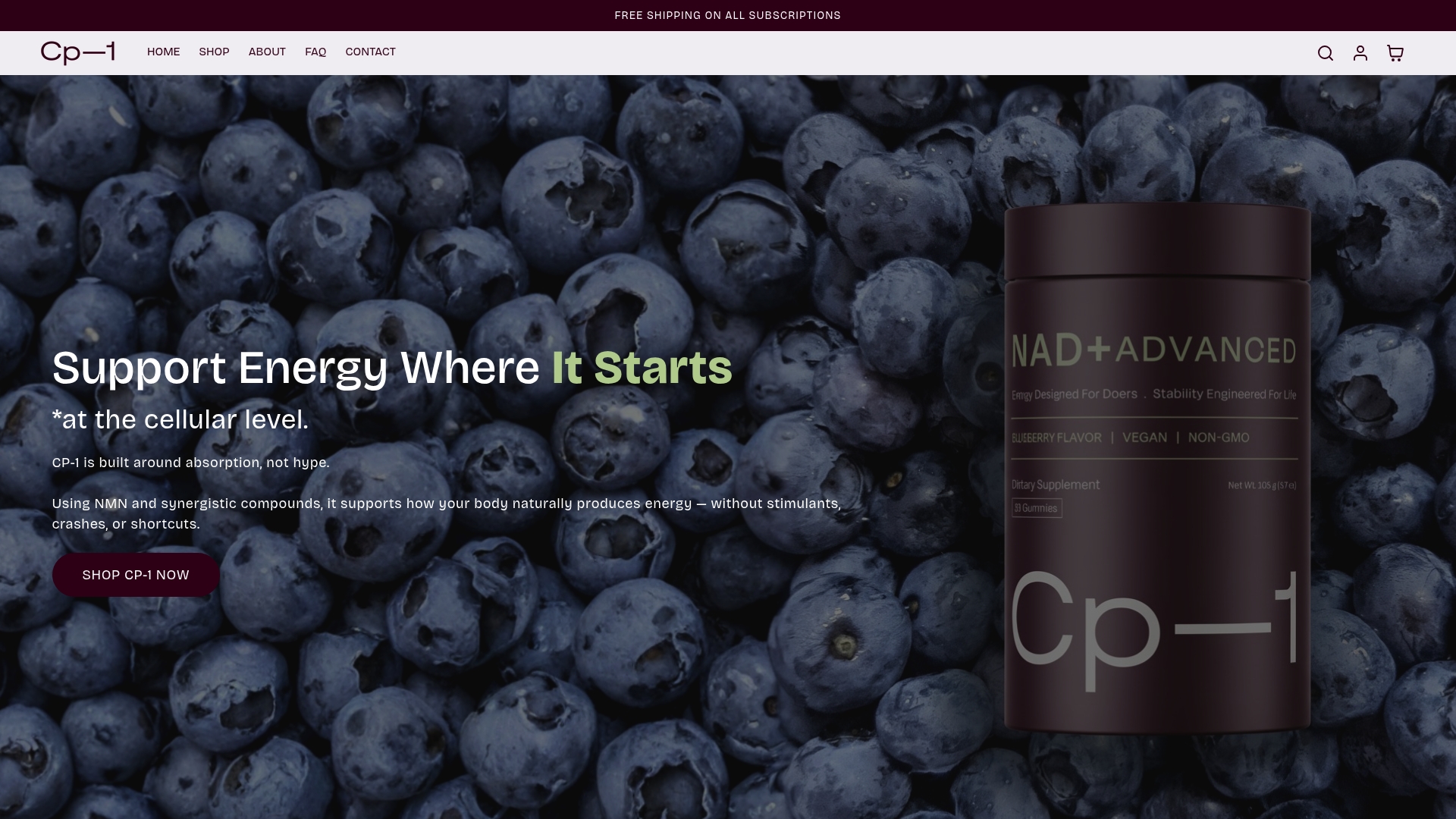
We didn’t build this to be another vague “mushroom blend” with a proprietary label shielding the actual ingredient amounts. Every batch is tested, and the sourcing decisions behind Lion’s Mane, Reishi, and Turkey Tail follow the same transparency standards this article just walked you through. If you’re ready to see how those ingredients come together in a single formula, check out the CP-1 NAD+ Advanced Supplement collection and look at the label the way you now know how.
This article is general information, not a substitute for advice from a qualified doctor. Consult a qualified healthcare professional about your own circumstances before acting on anything here.
Sources
- Mycelium vs. Fruiting Bodies of Edible Fungi—A Comparison of Metabolites - PMC
- NAMMEX petition and related attachments (regulatory filing)
- AHPA guidance on fungi labeling
FAQ
What Does “100% Fruiting Body” Mean on a Label?
It means the product contains only the mushroom’s fruiting structure, harvested and processed with no mycelium or grain substrate included. This matters because fruiting body material typically carries higher beta-glucan content than mycelium-on-grain products, though the actual percentage should still be confirmed by a Certificate of Analysis.
Does Mycelium Make Up Part of the Fruiting Body?
Yes, in a biological sense. The fruiting body grows out of an existing mycelial network, using nutrients the mycelium has absorbed, but the two structures develop distinct chemistry once the fruiting body forms. A finished fruiting body extract generally doesn’t contain leftover raw mycelium tissue, since it’s typically harvested well after mycelium has already produced it.
Which Form of Lion’s Mane Is Most Effective?
There isn’t a single “most effective” form, because mycelium and fruiting body produce different active compounds, erinacines and hericenones, respectively, that appear to work through related but distinct pathways, as shown in neuroprotective research on Hericium erinaceus. A product combining both, with tested concentrations of each, is generally more defensible than betting on one structure alone.
How Can I Tell if a Supplement Uses Mycelium-on-Grain Filler?
Check whether the label specifically says “mycelium on grain” or simply lists “mycelium” without clarifying whether it’s grain-grown or liquid-culture. If the beta-glucan percentage isn’t listed, or the label uses “polysaccharides” instead of “beta-glucans,” that’s a strong signal the product may include diluting grain starch.
Does CP-1 Use Fruiting Body or Mycelium Extracts?
CP-1’s formula includes Lion’s Mane, Reishi, and Turkey Tail extracts alongside NMN and CoQ10, manufactured in the US under GMP certification with third-party testing on every batch. Current ingredient specifics and testing documentation are available on the CP-1 product collection page.