
Restore mental clarity by fixing the biggest, addressable drivers first: sleep debt, dehydration, low movement, digital overload, and scattered attention. Fix those five and most brain fog lifts within days, not months.
Try these right now:
- Drink 16 ounces of water.
- Take a 10-minute walk outside.
- Do a 60-second physiological sigh (two inhales through the nose, one long exhale through the mouth).
- Write a two-minute brain dump of everything on your mind.
- Close every browser tab you’re not actively using.
Pro Tip: The fastest state shift is water, a physiological sigh, then a 10-minute walk, in that order. It takes less than 15 minutes and works before any supplement or productivity hack does.
Key Takeaways
Mental clarity improves fastest when sleep, hydration, and movement are fixed first, with digital hygiene and attention training layered on top.
| Point | Details |
|---|---|
| Hydration is immediate | A 2% drop in body water measurably impairs attention, so fix this before anything else. |
| Sleep and exercise are foundational | Consistent sleep timing and roughly 150 minutes of weekly activity drive the biggest lasting gains. |
| Digital noise fragments focus | Batching notifications and timeboxing tasks reduces the attention tax of constant switching. |
| Persistent fog needs testing | Fog lasting past two to three weeks warrants labs for thyroid, iron, B12, and glucose. |
| Supplements are optional, not primary | A formula like CP-1 can support the plan once sleep, hydration, and movement are already in place. |
Table of Contents
- How to Increase Mental Clarity: The Evidence-Based Checklist
- Why Does Mental Clarity Fail? Common Causes of Brain Fog
- When Should You See a Doctor for Brain Fog?
- Do Supplements Actually Help With Mental Clarity?
- A Simple 7-Day Plan to Restore Mental Clarity
- How Do Screens Affect Mental Clarity?
- How I Triage Brain Fog in Practice
- A Lifestyle-First Approach to Cognitive Support
- Frequently Asked Questions
- Sources
How to Increase Mental Clarity: The Evidence-Based Checklist
Mental clarity isn’t one thing you fix. It’s the sum of five or six habits, each backed by research, stacked in the right order. Here’s the priority list, ranked by how fast each one pays off.
-
Fix hydration first. A meta-analysis of 33 studies found that losing just 2% of body water measurably impairs attention, executive function, and motor coordination, often before you even feel thirsty. Keep a water bottle visible at your desk and refill it on a schedule instead of waiting for thirst cues.
-
Protect sleep like it’s a work meeting. Stop screens 60 minutes before bed and keep a consistent wake time, even on weekends. One recovered night of sleep produces measurable next-day clarity, though the research on attention and distraction makes clear that the benefit fades fast without repetition.
-
Move your body most days. Regular aerobic activity is linked to lower risk of cognitive decline and better executive function. The CDC recommends adults aim for roughly 150 minutes of moderate activity per week, which breaks down to about 30 minutes, five days a week. A brisk walk counts.
-
Single-task with a timer. Timeboxing methods like the Pomodoro Technique, 25 minutes of focused work followed by a 5-minute break, cut the mental tax of constant task-switching. Healthline’s roundup of research-backed concentration tips lists timeboxing alongside sleep and exercise as a core strategy with consistent, modest benefits.
-
Train attention on purpose. Mindfulness isn’t just relaxation. Neuropsychologist Kim Willment notes that attention training actually rewires the circuits that sustain focus during ordinary tasks, not just meditation sessions. Ten minutes of focused breathing daily builds this over two to three weeks.
-
Stabilize blood sugar. Skip the sugar crash by pairing carbs with protein or fat at meals. Fog that spikes an hour after lunch is often glucose, not fatigue.
-
Get outside. Even short exposure to natural light and green space shows up repeatedly in concentration research as a low-effort clarity booster.
Quick stat: Mild dehydration is enough to blunt attention and coordination, roughly the dehydration level you hit after a few hours without drinking on a normal day.
Why Does Mental Clarity Fail? Common Causes of Brain Fog
Brain fog usually comes from a stack of small, reversible problems rather than one big cause; for a clear overview of brain fog symptoms, see this detailed explanation of brain fog symptoms.
- Poor sleep reduces the brain’s overnight clearance of metabolic waste, leaving you groggy and slow to react.
- Dehydration thickens blood flow to the brain and drops attention scores even at mild levels.
- Blood sugar swings starve neurons of steady fuel, producing the classic post-lunch crash.
- Inactivity limits blood flow and the brain chemicals that support new neural connections.
- Digital overload fragments working memory through constant notifications and task-switching.
- Medication side effects, including some antihistamines, blood pressure drugs, and sleep aids, list cognitive fog as a known effect.
- Nutritional deficiencies, especially iron, B12, and vitamin D, are frequently missed and easily tested.
- Hormonal shifts, including thyroid changes and perimenopause, are common midlife contributors that Psychology Today highlights as under-diagnosed.
- Post-viral syndromes and chronic conditions can produce persistent fog that lifestyle changes alone won’t fix.
Red flag: sudden-onset confusion, slurred speech, one-sided weakness, or progressive memory loss over months needs urgent medical evaluation, not a wellness routine.
When Should You See a Doctor for Brain Fog?
If fog persists beyond a couple of weeks despite consistent sleep, hydration, and movement, clinical evaluation is recommended, not another supplement.
Pro Tip: Walk in with specifics: when the fog started, what makes it worse, and how it’s affecting work or driving. “I feel foggy” gets a shrug. “It’s been constant for six weeks and I can’t finish emails” gets tests ordered.
Ask your provider about:
- Sleep apnea screening, especially if you snore or wake unrefreshed
- Thyroid panel (TSH)
- CBC and iron studies (ferritin specifically)
- Vitamin B12 and vitamin D levels
- Fasting glucose or A1C
- A full medication review for cognitive side effects
Mayo Clinic notes that persistent or progressive clarity problems can signal an underlying condition worth ruling out with basic lab work. Seek urgent care for sudden confusion, one-sided weakness, or vision changes, these are not brain fog and shouldn’t wait for a routine appointment. For a deeper breakdown of when fog crosses into something clinical, this explainer on brain fog causes and symptoms walks through the distinction in more detail.
Do Supplements Actually Help With Mental Clarity?
Some do, modestly, and only once the basics are covered. Here’s the evidence breakdown, ranked honestly:
- Omega-3s: moderate evidence for long-term cognitive support, weaker for immediate clarity.
- B vitamins: strong evidence, but only if you’re actually deficient. Supplementing when you’re not deficient does little.
- Iron: chronically low ferritin is a frequently missed cause of fog, especially in adults who assume the fatigue is just aging. Test before supplementing at high doses; excess iron carries real risk.
- Caffeine: reliable short-term alertness boost, limited lasting benefit, and it can mask sleep debt rather than fix it.
- Adaptogenic mushrooms (Lion’s Mane, Reishi): early, promising research on stress resilience and nerve growth support, though evidence is still developing compared to sleep and exercise data.
- NMN/NAD+ precursors: studied mainly for cellular energy production; framed as long-term metabolic support rather than a same-day fix.
- Standard nootropics: evidence quality varies widely by ingredient; treat marketing claims skeptically.
Cognitive therapies, like structured mindfulness training or formal attention rehabilitation, have more consistent evidence behind them than most supplements.
Pro Tip: Never let a supplement replace the fundamentals. Treat it as the last 10% of the plan, not the first 100%, and always loop in a doctor if you’re on medication or managing a health condition.
A Simple 7-Day Plan to Restore Mental Clarity
Here’s how to sequence everything above into a week you can actually follow.
- Day 1: Hydrate on a schedule, not on thirst. Do one 60-second physiological sigh session. Track water intake.
- Day 2: Add a fixed sleep and wake time. Stop screens 60 minutes before bed.
- Day 3: Add a 20-minute walk. Note energy levels an hour later.
- Day 4: Introduce two Pomodoro-style focus blocks (25 minutes on, 5 off) using any free timer app.
- Day 5: Batch notifications to three set check-in times instead of constant pings.
- Day 6: Add a 10-minute focused-breathing or attention practice.
- Day 7: Review your tracked numbers: sleep hours, water ounces, exercise minutes, distraction-free blocks completed.
Track it on paper or a notes app, columns for sleep, water, movement, and focus blocks. If work or family life makes a full block impossible some days, shrink it to 10 minutes rather than skipping it. Consistency at low volume beats occasional intensity. For a more detailed, staged version of this plan stretched across weeks instead of days, this longer cognitive enhancement guide picks up where this week leaves off.
How Do Screens Affect Mental Clarity?
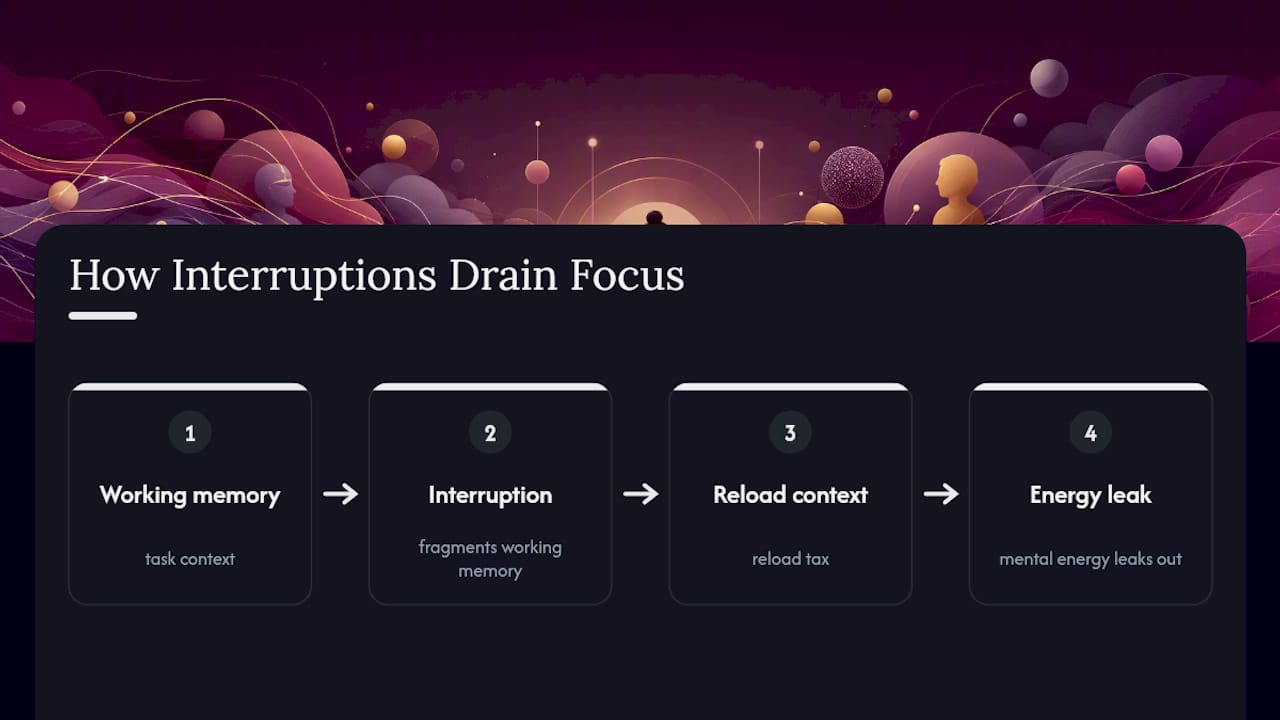
Every notification costs more than the two seconds it takes to glance at it. Research on attention and digital distraction shows that interruptions fragment working memory, meaning your brain has to reload context every time you switch tasks, and that reload tax is where most of your mental energy leaks out during a normal workday.
The fix isn’t quitting your phone. It’s batching. Set notifications to arrive at three fixed windows a day instead of constantly. Turn off badges and banners for anything that isn’t a real emergency. Keep your phone in another room during focus blocks rather than face-down on the desk, studies on proximity effects consistently show that even a silenced phone in view pulls on attention.

Screen time before bed deserves its own rule. Blue light and stimulating content delay the sleep signal your brain needs to start winding down, which is why the sleep hygiene habit and the digital hygiene habit are really the same fix wearing two names. Cutting screens 60 minutes before bed does double duty: better sleep tonight, less next-day fog tomorrow.
Workspace environment matters too. Dim, flickering, or overly cool lighting strains the eyes and accelerates fatigue; natural light or a full-spectrum desk lamp helps sustain focus longer. Background noise works the same way, a noisy open office measurably increases task-switching errors compared to a quiet or white-noise environment.
How I Triage Brain Fog in Practice
When someone describes fog, I never start with supplements. Sleep and hydration come first because they’re the fastest, cheapest levers with the clearest evidence behind them. Digital noise comes next, since it’s often invisible until you remove it. Basic labs come after that, because treatable causes like low iron get missed constantly. Only once those layers are addressed does targeted training or supplementation earn a place in the plan.

A Lifestyle-First Approach to Cognitive Support
Everything above works without spending a dollar. But once sleep, hydration, movement, and digital hygiene are dialed in, some readers want an extra layer of support for cellular energy and stress resilience, and that’s where a formula like CP-1 fits, not as a replacement for the basics, but as an addition to them.
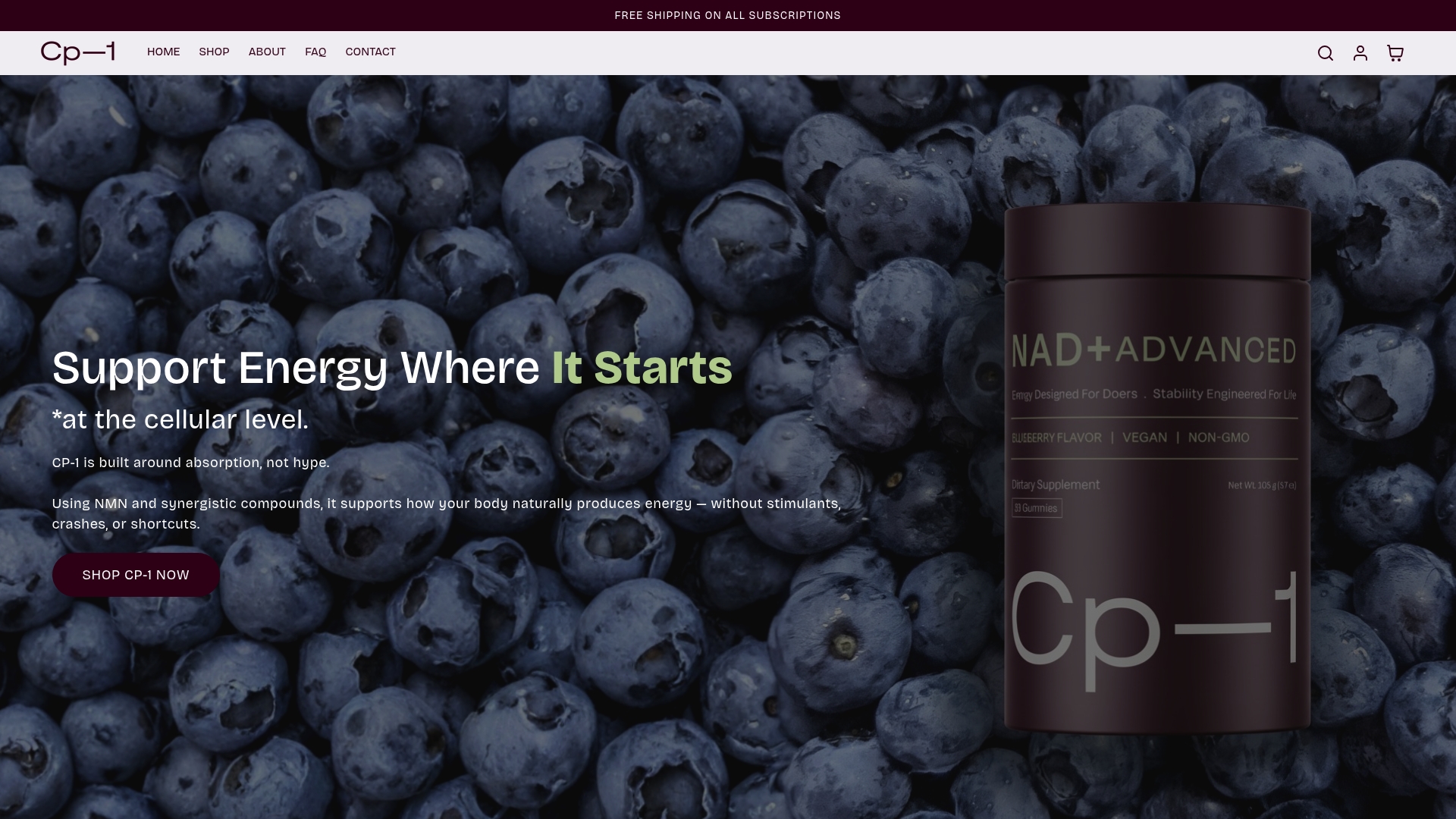
CP-1 combines NMN, Lion’s Mane, Reishi, Turkey Tail, and CoQ10 in a chewable gummy, manufactured in the US under GMP standards, third-party tested, vegan, and non-GMO. The formula targets cellular energy production and NAD+ support alongside the stress-resilience properties of adaptogenic mushrooms, the same categories flagged as promising-but-still-developing in the supplement evidence above. If you’re managing a health condition or taking medication, talk to your doctor before adding any new supplement, including CP-1. For readers who want the full ingredient rationale before deciding, this science-based breakdown of cognitive supplementation covers the mechanisms in plain language. If your fundamentals are already solid and you’re ready to see whether CP-1 fits your routine, check out the full product details on the CP-1 site to decide if it’s worth adding to your week.
Frequently Asked Questions
What is mental clarity, exactly? Mental clarity is the state of clear, focused thinking with minimal distraction or fog, driven mostly by sleep quality, hydration, blood sugar stability, and how much digital noise your attention has to fight through.
How fast can I improve mental clarity? Hydration and one good night of sleep can produce noticeable next-day improvement. Lasting clarity from exercise and attention training typically takes two to three weeks of consistency.
Why focus on mental clarity instead of just pushing through fog? Chronic fog compounds. It slows decision-making, increases errors, and often signals an underlying issue, like poor sleep or a nutrient deficiency, that gets worse the longer it’s ignored.
What are the best methods to enhance focus during a workday? Timeboxing with 25-minute focus blocks, batching notifications to set windows, and a short midday walk cover most of the measurable gains without any special tools.
Can nutrition alone fix brain fog? Nutrition helps, particularly stable blood sugar and correcting deficiencies like iron or B12, but it rarely works alone. It’s one lever among several, not a standalone fix.
This article is general information, not a substitute for advice from a qualified doctor. Consult a qualified healthcare professional about your own circumstances before acting on anything here.