
A natural energy support workflow is a structured, daily sequence of circadian-aligned behaviors, adaptogenic herbs, and whole-health habits designed to produce sustained mental clarity and physical vitality without stimulants. This approach treats energy as a system output, not a substance you consume. When you align your biology with light, movement, stress-modulating plants, and consistent sleep timing, you stop chasing energy and start generating it. The framework covered here is grounded in clinical research on adaptogens like ashwagandha and rhodiola, circadian science, and practical lifestyle integration. You will leave with a sequence you can actually run tomorrow morning.
What is a natural energy support workflow?
A natural energy workflow is the industry term for what researchers call “circadian-based energy optimization,” a protocol that sequences behavioral and nutritional inputs to match your body’s natural hormonal rhythms. The distinction from stimulant-based approaches is fundamental. Caffeine overrides your adenosine signaling. A natural energy workflow works with your cortisol awakening response, your mitochondrial repair cycles, and your HPA axis regulation to produce energy that compounds over weeks, not hours.
The core insight is this: consistency over any single ritual determines whether your energy is stable or erratic. A person who wakes at the same time every day, gets outdoor light within the first hour, and takes a standardized adaptogen extract will outperform someone who takes five different supplements but sleeps at random hours. The workflow is the product.
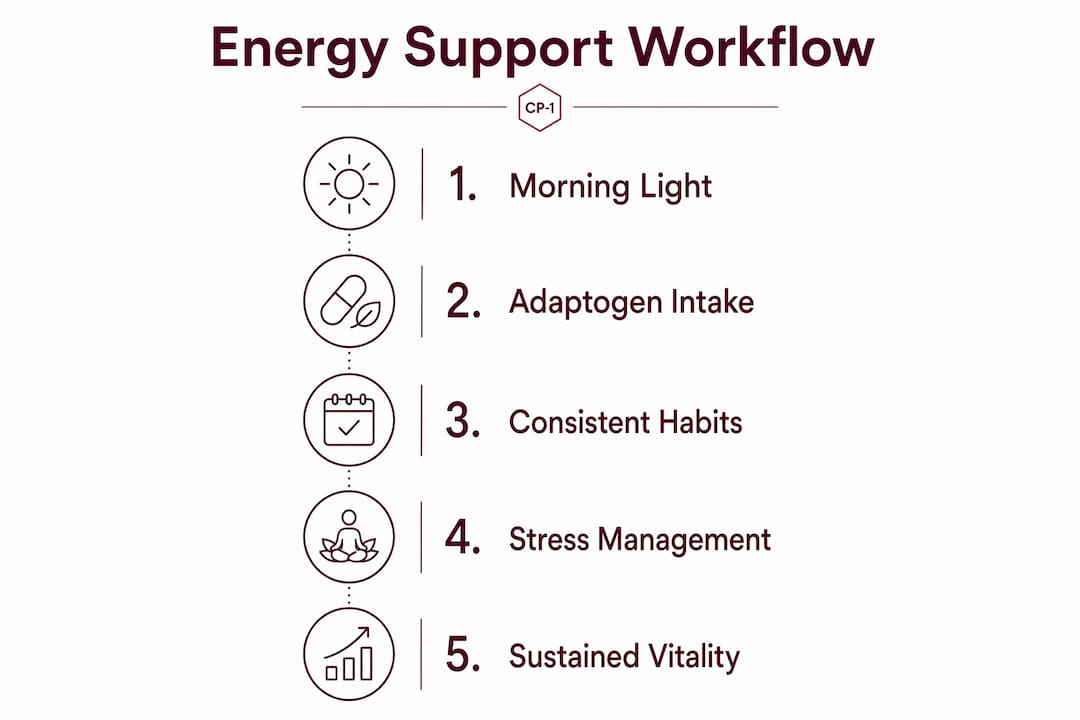
Three named pillars anchor this approach. First, morning light exposure to entrain your circadian clock. Second, evidence-based adaptogens like ashwagandha and rhodiola to modulate stress hormones and reduce cognitive fatigue. Third, whole-health lifestyle habits including hydration, movement, and sleep hygiene to sustain the gains. Each pillar reinforces the others.

Why morning light is the foundation of energy management
Morning light is not a wellness trend. It is a biological input your body requires to calibrate every hormone, mood, and energy cycle for the next 16 hours. The mechanism is circadian entrainment: bright light hitting your retina signals the suprachiasmatic nucleus to suppress melatonin, spike cortisol, and set your internal clock forward.
The numbers matter here. Outdoor morning light amplifies the cortisol awakening response by 20% to 50%, which translates directly to sharper alertness by 8 AM compared to waking without light exposure. Indoor lighting rarely exceeds 200 lux. Outdoor light on a cloudy day delivers 1,000 to 10,000 lux. That gap is why sitting near a window does not replicate the effect.
Here is what the research recommends for practical implementation:
- Get outside within 60 minutes of waking, before checking your phone
- Aim for 10 to 20 minutes outdoors at eye level with the sky, not staring at the sun
- Do not wear sunglasses during this window since UV filtering reduces the circadian signal
- Pair light exposure with a short walk to stack movement benefits simultaneously
- On overcast days, extend the duration to 20 to 30 minutes to compensate for lower lux
The cortisol spike from morning light is not stress. It is your body’s natural performance hormone doing exactly what it is designed to do. Suppressing it with blackout curtains and phone screens until noon is one of the most common reasons people feel foggy until midday.
Pro Tip: If you live in a northern climate during winter, a 10,000-lux light therapy lamp like those from Verilux or Carex placed at eye level during breakfast replicates outdoor light exposure with clinical-grade effectiveness.
How do adaptogens support energy and stress resilience?
Adaptogens are plant-derived compounds that help your body maintain homeostasis under physical and psychological stress. The term was coined by Soviet pharmacologist Nikolai Lazarev in 1947, and the clinical evidence base has grown substantially since. The two most studied for energy and cognitive function are ashwagandha (Withania somnifera) and rhodiola (Rhodiola rosea).
Ashwagandha: stress modulation and cortisol control
Ashwagandha works primarily through HPA axis regulation. It reduces excess cortisol, which is the hormone that, when chronically elevated, destroys sleep quality, impairs memory, and drains physical energy. Standardized ashwagandha root extract at 125 to 600 mg per day is clinically safe for up to 180 days, with adverse events comparable to placebo. This is not a supplement you need to cycle aggressively or fear. The key word is “standardized.” Products standardized to withanolide content deliver predictable effects. Generic ashwagandha powder does not.
Rhodiola: fatigue reduction and cognitive sharpness
Rhodiola targets a different part of the stress-energy equation. Where ashwagandha calms the HPA axis, rhodiola directly reduces fatigue symptoms and improves attention under stress. Rhodiola rosea at 200 to 680 mg per day produces a standardized mean difference of negative 0.69 on fatigue scales, which is a clinically meaningful reduction. That means you feel the difference. It also modulates NF-κB and PI3K/AKT pathways, providing neuroprotection alongside the fatigue relief.
Here is a side-by-side comparison to guide your selection:
| Adaptogen | Primary benefit | Optimal timing | Clinical dose range |
|---|---|---|---|
| Ashwagandha | Cortisol reduction, sleep quality | Evening or with dinner | 125 to 600 mg/day |
| Rhodiola rosea | Fatigue relief, cognitive focus | Morning or pre-work | 200 to 680 mg/day |
| Lion’s mane | Nerve growth factor support | Morning with food | 500 to 1,000 mg/day |
| Reishi | Immune modulation, stress resilience | Evening | 1,000 to 3,000 mg/day |
The pleiotropic effects of adaptogens mean they work across multiple molecular pathways simultaneously. This is why they produce broad benefits rather than a single targeted effect. It also means they take time. Most people notice meaningful fatigue reduction after two to four weeks of consistent use, not after a single dose.
Pro Tip: Separate your adaptogens by function. Take rhodiola in the morning to sharpen focus during your peak work hours. Take ashwagandha in the evening to lower cortisol before sleep. Mixing them at random times reduces the precision of both.
What whole-health habits sustain energy long term?
No adaptogen or morning light protocol compensates for chronic dehydration, a diet built on processed carbohydrates, and zero movement. Whole-health lifestyle integration is not optional in a natural energy workflow. It is the substrate everything else runs on.
Here is a practical sequence of habits that compound over time:
-
Hydrate before caffeine. Drink 16 to 20 ounces of water within 15 minutes of waking. Overnight dehydration reduces cognitive performance measurably, and rehydrating first makes every subsequent habit more effective.
-
Eat for metabolic energy, not blood sugar spikes. Whole grains, nuts, legumes, and quality proteins provide sustained metabolic energy without the crash that follows refined carbohydrates. A breakfast of oats, eggs, and walnuts outperforms a bagel for four-hour energy stability.
-
Use movement snacks to clear mental fog. A 10-minute walk or a set of bodyweight exercises mid-morning and mid-afternoon clears adenosine buildup and resets focus without caffeine. Short movement bursts are one of the fastest ways to increase energy between tasks.
-
Protect sleep architecture. Consistent wake times within a 30-minute window daily stabilize your cortisol rhythm and improve sleep quality more than any sleep supplement. This is the single most underrated energy enhancement strategy available to you.
-
Practice brief mindfulness to reduce cortisol load. Five minutes of diaphragmatic breathing or journaling after lunch reduces afternoon cortisol spikes. Lower cortisol in the afternoon means better sleep onset at night, which feeds directly back into morning energy.
The goal is not perfection on any single day. The goal is a system that runs reliably across weeks and months. That is what separates sustainable energy solutions from the cycle of crash-and-recover most people live in.
How to design your daily natural energy support workflow
Here is a practical, sequenced workflow you can implement starting tomorrow. Adjust timing to your schedule, but preserve the order.
-
Wake at a fixed time (6:00 to 7:00 AM). Set your alarm for the same time seven days a week, including weekends. Irregular wake times degrade your cortisol rhythm faster than almost any other variable.
-
Hydrate immediately (6:00 to 6:05 AM). Drink 16 to 20 ounces of water before anything else.
-
Get outdoor light (6:10 to 6:30 AM). Walk outside for 10 to 20 minutes. No sunglasses. Eyes toward the sky. This is the single highest-leverage step in the entire workflow.
-
Take rhodiola with breakfast (7:00 AM). A standardized extract at 200 to 400 mg with food positions the fatigue-reducing and focus-sharpening effects for your peak work window.
-
Do a 10-minute movement snack (10:30 AM). Walk, stretch, or do bodyweight exercises. This clears mid-morning adenosine and extends your focus window by one to two hours.
-
Eat a whole-food lunch (12:30 PM). Prioritize protein, fiber, and healthy fats. Avoid refined carbohydrates that trigger a 2 PM energy crash.
-
Take ashwagandha with dinner (6:30 PM). Standardized extract at 300 to 600 mg with food. This positions the cortisol-lowering effect for the evening wind-down.
-
Dim lights and stop screens by 9:00 PM. Blue light after dark delays melatonin onset and undermines everything you built in the morning.
“The primary success metric for a natural energy workflow is improved sleep onset and circadian phase alignment, not immediate stimulation. Adaptations take weeks, not days.”
Common challenges and how to address them: If you feel no effect from rhodiola after two weeks, check whether your product is standardized to 3% rosavins and 1% salidroside. Generic products often contain neither at therapeutic levels. If morning light feels impractical in winter, invest in a 10,000-lux lamp. If ashwagandha causes mild GI discomfort, take it with a larger meal or reduce the dose to 125 mg and build up gradually.
For anyone exploring non-stimulant energy approaches, the workflow above is the framework. Supplements like CP-1, which combines NMN, lion’s mane, reishi, turkey tail, and coenzyme Q10, fit cleanly into step four or seven depending on your goals. They support mitochondrial energy and NAD+ production at the cellular level, which complements the circadian and adaptogen layers without adding stimulants.
Key takeaways
A natural energy support workflow produces lasting vitality by sequencing morning light, targeted adaptogens, and consistent lifestyle habits rather than relying on stimulants.
| Point | Details |
|---|---|
| Morning light is non-negotiable | Ten to twenty minutes outdoors within sixty minutes of waking amplifies cortisol and clears sleep inertia. |
| Adaptogens require precision | Ashwagandha targets cortisol reduction in the evening; rhodiola targets fatigue and focus in the morning. |
| Consistency beats any single ritual | Fixed wake times within thirty minutes daily stabilize circadian rhythms more than any supplement. |
| Whole-health habits are the substrate | Hydration, whole-food meals, and movement snacks sustain the gains that light and adaptogens initiate. |
| Results take weeks | Circadian entrainment and adaptogen effects compound over two to four weeks, not overnight. |
What I have learned from running this workflow myself
Here is my honest take: most people who say natural energy methods do not work have never actually run a structured protocol for more than two weeks. They tried ashwagandha for three days, felt nothing, and went back to their third coffee. That is not a fair test of the system.
What I have found, both personally and from watching others go through this, is that the morning light step is the one people skip most and need most. It feels too simple. You think the supplement is the active ingredient. It is not. The light is. The supplement is the support layer.
I also want to be direct about adaptogens: standardized extracts matter enormously. I have seen people spend months on products that contain no measurable withanolides or rosavins. They get nothing and conclude adaptogens are placebo. The problem was the product, not the category. When you use a clinically dosed extract, the difference is real and measurable within two to three weeks.
The other thing I will say is this: do not try to optimize everything at once. Start with the fixed wake time and the morning light. Run that for one week. Add rhodiola in week two. Add ashwagandha in week three. Build the system layer by layer. Trying to implement all eight steps on day one is how people burn out on protocols that would have worked if they had been patient.
— Hugo
How Cp-1 supports your natural energy goals
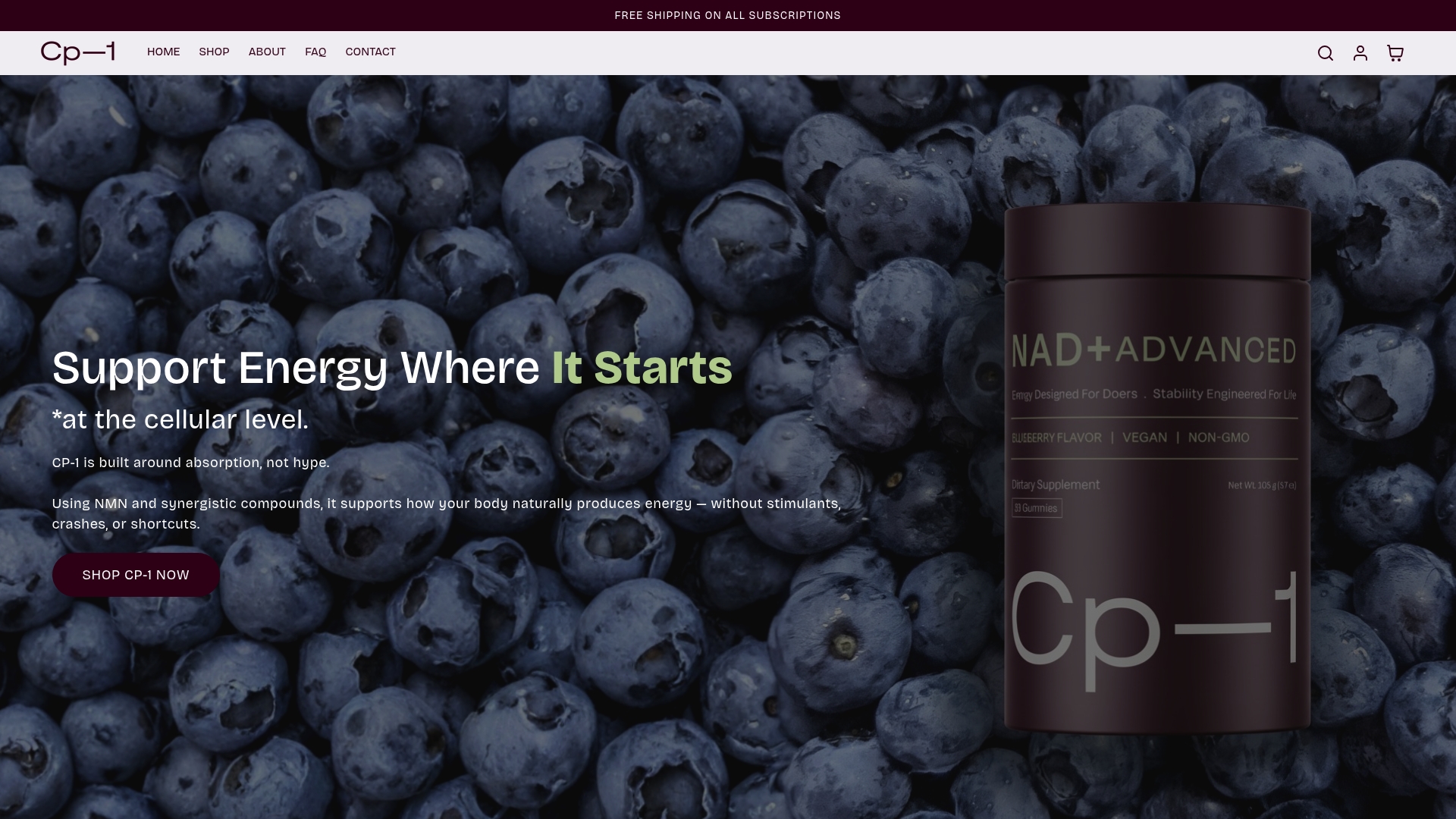
If you are serious about building a natural energy workflow that actually holds up over months, Cp-1 was designed to fit exactly that system. The CP-1 formula combines NMN for NAD+ production, lion’s mane and reishi mushroom extracts for cognitive support and stress resilience, turkey tail for immune function, and coenzyme Q10 for mitochondrial energy. Every ingredient is third-party tested, vegan, non-GMO, and manufactured in the US. This is not a formula built for a marketing deck. It is built for the person who wants daily energy and clarity without stimulants. Explore the full CP-1 approach at cp-1.com.
FAQ
What is a natural energy support workflow?
A natural energy support workflow is a structured daily protocol that sequences morning light exposure, adaptogenic herbs, and whole-health lifestyle habits to produce sustained energy and mental clarity without stimulants. It works by aligning your behaviors with your body’s circadian and hormonal rhythms.
How long does it take to feel results from adaptogens?
Most people notice meaningful fatigue reduction and improved focus after two to four weeks of consistent use at clinically standardized doses. Ashwagandha and rhodiola both require sustained intake to modulate HPA axis function and cortisol patterns.
Can I combine ashwagandha and rhodiola in the same workflow?
Yes, and they work better when timed separately. Take rhodiola in the morning at 200 to 400 mg for fatigue relief and focus, and take ashwagandha in the evening at 300 to 600 mg for cortisol reduction and sleep quality. Combining them at the same time reduces the precision of both.
Is morning light exposure really necessary if I take energy supplements?
Morning light is the single highest-leverage input in a natural energy workflow. No supplement fully replicates the cortisol awakening response triggered by outdoor light at 1,000 lux or more. Supplements support the system. Light anchors it.
What makes a natural energy workflow different from just taking caffeine?
Caffeine blocks adenosine receptors to create temporary alertness, which rebounds as a crash when it clears. A natural energy workflow builds the underlying hormonal and cellular conditions for energy production, so the output is stable across the day rather than spike-and-crash.