
NMN (Nicotinamide Mononucleotide) is defined as a direct NAD+ precursor that your cells convert into NAD+, the molecule powering energy production, DNA repair, and sirtuin activation. If you’re asking whether it’s better to take NMN or NAD as a supplement, the honest 2026 answer is this: both raise NAD+ levels effectively, but neither has proven clinical superiority over the other in human trials. The decision comes down to bioavailability, safety data, delivery method, and what you’re actually trying to accomplish.
Is it better to take NMN or NAD? how each one works
NMN and NAD+ are not the same molecule, and that distinction matters when you’re choosing a supplement. NAD+ (Nicotinamide Adenine Dinucleotide) is the active coenzyme your cells use directly. NMN is one step upstream in the biosynthesis pathway, meaning your body converts it into NAD+ after absorption.
Here’s where it gets interesting. The NAD+ molecule itself has poor oral bioavailability. It breaks down in the gut before it can enter cells intact. That’s why most researchers and clinicians focus on precursors like NMN or NR (Nicotinamide Riboside) as the practical delivery vehicles for raising NAD+ levels.

The conversion pathway for NMN involves a specific transporter called Slc12a8, which shuttles NMN directly into intestinal cells. Once inside, NMN is converted to NAD+ through enzymatic reactions involving NMNAT enzymes. This pathway is efficient and well-documented in animal studies, with growing human data supporting it.
Key mechanisms both precursors share:
- Sirtuin activation: NAD+ fuels sirtuins, the proteins linked to cellular aging and stress response.
- DNA repair support: PARP enzymes consume NAD+ to repair DNA strand breaks. Higher NAD+ means faster repair.
- Mitochondrial energy: NAD+ is central to the electron transport chain. More NAD+ correlates with better mitochondrial output.
- NAMPT pathway: Both NMN and NR feed into the salvage pathway, the body’s primary recycling system for NAD+.
Pro Tip: If you’re new to NAD+ precursors, start with the biology before the brand. Understanding that you’re supplementing a precursor, not NAD+ itself, helps you evaluate product claims with a clearer head.
What does the clinical evidence actually show?
The most direct answer to the NMN vs NAD debate comes from a 2026 Nature Metabolism RCT that compared NMN and NR head-to-head in healthy adults over 14 days. The result: both produced comparable NAD+ increases, with no significant superiority for either precursor on the primary endpoint. That finding alone should recalibrate how you think about the NMN vs NAD debate.
“The precursor comparison method shows that NMN and NR elevate NAD+ to similar degrees in short-term human trials. The molecule on the label matters less than the quality of the formulation delivering it.”
The clinical picture gets more nuanced when you look at broader outcome data. Meta-analyses from 2024 to 2025 found no consistent evidence that NAD+ elevation from NMN translates into meaningful improvements in glucose metabolism, lipid profiles, or physical performance. Raising a biomarker is not the same as improving a clinical outcome. That gap is where most supplement marketing falls apart.
Here’s a side-by-side summary of what the current human trial record shows:
| Factor | NMN | NR (NAD Precursor) |
|---|---|---|
| Human trials published | Growing, but fewer than NR | More extensive trial record |
| NAD+ elevation | Comparable to NR in 2026 RCT | Comparable to NMN in 2026 RCT |
| Clinical outcome evidence | Unproven in rigorous trials | Unproven in rigorous trials |
| Regulatory safety opinion | EFSA positive at 300 mg/day | Less formal regulatory review |
| Oral bioavailability | Moderate | Moderate |
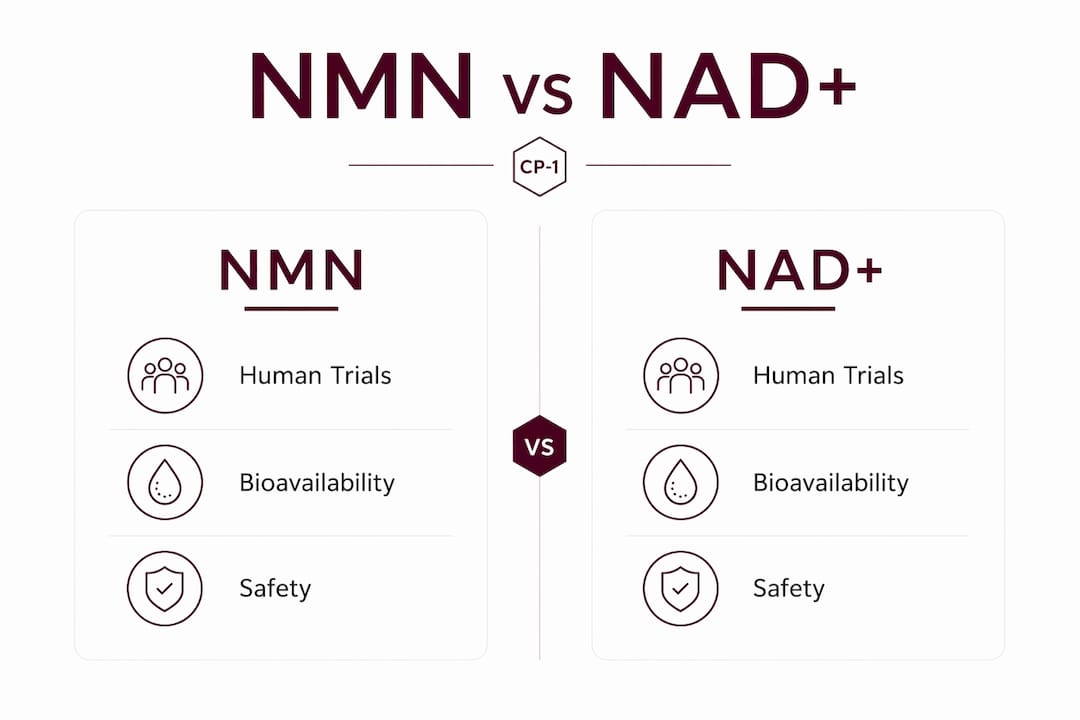
The claims about NMN improving aging markers and cognition remain unproven in rigorous human trials as of 2026. That’s not a reason to dismiss the supplement. It’s a reason to hold realistic expectations and focus on quality over hype.
Is NMN safe? what the regulatory data says
NMN safety is one area where the evidence is genuinely encouraging. The European Food Safety Authority (EFSA) issued a positive safety opinion for NMN at 300 mg per day for the general population in 2026. EFSA excluded pregnant and lactating women from this opinion, pending additional data. That regulatory endorsement reflects a high evidentiary bar, covering toxicity studies in both human and animal models.
Short-term human trials show NMN is well tolerated up to approximately 1,250 mg per day, with only mild gastrointestinal side effects reported at higher doses. No serious adverse events have been documented in trials to date. The catch is that most trials run under six months, so long-term safety data beyond that window simply does not exist yet.
Reported side effects at higher doses include:
- Mild nausea or digestive discomfort, particularly on an empty stomach
- Insomnia or sleep disruption, reported anecdotally at doses above 500 mg taken late in the day
- Flushing, less common with NMN than with niacin but occasionally noted
- Headache, typically transient and dose-dependent
The practical guidance from EFSA’s 300 mg threshold is clear: start there. Higher doses may produce stronger NAD+ biomarker responses, but the safety data thins out above 900 mg per day. For daily maintenance, 300 mg is the most defensible starting point based on current regulatory science.
Pro Tip: Take NMN in the morning with food. The morning timing aligns with your circadian NAD+ rhythm, and food reduces the chance of GI discomfort at higher doses.
Bioavailability, delivery methods, and practical use cases
The form you take matters as much as the molecule you choose. Oral NMN and NR supplements have moderate bioavailability. They survive digestion well enough to enter the bloodstream and reach tissues, but absorption varies by formulation, capsule type, and whether you take them with food.
Oral NAD+ supplements are a different story. The NAD+ molecule itself degrades in the gut before meaningful absorption occurs. Supplementing NAD+ directly in capsule form is largely ineffective for raising intracellular NAD+. This is why the NMN and NR precursor approach dominates both the research literature and the commercial market.
IV NAD+ is the exception. Intravenous NAD+ administration delivers rapid, high-concentration NAD+ elevation by bypassing the gut entirely. It’s used in clinical settings for acute restoration, addiction recovery protocols, and intensive longevity interventions. The tradeoff is obvious: it requires a clinical setting, trained staff, and significant cost. It’s not a daily maintenance option.
For most people reading this, the practical choice looks like this:
| Use Case | Best Option | Why |
|---|---|---|
| Daily NAD+ maintenance | Oral NMN or NR | Convenient, moderate bioavailability, EFSA-backed dosing |
| Acute NAD+ restoration | IV NAD+ | Bypasses gut, delivers rapid elevation |
| Cognitive support stack | Oral NMN with cofactors | Pairs well with CoQ10, lion’s mane for mitochondrial support |
| Budget-conscious protocol | NR capsules | Longer trial record, comparable efficacy to NMN |
Product formulation quality is the variable most people overlook. Precursor protection during manufacturing, capsule stability, and third-party testing determine whether the NMN in your bottle actually reaches your cells intact. A well-formulated 300 mg NMN product will outperform a poorly manufactured 600 mg product every time. The label dose is not the delivered dose if the formulation is garbage.
For those interested in a detailed comparison of NAD+ and NMN for energy and brain health, the research consistently points back to formulation quality as the deciding factor.
Key takeaways
NMN and NAD precursors both raise NAD+ effectively, but product quality and delivery method determine real-world results more than which precursor you choose.
| Point | Details |
|---|---|
| NMN vs NR efficacy | A 2026 Nature Metabolism RCT found NMN and NR produce comparable NAD+ increases in healthy adults. |
| Clinical outcome gap | NAD+ elevation does not yet translate to proven improvements in aging, cognition, or metabolism in human trials. |
| EFSA safety threshold | EFSA endorses 300 mg per day NMN for the general population as a practical, evidence-backed starting dose. |
| Oral NAD+ is ineffective | The NAD+ molecule degrades in the gut; precursors like NMN or NR are the only practical oral delivery route. |
| Formulation quality wins | A well-manufactured NMN product at 300 mg outperforms a poorly formulated product at higher doses. |
What i’ve learned after years of tracking this research
I’ll be direct about something the supplement industry does not want you to hear. The NMN vs NAD debate is mostly a marketing construct. The real question is whether the product you’re buying is formulated well enough to actually do anything.
I’ve watched this space for years. The pattern is always the same: a promising precursor gets animal study results, the marketing machine inflates those results into human longevity claims, and consumers spend money on products that were designed for a marketing deck, not for the person swallowing them.
The 2026 Nature Metabolism trial is genuinely useful because it cuts through that noise. NMN and NR are comparable. Neither is magic. What separates a product that works from one that doesn’t is manufacturing integrity, third-party testing, and honest dosing.
My practical take: if you’re supplementing for daily NAD+ maintenance and cognitive support, oral NMN at 300 mg per day is a reasonable, EFSA-backed starting point. If you want to stack it intelligently, pair it with CoQ10 and adaptogens like lion’s mane. That combination addresses mitochondrial energy from multiple angles rather than betting everything on one molecule.
Expect gradual, subtle improvements in energy and mental clarity over weeks, not a dramatic transformation in days. Anyone selling you the dramatic version is selling you something else.
— Hugo
Why CP-1 takes formulation seriously
If you’ve read this far, you already know that the molecule on the label is only part of the story. CP-1 was built around that exact frustration.
CP-1 combines NMN with lion’s mane mushroom extract, reishi mushroom extract, turkey tail mushroom extract, and CoQ10 in a single formulation. Every ingredient is third-party tested, vegan, non-GMO, and manufactured in the US. The NMN dose aligns with EFSA’s evidence-backed 300 mg threshold. Nothing in CP-1 is there for the marketing deck. If you’re ready to supplement with something built for real results rather than impressive packaging, explore CP-1’s full formula and see what honest formulation actually looks like.
FAQ
What is the difference between NMN and NAD supplements?
NMN is a precursor that your body converts into NAD+ after absorption. Oral NAD+ supplements are largely ineffective because the NAD+ molecule breaks down in the gut before reaching cells.
Which is better for energy: NMN or NAD?
For daily energy support, oral NMN is the better practical choice. IV NAD+ delivers faster results but requires a clinical setting and is not suitable for routine supplementation.
Is NMN safe to take daily?
EFSA issued a positive safety opinion for NMN at 300 mg per day for the general population in 2026. Short-term trials show tolerability up to 1,250 mg per day, though long-term data beyond six months remains limited.
Do NMN supplements actually work for aging?
NMN reliably raises NAD+ biomarkers in human trials, but meta-analyses through 2025 found no consistent evidence that this elevation produces meaningful improvements in aging markers, cognition, or metabolism.
Should i take NMN in the morning or at night?
Morning dosing is recommended. NMN aligns with your body’s circadian NAD+ rhythm, and taking it earlier in the day reduces the risk of sleep disruption reported at higher doses.