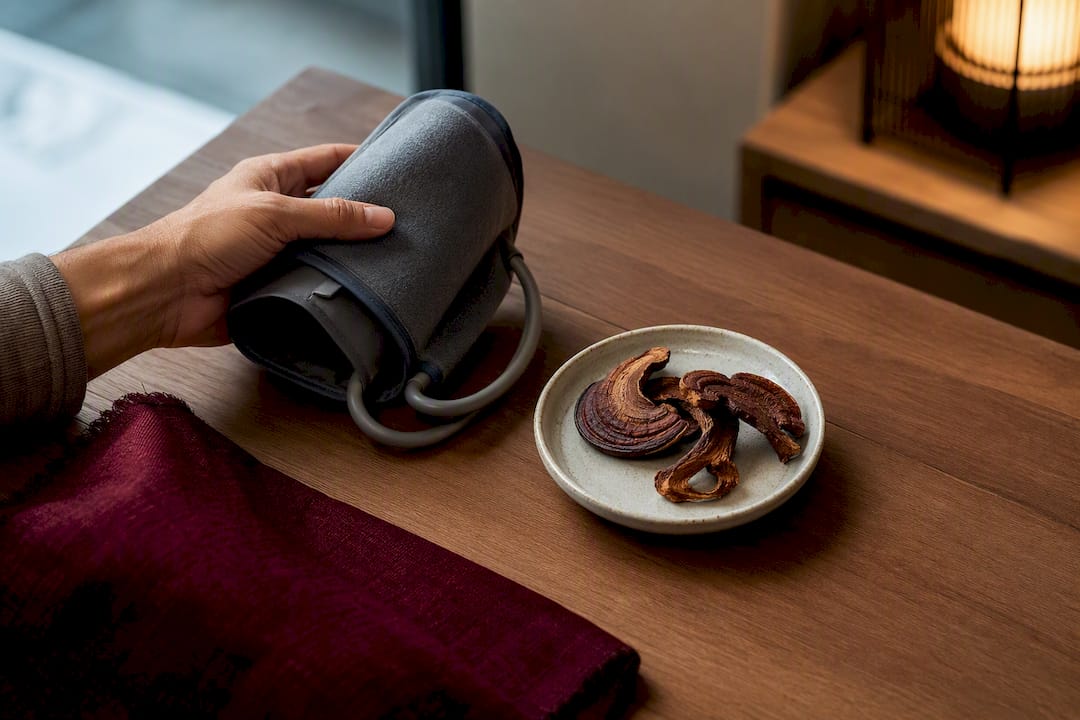
Reishi shows real hypotensive activity in animal studies, and a handful of small human trials hint at modest blood pressure benefits, but the evidence in people is inconsistent and nowhere near strong enough to call reishi a hypertension treatment. The bigger issue: reishi can interact with blood pressure medications, blood thinners, and diabetes drugs, sometimes in unpredictable ways. If you take antihypertensives, talk to your prescriber before adding it, and get your interactions checked first.
TL;DR:
- Human studies on reishi’s blood pressure effects are small, inconsistent, and do not support its use as a reliable hypertension treatment.
- Reishi’s blood pressure-lowering mechanism is linked to ACE-inhibitory compounds, but extract differences significantly affect potency and effects.
- Combining reishi with blood pressure medications or blood thinners can cause additive hypotension and bleeding risks, warranting medical supervision.
- Typical effective doses in trials range from 1.4 to 3 grams of dried extract daily, with product potency varying greatly depending on extraction methods.
- The strongest evidence for blood pressure reduction exists in animal studies, while human data remains too limited and inconsistent for clinical recommendations.
Table of Contents
- What Clinical Reviews and Trials Say About Reishi and Blood Pressure
- How Could Reishi Lower Blood Pressure? The Mechanism Behind the Claim
- Who Should Avoid Reishi and Which Medications Interact With It
- What Dosage of Reishi Is Used in Studies, and How Do You Read a Label?
- Which Studies Actually Back the Reishi Blood Pressure Claim?
- How to Talk to Your Clinician About Reishi and Monitor Safely
- A Clinically Grounded Verdict on Reishi and Blood Pressure
- Where CP-1 Fits if You Want a Quality-Tested Mushroom Supplement
- Sources
What Clinical Reviews and Trials Say About Reishi and Blood Pressure
Here’s the part most wellness blogs skip: the human data on reishi and blood pressure is thin, and reviewers know it. A systematic review of Ganoderma lucidum’s cardiovascular effects found the clinical trials too small, too short, and too inconsistent to support reishi as a hypertension treatment. That’s not a minor caveat. It’s the whole story.
The trials that do exist share some common features:
- Most used doses between 1.4 and 3 grams of dried extract per day
- Trial duration ran roughly 12 to 24 weeks
- Sample sizes were small, which limits statistical power
- Results varied from modest improvements to no measurable effect
The gap between animal and human evidence is stark. Rodent studies show clear, sometimes dramatic drops in blood pressure after reishi extract. Human trials show a shrug. That mismatch matters because dosing, metabolism, and extract concentration in a 300-gram rat don’t map cleanly onto a 180-pound adult swallowing a capsule once a day.
Adverse event reporting compounds the problem. Reviewers have noted that most trials weren’t designed or powered to catch rare or serious side effects, so safety data from these studies should be read as incomplete rather than reassuring. Mild gastrointestinal upset shows up occasionally. Whether something worse could happen in a larger population is simply unknown.
If you’re weighing reishi mushroom benefits against actual clinical proof, the honest answer is that the proof isn’t there yet for blood pressure specifically, even though the biological plausibility is real.
How Could Reishi Lower Blood Pressure? The Mechanism Behind the Claim
The mechanism is where reishi’s blood pressure story gets genuinely interesting. Researchers isolated compounds from reishi that inhibit angiotensin-converting enzyme, or ACE, the same enzyme that ACE-inhibitor drugs like lisinopril target. Block ACE, and you block a step in the pathway that narrows blood vessels and raises pressure. That’s not speculation. It’s how a documented auto-digested reishi extract dropped systolic pressure in hypertensive rats, and it’s the clearest mechanistic thread connecting reishi hypertension research to actual physiology.
A few other compound classes likely play supporting roles:
- Triterpenoids, which may support vascular and metabolic health markers
- Polysaccharides, linked to antioxidant and immune-modulating activity
- Antioxidant compounds that could reduce oxidative stress on blood vessel walls
None of these act as reliably or predictably as the ACE-inhibitory peptides, and researchers still call for standardized extracts and larger trials before drawing firm conclusions.
Here’s the detail almost nobody explains clearly: extraction method changes the chemistry. Auto-digested extracts appear to concentrate ACE-inhibitory peptides more effectively than simple hot-water extraction, which may explain why some products show stronger effects in lab settings than others.
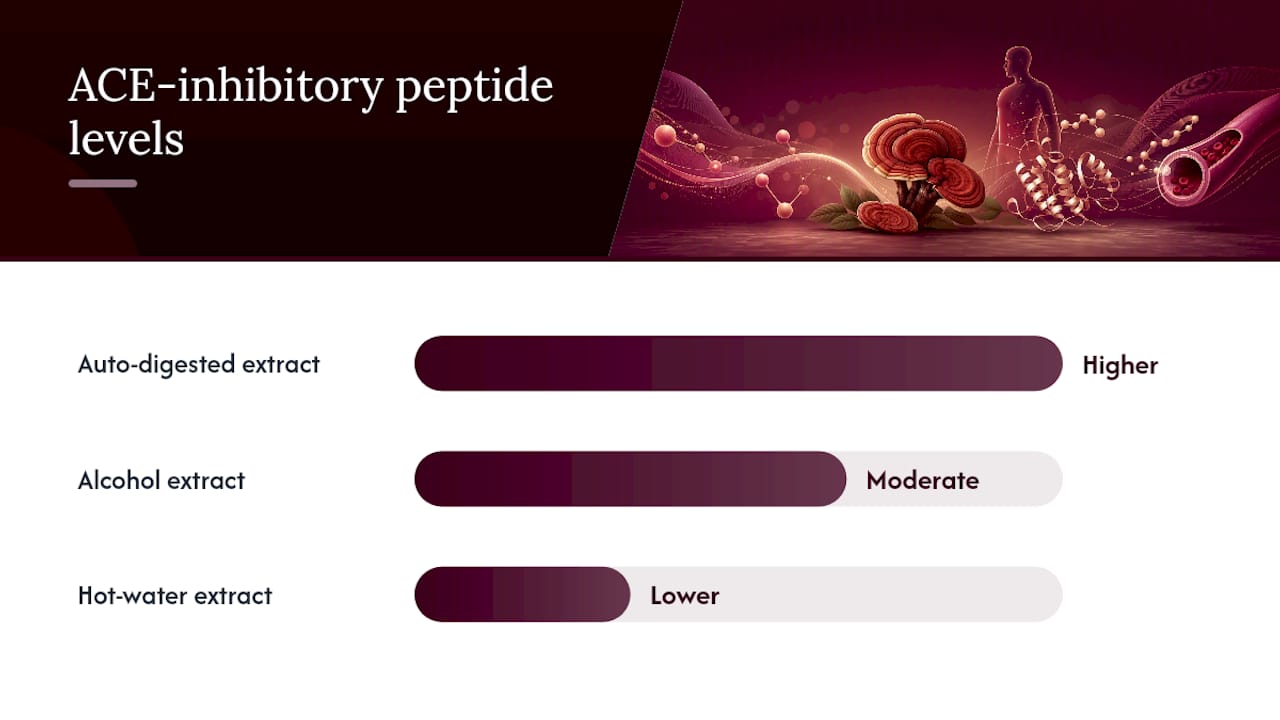
Pro Tip: Two bottles labeled “reishi extract” can contain almost entirely different compound profiles depending on whether the manufacturer used hot water, alcohol, or an auto-digestion process. The extraction method matters as much as the dose.
Who Should Avoid Reishi and Which Medications Interact With It
This is the section that matters most if you’re already managing blood pressure with medication. Reishi’s biggest real-world risk isn’t some rare toxic reaction. It’s additive hypotension, meaning reishi and your prescription drug both push your blood pressure down at the same time, and nobody can predict exactly how far.
Avoid reishi, or use it only under direct medical supervision, if you:
- Are pregnant or breastfeeding
- Already run low blood pressure or experience fainting or dizziness
- Have a bleeding disorder or bruise easily
- Have surgery scheduled in the near future
- Take multiple medications that already affect blood pressure or clotting
Clinical references flag several drug classes with real interaction potential. ACE inhibitors and ARBs top the list, since combining them with reishi’s own ACE-inhibitory activity could push blood pressure down further than either would alone. Calcium-channel blockers, beta blockers, and diuretics carry similar concerns. Anticoagulants and antiplatelet drugs raise bleeding risk when paired with reishi, and clinical guidance recommends caution for anyone on blood thinners. Antidiabetic medications round out the list, since reishi may also affect blood sugar.
The Merck Manual’s consumer guidance is direct on one point: reishi should be avoided before surgery and during pregnancy or breastfeeding without exception.
Here’s what to actually do with this information:
- Tell every prescriber and pharmacist that you’re taking reishi, not just your primary doctor
- Check your blood pressure before starting and monitor closely for the first two weeks
- Seek medical attention if you feel dizzy, lightheaded, or faint
- Stop reishi at least two weeks before any scheduled surgery
For a deeper look at how these interactions play out in practice, reishi’s documented side effects are worth reading before you start.
What Dosage of Reishi Is Used in Studies, and How Do You Read a Label?
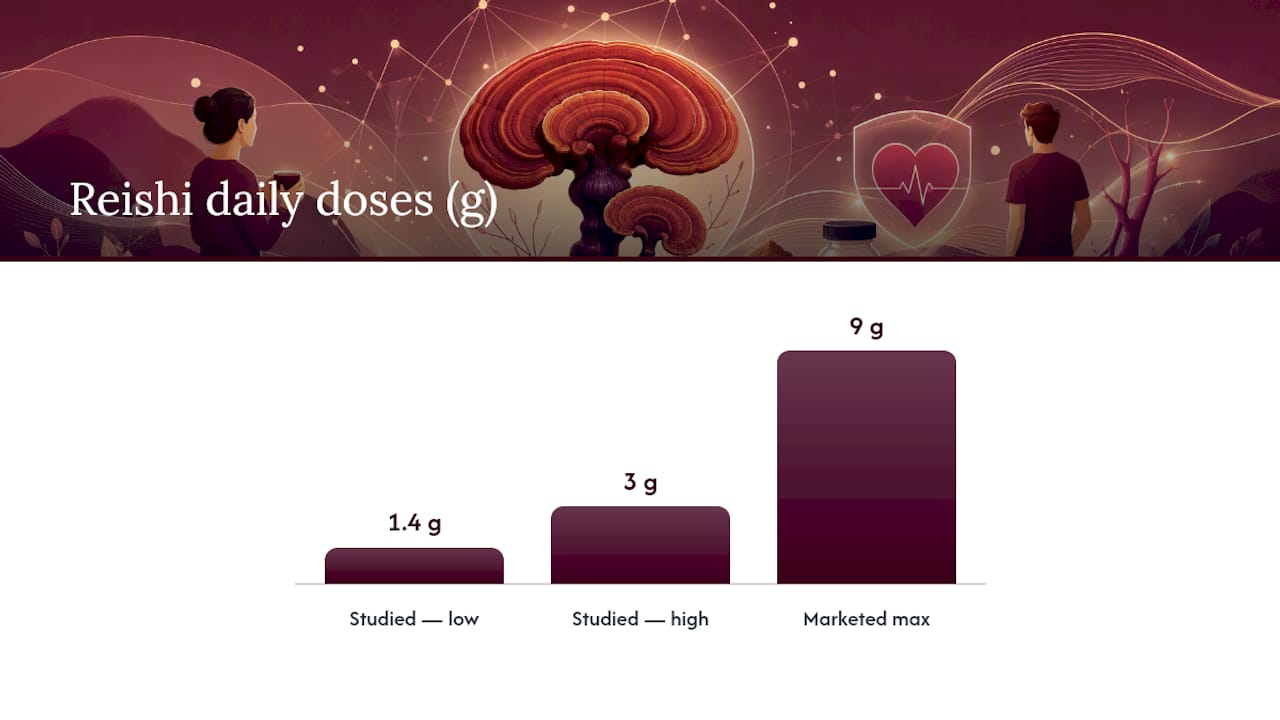
Most human trials that measured cardiovascular outcomes used 1.4 to 3 grams of dried extract per day, typically for three to six months. That’s the range with any research backing behind it. Walk into a supplement store or browse online, though, and you’ll find consumer products ranging far beyond that, with some marketed at doses up to 9 grams a day. Higher isn’t automatically better, and it definitely isn’t automatically studied.
Product form varies just as widely:
- Dried whole mushroom powder, generally the least concentrated
- Hot-water extracts, which pull out polysaccharides efficiently
- Concentrated or auto-digested extracts, which may concentrate ACE-inhibitory peptides
- Spore powder, a different preparation with its own potency profile
Pro Tip: Before buying, check the extract ratio on the label (something like 8:1 or 10:1), confirm there’s a batch-specific certificate of analysis from third-party testing, and look for standardization language rather than a vague “proprietary blend.” Products vary enormously in potency, and choosing an extract with transparent sourcing makes it far easier to know what you’re actually taking.
Which Studies Actually Back the Reishi Blood Pressure Claim?
The research supporting reishi’s effect on blood pressure splits cleanly into two tiers, and conflating them is where a lot of marketing goes wrong.
At the mechanistic tier, an auto-digested reishi (ADR) extract produced a systolic blood pressure reduction of up to 34.3 mmHg, a 19.5% drop, within four hours in hypertensive rats. That’s a substantial acute effect, and it’s the study most often cited to explain the ACE-inhibition mechanism. It’s also, worth repeating, a rodent study using a specific concentrated extract, not a commercial capsule.
At the human tier, results are far less dramatic. Some small trials report modest blood pressure changes; others find nothing distinguishable from placebo. The systematic review covering these trials concluded the evidence remains inadequate to recommend Ganoderma lucidum for cardiovascular risk reduction.
| Evidence type | Population | Reported effect | Key limitation |
|---|---|---|---|
| ADR extract, acute dosing | Hypertensive rats | Up to 34.3 mmHg systolic drop at 4 hours | Animal model; single extract type |
| Small human trials, 1.4–3 g/day | Adults, 12–24 weeks | Mixed; some modest reduction, some none | Small samples, short follow-up |
| Systematic review synthesis | Pooled human trials | Insufficient evidence for BP benefit | Heterogeneous preparations, publication bias risk |
Three limitations show up across nearly every human study in this space: small sample sizes that can’t detect modest effects reliably, short follow-up windows that miss long-term outcomes, and wildly inconsistent extract preparations that make pooling results across trials almost meaningless. Add in the usual publication bias that favors positive findings, and you get a research landscape that looks promising at the mechanism level and murky at the clinical level.
How to Talk to Your Clinician About Reishi and Monitor Safely
Bringing this up with your doctor doesn’t need to be awkward, and it shouldn’t be optional if you’re on any blood pressure medication. Give them specifics: the exact product name, whether it’s a hot-water extract or auto-digested formula, your daily dose, how long you’ve taken it, and any third-party test results printed on the label or available from the manufacturer.
A simple monitoring plan works better than guesswork:
- Check blood pressure twice daily for the first two weeks after starting or stopping reishi
- Recheck twice daily for a week after any change in your medication dose
- Watch for dizziness, fainting, unusual fatigue, or a resting blood pressure that drops noticeably below your normal range
- Contact your provider immediately if any of those symptoms appear
If surgery is on the calendar, stop reishi roughly two weeks beforehand and tell your surgical and anesthesia team you were taking it, since the same ACE-inhibitory and antiplatelet-adjacent activity that might help blood pressure can also complicate bleeding risk and blood pressure control under anesthesia.
Pro Tip: When comparing products, prioritize brands with US-based manufacturing, published third-party testing, and vegan, non-GMO sourcing. Those aren’t marketing fluff. They’re the label details that actually tell you whether a batch was verified for what it claims to contain. For more on why formula quality varies this much between brands, adaptogen evidence for stress covers a parallel case worth understanding.
A Clinically Grounded Verdict on Reishi and Blood Pressure
I don’t think reishi is snake oil, and I don’t think it’s a hypertension cure. Both extremes miss what the research actually shows. The ACE-inhibitory mechanism is real and measurable in animal studies. The human trial data is honestly too inconsistent to build a treatment plan around. What I’d tell anyone reading this: reishi might be worth exploring as part of a broader wellness approach, but it is not a substitute for your prescribed antihypertensive, and it deserves a real conversation with your prescriber before it touches your daily routine. If you want a mushroom supplement built with transparency rather than vague promises, that’s a reasonable thing to look for. Just keep your doctor in the loop.
— Hugo
Where CP-1 Fits if You Want a Quality-Tested Mushroom Supplement
If you’re drawn to reishi for its broader wellness reputation rather than a specific blood pressure fix, CP-1’s chewable gummy combines reishi extract with NMN, lion’s mane, turkey tail, and CoQ10 to support cellular energy, immune health, and mental clarity, not blood pressure treatment.
Every batch is made with care, third-party tested, uses vegan and non-GMO ingredients, and does not hide contents behind a vague “proprietary blend.” That’s the label transparency this article keeps pointing back to. CP-1 isn’t positioned as a hypertension remedy, and it shouldn’t replace anything your doctor prescribed for blood pressure control. If you’re on antihypertensives, blood thinners, or diabetes medication, check with your prescriber before adding any reishi-containing supplement to your routine. If you’re simply looking for a mushroom formula built with real dosing and real testing behind it, visit the CP-1 product page to see the full ingredient breakdown and get started.