Reishi can cause common, usually mild side effects like nausea and dry mouth, and in rare cases, it has been linked to serious liver injury. Most people tolerate it fine. Some people should not touch it at all without talking to a doctor first, and that distinction matters more than the marketing on most supplement bottles ever admits.
Here’s what shows up most often when people take reishi:
- Nausea and stomach upset
- Dizziness
- Dry mouth, throat, or nasal passages
- Skin rash or itching
- Headache
- Insomnia
- Chronic diarrhea (usually with long-term powdered forms)
If you’re on blood thinners, scheduled for surgery, pregnant or breastfeeding, dealing with low blood pressure, or immunocompromised, talk to a clinician before you start. The Merck Manual’s consumer guide on reishi and Memorial Sloan Kettering’s integrative medicine database both flag this mushroom as something to use carefully, not casually. That’s a real signal when two institutions this different in focus land on the same warning.
Key Takeaways
Reishi’s side-effect profile ranges from common, mild symptoms like nausea and dry mouth to rare but serious liver injury, and the risk depends heavily on form, dose, and who’s taking it.
| Point | Details |
|---|---|
| Common effects are usually mild | Expect possible nausea, dizziness, dry mouth, headache, or stomach upset, especially early on. |
| Liver injury is rare but documented | Powdered whole mushroom used beyond one month carries the clearest hepatotoxicity signal. |
| Interactions are the biggest hidden risk | Blood thinners, blood pressure drugs, diabetes medications, and immunosuppressants all warrant caution. |
| Special populations should avoid it | Pregnancy, breastfeeding, children, bleeding disorders, and pre-surgery patients lack sufficient safety data. |
| Product quality shapes real-world risk | CP-1’s CP-1 supplement uses GMP manufacturing and third-party testing to address the contamination concerns tied to inconsistent reishi sourcing. |
Table of Contents
- What Are the Common Reishi Side Effects?
- Can Reishi Cause Serious Health Problems?
- Does Reishi Interact With Medications?
- Who Should Avoid Reishi Entirely?
- Does the Form You Take Change the Risk?
- How Can You Lower Your Risk if You Try Reishi?
- When Should You Stop Taking Reishi and Seek Care?
- Is Reishi Worth the Risk for Most People?
- A Note on Product Quality if You Decide to Try Reishi
- Frequently Asked Questions
- Sources
What Are the Common Reishi Side Effects?
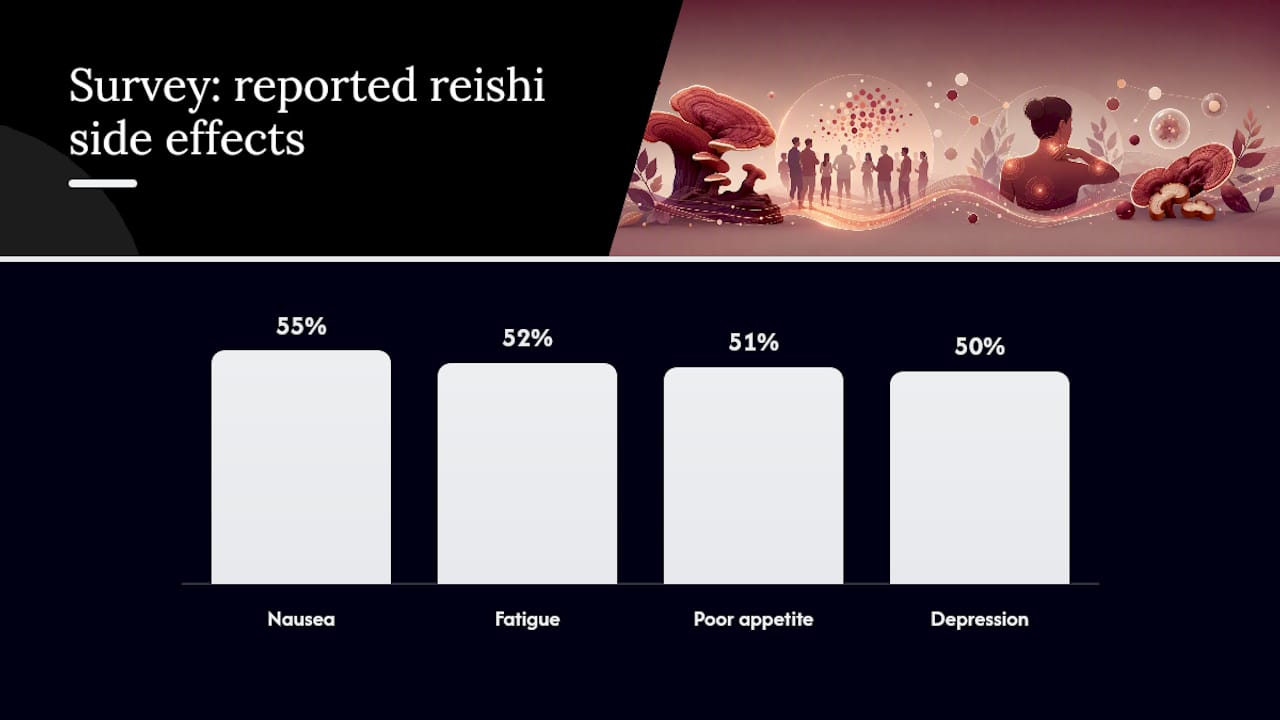
Nausea tops nearly every list of reported reishi side effects, and it’s not a minor footnote. A cross-sectional survey of 1,374 cancer patients taking reishi found that 55% reported nausea, 52% reported fatigue, 51% reported poor appetite, and 50% reported depression. Those numbers come from people already managing serious illness, so the baseline symptom burden runs higher than in a healthy adult. Still, the pattern is consistent with what shows up in general clinical reviews.
Beyond nausea, a broader clinical review documents insomnia, dizziness, dry mouth, throat, and nasal passages, skin rashes, itching, headache, stomach upset, and chronic diarrhea. Memorial Sloan Kettering’s clinical summary adds constipation, pruritus, and vertigo to that list. None of this is exotic. Most of it reads like a rundown of things your body does when it’s adjusting to a new active compound.
Mild symptoms tend to show up within the first days to weeks of starting reishi and often ease as the body adjusts, particularly with standardized extracts. Chronic diarrhea is the outlier. It shows up more with prolonged use of powdered whole mushroom rather than extract, which tells you something important about form mattering as much as dose. Symptom reporting also varies a lot across studies because most of this data comes from surveys and case series rather than controlled trials, so the real-world frequency for a healthy adult without cancer is probably lower than what shows up in patient-population surveys.
Can Reishi Cause Serious Health Problems?
Yes, though the serious end of the spectrum is rare compared to the common nuisance symptoms above. The clearest documented risk is liver injury. The same clinical review covering common side effects also documents rare cases of hepatotoxicity, and Memorial Sloan Kettering’s clinical notes tie documented liver injury and a strange condition called pseudoparasitosis to long-term use of powdered reishi specifically.
Reishi mushroom fragments can structurally resemble certain parasite eggs under microscopy, which has led to cases of pseudoparasitosis. Clinicians have mistaken the mushroom’s cellular debris for parasitic infection in stool samples, a diagnostic pitfall that only surfaces with sustained use of powdered forms.
That’s not a hypothetical. It’s happened, and it illustrates why “natural” doesn’t mean “invisible to a lab test.”
Watch for these red flags, and treat them as a reason to stop and call a doctor, not wait it out:
- Yellowing of the skin or eyes (jaundice)
- Dark or tea-colored urine
- Severe or persistent abdominal pain
- Persistent vomiting
- Unexplained high fever
- Unusual bruising or bleeding
There’s another wrinkle specific to cancer patients. Reishi spore powder can raise serum levels of the tumor marker CA72-4, a lab value used to monitor certain cancers. If you’re being tracked with that marker and taking reishi spore supplements, you could get a false alarm that looks like disease progression when it’s actually the supplement. Memorial Sloan Kettering flags this exact issue in its clinical guidance, which is precisely the kind of detail that gets lost on a supplement label but matters enormously in an oncology follow-up appointment.
Does Reishi Interact With Medications?
Reishi’s most clinically significant property is that it thins blood and can lower blood pressure, and that single fact drives most of the medication warnings you’ll find in clinical literature. According to the Merck Manual, this blood-thinning and blood-pressure-lowering effect means people on anticoagulants, antiplatelets, or blood pressure medications should generally avoid reishi, and anyone scheduled for surgery should stop taking it at least two weeks beforehand.
Here’s where the risk concentrates by medication type:
- Anticoagulants and antiplatelets (like warfarin or aspirin): compounding bleeding risk, since reishi has its own mild blood-thinning effect.
- Blood pressure medications: additive hypotension, meaning your pressure could drop lower than intended.
- Diabetes medications: reishi may lower blood glucose on its own, raising the risk of hypoglycemia when stacked with insulin or oral diabetes drugs.
- Immunosuppressants: reishi’s immune-modulating activity works against the entire point of immunosuppressive therapy, whether that’s for autoimmune disease or transplant maintenance.
| Medication class | Primary concern | Practical action |
|---|---|---|
| Blood thinners / antiplatelets | Increased bleeding risk | Avoid, or discuss with your prescriber before combining |
| Blood pressure medications | Additive drop in blood pressure | Monitor pressure closely, avoid without supervision |
| Diabetes medications | Hypoglycemia risk | Watch blood sugar, adjust only with clinician input |
| Immunosuppressants | Counteracts intended immune suppression | Avoid unless explicitly cleared by your care team |
Reishi doesn’t act alone here, either. Stacking it with other supplements that affect bleeding or blood pressure, like fish oil or ginkgo, compounds the risk rather than canceling it out. If you’re already taking something that thins blood or lowers pressure, adding reishi on top isn’t a wash. It’s an additive effect, and additive effects are exactly what send people to urgent care. Before starting reishi on any prescription regimen, bring your full medication list to your clinician and ask directly whether reishi’s known mechanisms conflict with what you’re taking. Our breakdown of how mushroom extracts interact with the body covers the mechanism side of this in more depth.
Who Should Avoid Reishi Entirely?
Some groups don’t have enough safety data to justify the risk, no matter how mild the typical side effects look on paper. If you fall into one of these categories, the honest answer is to avoid reishi or get explicit clearance first:
- Pregnant or breastfeeding individuals: there’s insufficient safety data to know how reishi’s active compounds affect fetal development or transfer through breast milk.
- Children: pediatric safety data is essentially absent from the clinical literature.
- People with bleeding disorders: reishi’s blood-thinning properties compound an already elevated bleeding risk.
- Anyone with chronically low blood pressure: reishi’s pressure-lowering effect can push already-low readings into symptomatic territory (dizziness, fainting).
- People scheduled for surgery: bleeding risk during and after procedures makes stopping reishi at least two weeks ahead a standard precaution.
- Immunocompromised individuals, including transplant recipients on immunosuppressants: reishi’s immune-stimulating activity can work directly against necessary medical suppression.
The rationale behind each of these isn’t guesswork. It traces directly back to reishi’s documented mechanisms: blood thinning, blood pressure reduction, and immune modulation. Those same mechanisms that supporters point to as benefits are the exact reasons certain populations need to stay away. If you’re not in one of these categories but you’re still nervous, that’s a reasonable instinct. Bring it up at your next appointment rather than guessing.
Does the Form You Take Change the Risk?
Yes, significantly, and this is one of the most underappreciated facts about reishi safety. The three common forms, whole powdered mushroom, standardized extract, and spore powder, don’t carry the same risk profile, even though they’re often marketed interchangeably.
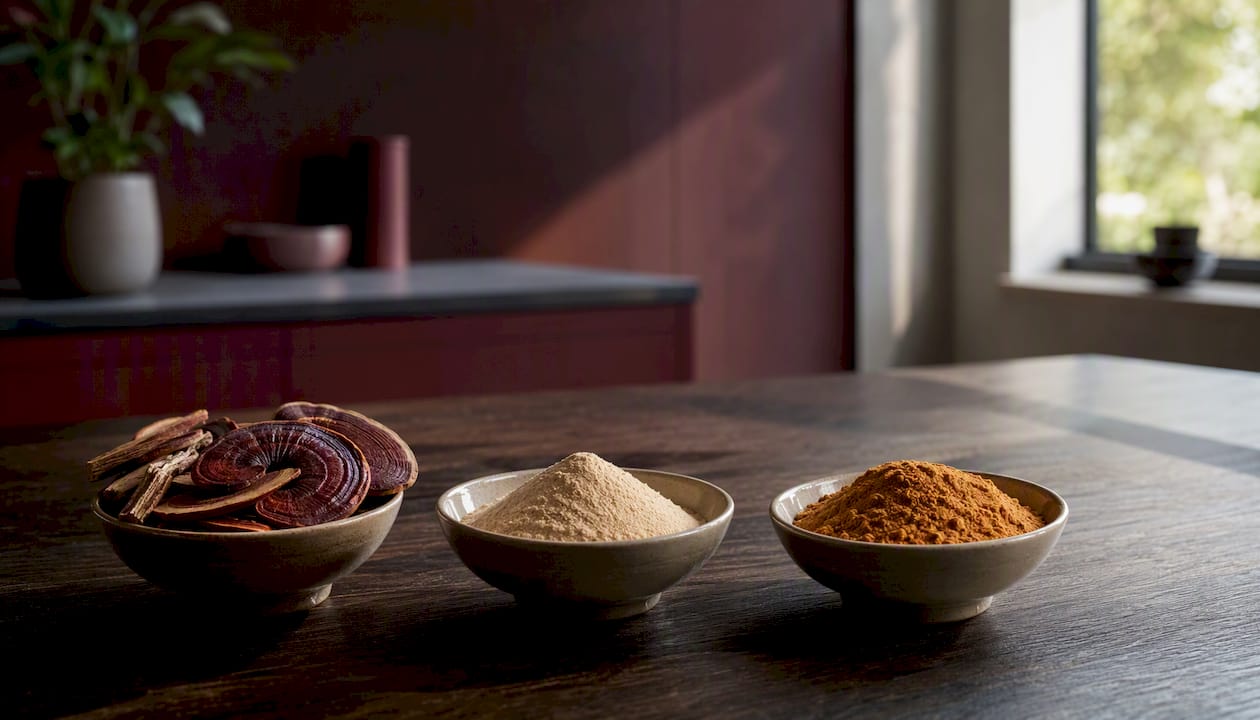
Powdered whole mushroom contains everything, fiber, chitin, and variable concentrations of active triterpenes, and it’s the form most associated with liver toxicity in reports involving extended use. Standardized extracts concentrate specific compounds and tend to carry a cleaner, better-documented safety profile. Spore powder is its own category entirely, tied specifically to the CA72-4 tumor marker issue mentioned earlier.
Duration matters just as much as form:
| Form | Duration guidance | Documented concern |
|---|---|---|
| Standardized extract | Possibly safe for up to one year | Generally better-tolerated with fewer reports of liver injury |
| Powdered whole mushroom | Caution beyond one month | Associated with liver toxicity in reports of extended use |
| Spore powder | Not established for long-term use | Can elevate CA72-4 tumor marker levels |
That one-year versus one-month gap, documented by the Merck Manual, is the single most important safety distinction in this entire topic, and it’s the one most supplement labels never explain. If you’re comparing products, our guide to extract versus whole-mushroom approaches walks through why concentration and processing method change what actually ends up in the capsule.
Pro Tip: If you’re trying reishi for the first time, start with a standardized extract rather than raw powdered mushroom. It’s the form with the cleanest safety data, and it makes dose tracking far easier than eyeballing powder.
If you take reishi daily for more than a few weeks, ask your clinician about a baseline liver panel before you start and a repeat check if you notice fatigue, appetite changes, or any of the red-flag symptoms covered above. That’s not paranoia. It’s the same monitoring logic doctors apply to any supplement or medication with a known, if rare, hepatotoxicity signal.
How Can You Lower Your Risk if You Try Reishi?
Product quality is where most of the preventable risk hides. Regulation in the supplement space is inconsistent, and quality varies widely between manufacturers, which means two bottles labeled “reishi extract” can contain meaningfully different concentrations of active compounds, or worse, contaminants that have nothing to do with reishi at all.
Before you buy, check for:
- Third-party lab testing with a publicly available certificate of analysis (COA)
- GMP (Good Manufacturing Practice) certification
- Clear labeling of extract type and standardized compound percentages
- Transparent sourcing and country of origin
- Explicit labeling of spore powder versus fruiting body extract, since they carry different risk profiles
Start low and go slow. Titrate your dose upward gradually over the first couple of weeks rather than jumping to a full serving on day one, and pay attention to how you feel after each increase. If nausea, dizziness, or a rash shows up, that’s your body telling you to back off before pushing further.
Pro Tip: Keep a simple log for the first month: date, dose, and how you felt that day. It sounds tedious, but if a side effect does show up, you’ll know exactly what changed and when, instead of trying to reconstruct it from memory during an already stressful moment.
“Natural” is not the same as “risk-free.” Reishi is a biologically active compound that affects your liver, blood pressure, and immune system, the same systems that most prescription medications target. Treat it with the same respect you’d give any active supplement, especially if you’re combining it with anything else. Our checklist for reading supplement labels is a useful companion here if you want a repeatable system for evaluating any new product, not just reishi.
When Should You Stop Taking Reishi and Seek Care?
Certain symptoms mean you stop immediately and get medical attention, not wait to see if they pass:
- Jaundice (yellow skin or eyes)
- Severe or worsening abdominal pain
- Dark, tea-colored urine
- Persistent vomiting that won’t resolve
- Unusual bleeding or bruising
If you notice any of these, follow this sequence:
- Stop taking the reishi product immediately.
- Write down the brand, dose, and how long you’d been taking it.
- List any other medications or supplements you’re currently on.
- Contact your clinician and describe the symptoms and timeline clearly.
- Go to the emergency room if symptoms are severe (significant jaundice, intense pain, or heavy bleeding).
Bring the product label or, better, its certificate of analysis to your appointment. A clinician working from “I took reishi” has far less to go on than one working from “I took this specific extract at this specific dose from this lot number.” That detail can meaningfully speed up diagnosis if something is actually going wrong.
Is Reishi Worth the Risk for Most People?
Reishi occupies an odd middle ground in the supplement world. The evidence for meaningful immune or energy benefits in healthy adults is thinner than the marketing suggests, and the safety literature itself acknowledges limited human trials even as it flags real toxicity concerns. That combination, modest evidence for benefit paired with a documented, if rare, liver injury signal, should shift how cautiously you approach this mushroom.
The best candidate for trying reishi is a generally healthy adult who isn’t on blood thinners, blood pressure medication, diabetes medication, or immunosuppressants, who isn’t pregnant or preparing for surgery, and who’s willing to start with a standardized extract at a low dose while paying attention to how their body responds. The worst candidate is someone who stacks reishi onto an existing medication regimen without telling their doctor, assuming that because it comes from a mushroom rather than a pharmacy, it can’t do much. It can. Reishi is an active compound, and the same mechanisms that make it interesting also make it something to plan around rather than casually add to your morning routine.
If you’re already taking something like lion’s mane or turkey tail alongside reishi, the same rule applies: functional mushrooms as a category deserve the same scrutiny you’d give any supplement with documented interactions, not a pass because they sound wholesome.
A Note on Product Quality if You Decide to Try Reishi
If you’ve read this far, you already know reishi’s safety profile depends heavily on form, dose, and where the product actually comes from. That’s exactly why CP-1 built its CP-1 NAD+ Advanced Supplement around transparent sourcing rather than vague “proprietary blend” labeling.
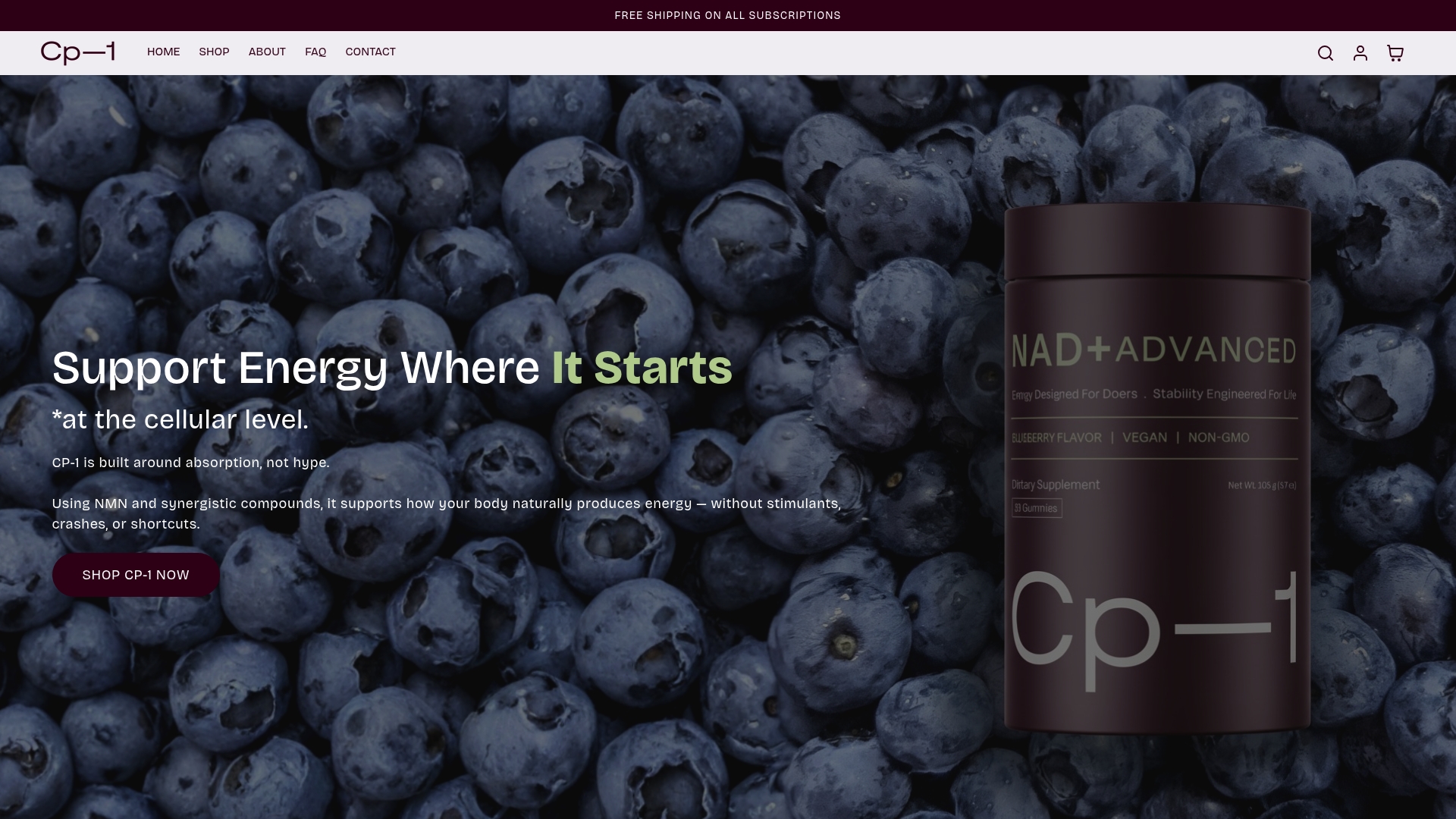
The gummy combines NMN, lion’s mane, reishi, turkey tail, and CoQ10 in a formula manufactured in the US under GMP certification, with third-party testing behind every batch and vegan, non-GMO ingredients listed plainly rather than buried in fine print. That matters because, as covered above, reishi’s risk profile shifts significantly with concentration and contamination, and a certificate of analysis is the one document that actually proves what’s in the bottle instead of what’s printed on it. CP-1 makes that documentation available rather than asking you to take a label at its word, which is a meaningfully different posture than most brands in this category take.
If you’re weighing whether to add reishi to your routine, take a look at the CP-1 landing page to see the full ingredient breakdown, dosing information, and quality documentation before you decide. Reading the label alongside everything you now know about form and duration is the smartest next step you can take.
Frequently Asked Questions
Is reishi safe to take every day? Powdered whole mushroom carries more risk with daily use beyond a month, so form matters as much as frequency.
What are the most common reishi allergy symptoms? Skin rash, itching, and dry mouth or throat are the most frequently reported allergic-type reactions. If you notice hives, swelling, or difficulty breathing, stop the supplement and seek care immediately, since those signs point toward a more significant hypersensitivity reaction.
Does reishi interact badly with lion’s mane or turkey tail? There’s no strong evidence that reishi, lion’s mane, and turkey tail conflict with each other directly. The bigger concern is each mushroom’s individual effect on blood clotting, blood pressure, or immune function when combined with medications, not necessarily with each other.
Can I take reishi if I’m on blood pressure medication? Generally, no, not without clearing it with your prescriber first. Reishi can lower blood pressure on its own, and stacking it with antihypertensive medication risks pushing your pressure lower than intended.
How much reishi is considered a safe starting dose? Clinical literature doesn’t establish one universal dose, since studies vary widely in form and concentration. The safer approach is starting low with a standardized extract, watching for side effects over the first two weeks, and adjusting gradually rather than following a generic recommendation.
This article is general information, not a substitute for advice from a qualified doctor. Consult a qualified healthcare professional about your own circumstances before acting on anything here.
Sources
- Reishi - Special Subjects - Merck Manual Consumer Version
- PubMed — clinical review reporting common side effects and rare hepatotoxicity
- Symptom improvements and adverse effects with Reishi mushroom use: A Cross-Sectional survey of cancer patients
- Reishi Mushroom | Memorial Sloan Kettering Cancer Center
- PubMed — CA72-4 elevation after reishi spore supplementation