
If a supplement carries the USP Verified Mark, independent lab testing has confirmed it actually contains the ingredients on the label, in the amounts stated, without unacceptable levels of contaminants. What it does not confirm is whether the product works for you clinically, and it is not a banned-substance screen for competitive athletes. That distinction matters more than most shoppers realize.
TL;DR:
- USP verification confirms that a supplement contains the labeled ingredients at accurate amounts, meets purity standards, and dissolves properly for absorption.
- The verification process includes audits of manufacturing facilities, laboratory testing of actual product lots, and ongoing surveillance, not a one-time certification.
- The USP mark applies to a specific formula and lot, so consumers should verify the current product’s listing and look for the official printed mark on the label.
- USP does not test for clinical efficacy or screen comprehensively for banned substances, which are critical considerations for athletes and those with specific health conditions.
- To ensure a supplement is currently verified, consumers should search the USP product finder for the exact product, check for the verified mark on the package, and confirm the product’s formulation matches the listing.
Table of Contents
- What Does the USP Verified Mark Actually Verify?
- How Does USP Verify a Dietary Supplement?
- What Does USP Verification Cover, and What Doesn’t It Cover?
- How Do You Confirm a Supplement Is Currently USP Verified?
- Why Do Healthcare Practitioners Recommend USP-Verified Products?
- Why This Matters to Us
- Where CP-1 Fits Into the Quality Conversation
- Sources
- FAQ
What Does the USP Verified Mark Actually Verify?
I’ve spent enough time reading supplement labels to know the industry runs on vague, feel-good phrases. “Third-party tested.” “Clinically studied.” “Premium quality.” None of that means anything unless someone independent actually checked the work. The USP Verified Mark is one of the few labels that does.
USP, or U.S. Pharmacopeia, is a nonprofit scientific organization that sets quality standards for medicines and supplements. Its Dietary Supplement Verification Program checks four specific things before a product earns the mark:
- Identity and potency: the ingredients listed on the label are the ingredients actually in the bottle, at the declared amounts.
- Purity: the product falls within specified limits for contaminants like heavy metals, microbes, and other toxins.
- Dissolution: the pill or capsule breaks down properly so your body can actually absorb what’s inside it.
- Manufacturing compliance: the facility follows Good Manufacturing Practices (GMP), verified through documentation review, not just a self-reported checklist.
That dissolution check is the one most buyers never think about. A supplement can contain the exact right amount of an active ingredient and still fail you completely if the tablet does not break down in your digestive system in time to be absorbed. USP requires performance testing specifically to catch that failure point before it ever reaches your medicine cabinet.
How Does USP Verify a Dietary Supplement?
This is not a one-time inspection or a paid stamp handed out after a phone call. USP runs a genuine, multi-step process, and manufacturers have to keep earning the mark year after year.
- Pre-audit document review. USP requests formulation data, quality-control documentation, and manufacturing records before anyone sets foot in the facility.
- On-site GMP audit. Auditors inspect the manufacturing plant to confirm the facility actually follows the sanitation, equipment, and process standards it claims to.
- Laboratory testing of product lots. USP tests actual batches for identity, potency, purity, and dissolution against its own Dietary Supplements Verification Program standards.
- Resolution with the manufacturer. If a lot fails, the manufacturer has to fix the issue before the process moves forward. Nothing gets waved through.
- Award of the mark, followed by ongoing off-the-shelf surveillance. USP buys products from store shelves periodically, retests them, and re-audits facilities annually to keep the certification active.
That last step is the part most people miss. This isn’t a badge a company earns once and slaps on every future batch forever. It’s a maintained relationship with unannounced sampling built in.
Pro Tip: If a brand advertises “USP verified” but you can’t find that specific product formula on the USP product finder, treat it as a red flag. The mark applies to a specific formula and lot process, not to a company’s entire product line.
What Does USP Verification Cover, and What Doesn’t It Cover?
Here’s where I want to slow down, because this is the part supplement marketing loves to blur.
USP verification confirms label accuracy, contaminant limits, dissolution performance, and GMP compliance. That’s real, meaningful assurance. But it does not confirm that the ingredient inside the bottle actually delivers the health outcome the label implies. A USP-verified magnesium supplement is guaranteed to contain the magnesium it claims. It is not guaranteed to fix your sleep.
It’s also worth knowing that USP does not screen comprehensively for banned athletic substances. If you’re a competitive athlete or anyone subject to routine drug testing, that’s a completely different risk category than label accuracy.
What USP covers:
- Label accuracy for ingredients and dosages
- Purity limits for specified contaminants
- Dissolution and performance standards
- GMP-compliant manufacturing
What it doesn’t cover:
- Clinical efficacy claims
- Comprehensive banned-substance screening for sport
NSF Certified for Sport screens for over 290 banned substances and exists specifically for athletes who need to avoid a positive drug test. If you’re managing a chronic condition or just want confidence your gummy actually contains what it says, USP is the right seal. If you’re competing under a testing body’s rules, you need NSF Certified for Sport on top of, or instead of, USP.
How Do You Confirm a Supplement Is Currently USP Verified?
You can check this in about ninety seconds, and you should, every time you’re deciding on a new bottle.
- Look at the label itself. The USP Verified Mark is a specific printed logo, not just text claiming “verified.” If you don’t see the actual mark, the product isn’t verified, no matter what the front-of-bottle copy implies.
- Search the official product finder. USP’s Quality Supplements database lists every currently verified formula. Numerous different supplement formulas carry the mark today, and they’re sold through major retailers, pharmacies, and online stores. Search the exact product name, not just the brand.
- Check that it’s the same formula. Brands reformulate products constantly. A verified label from two years ago doesn’t guarantee the current version on the shelf still qualifies.
- If you’re buying online and can’t confirm visually, contact the manufacturer directly and ask for test documentation. Legitimate verified brands can point you to their listing without hesitation.
Watch for red flags: vague “third-party tested” language with no named organization, missing lot numbers, or a product that claims USP verification but doesn’t appear anywhere in the official finder. Reading labels carefully is a habit worth building generally, and our supplement label reading checklist walks through the other claims worth scrutinizing beyond certification marks.
Why Do Healthcare Practitioners Recommend USP-Verified Products?
A representative survey of dietitians, physicians, pharmacists, and nutritionists found the USP Verified Mark ranked as their top recommended seal when advising patients on supplement choice. That matters most for people managing narrow therapeutic windows, drug interactions, or pregnancy, where dosing consistency isn’t a nice-to-have. A blood thinner interacting with an unverified herbal supplement is not a hypothetical risk.
Practitioners lean on USP because it reduces the unknowns in both content and absorption. When a patient’s dosing needs to stay predictable, a verified product removes one major variable from the equation.
Why This Matters to Us
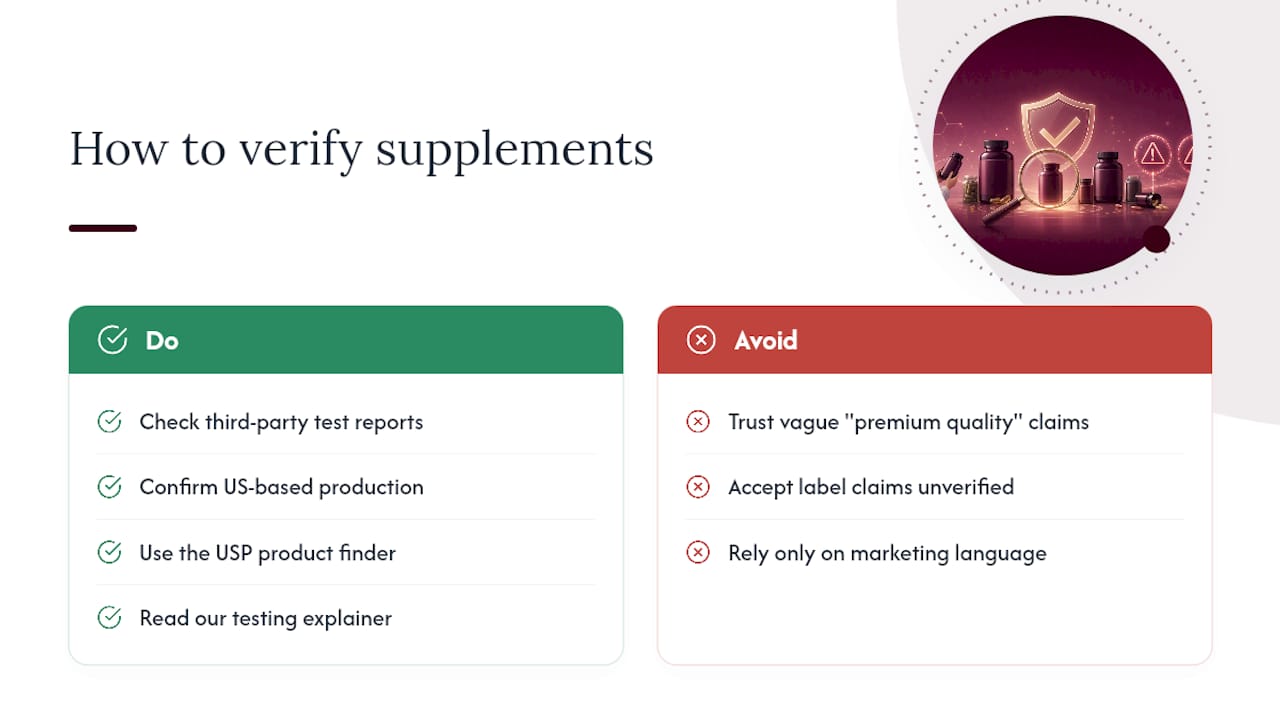
I started paying close attention to third-party verification because the supplement industry is full of formulas built for a marketing deck, not for the person swallowing them. Label claims that don’t match lab reality aren’t rare. They’re common enough that regulators and practitioners keep flagging the same problem year after year.
That’s why we talk openly about our own manufacturing choices, from US-based production to third-party testing practices, rather than hiding behind vague “premium quality” language. I’d rather you check our claims than take our word for them. Use the USP product finder and our own third-party testing explainer to verify any claim, ours included, before you trust it with your health.
— Hugo
Where CP-1 Fits Into the Quality Conversation
CP-1’s NAD+ Advanced Supplement is manufactured under quality-focused production using vegan, non-GMO ingredients including NMN, lion’s mane, reishi, turkey tail, and CoQ10. We built it with the same underlying concern this whole article covers: knowing what’s actually in the product you’re taking, and why it was dosed the way it was.
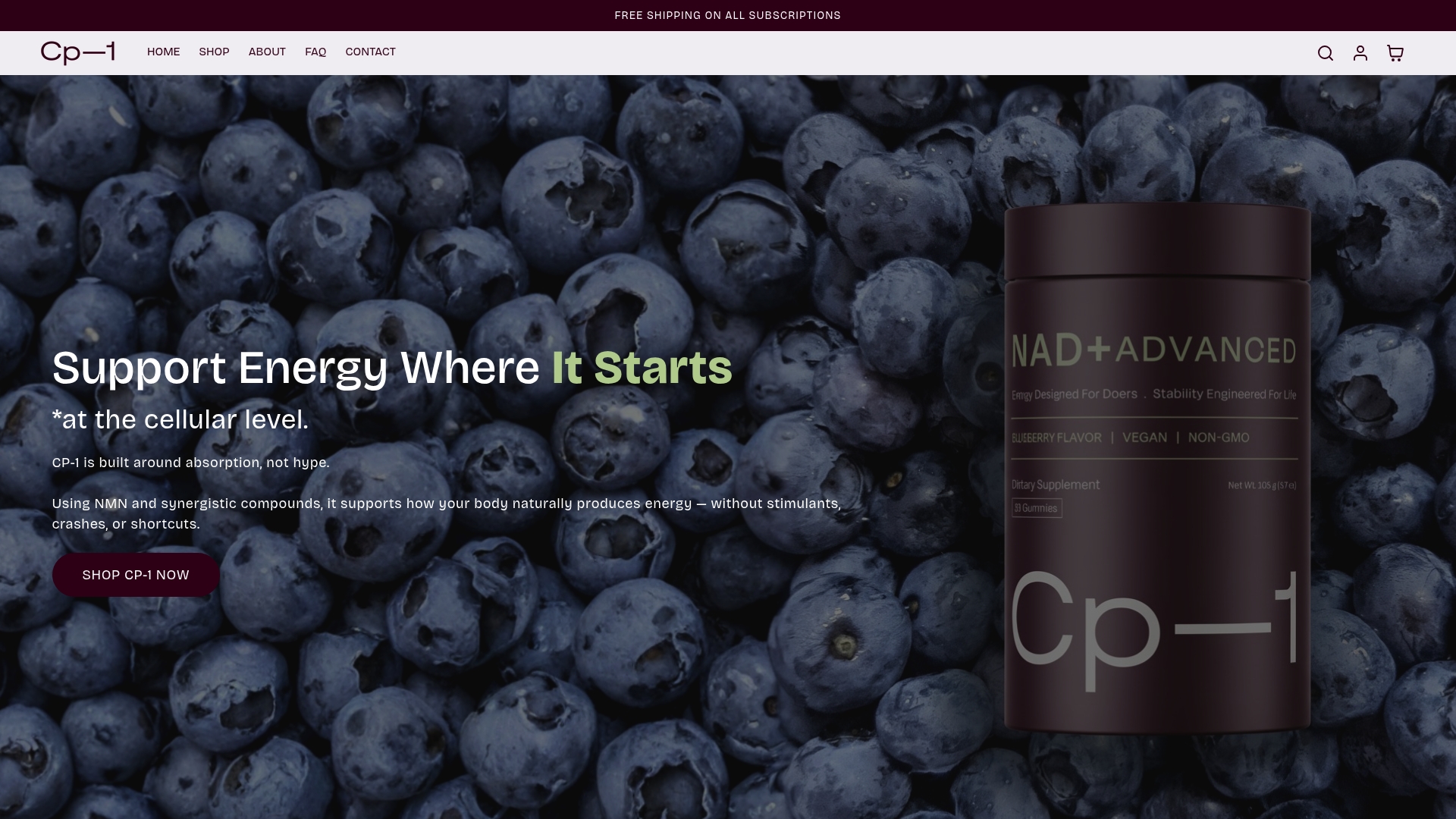
We’re not claiming USP verification here, and we won’t pretend otherwise. What we can offer is transparency about manufacturing standards and testing practices, so you’re not relying on marketing copy to make that call. Our piece on why US-made supplements matter breaks down the manufacturing signals worth checking on any product, not just ours. Broader industry context on ingredient sourcing commitments shows this scrutiny is spreading across the category, which is good news for anyone tired of guessing. If cellular energy and cognitive support are on your radar, visit the CP-1 product page to review our sourcing and testing details before you decide.
This article is general information, not a substitute for advice from a qualified doctor. Consult a qualified healthcare professional about your own circumstances before acting on anything here.
Sources
FAQ
What does it mean if a supplement is USP verified?
It means an independent audit and lab testing process confirmed the product contains the labeled ingredients at the stated amounts, meets purity limits for specified contaminants, and passes dissolution testing so your body can absorb it.
Is USP verification legit?
Yes. It involves facility GMP audits, documentation review, laboratory testing of actual product lots, and ongoing off-the-shelf surveillance with annual re-evaluation, not a one-time paid stamp.
Are Nature Made supplements USP verified?
Some Nature Made products do carry the USP Verified Mark, but not the entire line. Check the specific product on the USP product finder rather than assuming brand-wide coverage.
What is the most trustworthy supplement company?
There’s no single “most trustworthy” brand, since verification applies at the product level, not the company level. The more reliable question is whether the specific formula you’re buying carries the USP Verified Mark or another recognized seal like NSF Certified for Sport for sport-specific needs.
Does USP verification prove a supplement works?
No. USP confirms label accuracy, purity, and dissolution performance, not clinical efficacy. A verified product is guaranteed to contain what it claims; whether that ingredient delivers a specific health benefit for you is a separate question.