

Your Practical Guide to Natural Energy Support
Natural energy support is the ability to maintain physical stamina and mental clarity through safe, evidence-based lifestyle choices rather than relying on artificial stimulants. Most people reach for caffeine or sugar when their energy crashes. That’s a short-term fix with a long-term cost. The real solution is building a system where sleep, nutrition, hydration, movement, and stress management work together. This guide to natural energy support breaks down each pillar, explains the science in plain terms, and gives you a practical framework you can start using today.
What is natural energy support and why does it matter?
Natural energy support is the practice of fueling your body’s own energy systems through lifestyle choices rather than synthetic stimulants. The industry term for this is cellular energy optimization, which refers to improving how your mitochondria produce adenosine triphosphate (ATP), the molecule your cells use as fuel. When your mitochondria work well, you feel alert, focused, and physically capable without needing a stimulant to get there.
The reason this matters is simple. Stimulants mask fatigue. They do not fix it. When the effect wears off, your energy debt remains. A systems-based approach to natural energy treats the root causes: poor sleep, nutritional gaps, dehydration, sedentary behavior, and unmanaged stress. Address those, and sustained energy becomes the default, not the exception.
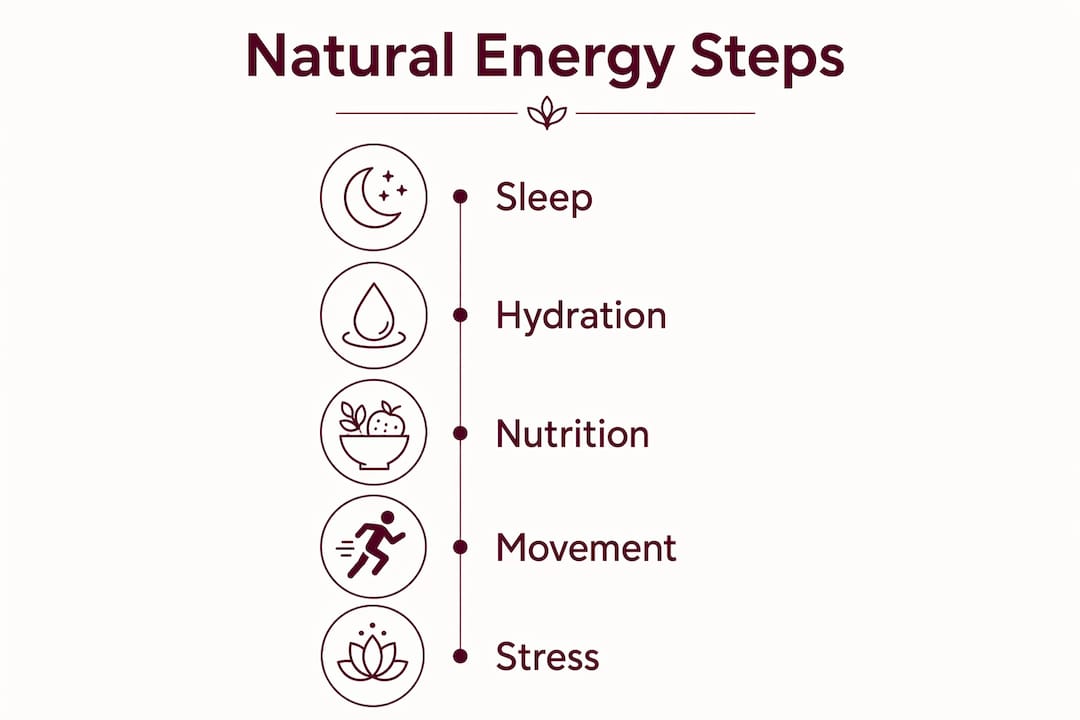
The five pillars covered here are not independent tips. They reinforce each other. Better sleep improves your ability to exercise. Exercise improves sleep quality. Hydration sharpens focus, which makes stress easier to manage. That interconnection is the core insight. Isolated tactics rarely stick. A system does.
How does sleep quality impact natural energy support?
High-quality sleep of 7–9 hours is the single most powerful lever for natural energy. No supplement, workout, or nutrition plan compensates for chronic sleep deprivation. Sleep is when your body repairs cells, clears metabolic waste from the brain, and resets the hormonal signals that govern energy the next day.
During deep sleep stages, your brain runs a cleaning process called glymphatic clearance. It flushes out waste proteins that accumulate during waking hours. Disrupted sleep leaves those proteins behind, which is why poor sleep feels like mental fog, not just tiredness. Your circadian rhythm also controls cortisol and melatonin release. Cortisol peaks naturally in the morning to drive alertness. Melatonin rises at night to signal rest. When your sleep schedule is inconsistent, those hormones misfire, and your energy pattern becomes unpredictable.
Common mistakes that sabotage sleep quality include:
- Scrolling on a phone or tablet within 60 minutes of bedtime (blue light suppresses melatonin)
- Keeping the bedroom above 68°F (cooler rooms support deeper sleep stages)
- Drinking caffeine after 2:00 PM (caffeine has a half-life of 5–6 hours)
- Inconsistent wake times on weekends, which shifts your circadian rhythm by days
Pro Tip: Set your alarm for the same time every day, including weekends. Consistent wake time is the fastest way to anchor your circadian rhythm and stabilize morning energy.
What nutrition and hydration habits best support natural energy?
Your cells produce ATP through a process that requires specific micronutrients. Without them, energy metabolism slows regardless of how many calories you eat. The key nutrients for cellular energy production are iron, magnesium, vitamin B12, vitamin D, folate, and CoQ10.
Iron deficiency anemia is one of the most common and preventable causes of fatigue. Iron-rich foods include lean meat, spinach, and legumes. Supplementing without testing first is a mistake because excess iron causes its own problems. The same logic applies to B12, vitamin D, and magnesium. Targeted blood testing before supplementing is the responsible approach. It tells you exactly what your body needs rather than what a marketing label claims you need.
CoQ10 deserves special attention. It sits at the center of mitochondrial energy production. The reduced form, ubiquinol, absorbs better than standard CoQ10, especially for people over 40 or those taking statins. CoQ10 absorbs best when taken with a fat-containing meal. Timing and food pairing matter as much as the dose.
| Nutrient | Energy role | Best food sources |
|---|---|---|
| Iron | Oxygen transport to cells | Lean meat, spinach, lentils |
| Magnesium | ATP synthesis and muscle function | Nuts, seeds, dark leafy greens |
| Vitamin B12 | Red blood cell production | Eggs, dairy, fortified foods |
| CoQ10 | Mitochondrial electron transport | Fatty fish, organ meats |
| Vitamin D | Hormonal signaling and immune function | Sunlight, fatty fish, fortified milk |
Hydration is the most overlooked factor in energy management. Mild dehydration of just 1–2% fluid loss produces symptoms that feel identical to fatigue and brain fog. Most people reach for coffee when they are actually thirsty. Drinking 16 oz of water within 30 minutes of waking, and consistently throughout the day, improves cognitive performance and physical output without any stimulant.
Pro Tip: Eat balanced meals that combine protein, healthy fats, and complex carbohydrates. That combination slows glucose absorption and prevents the blood sugar spikes and crashes that cause mid-afternoon energy slumps.
How do movement and natural light enhance energy levels naturally?
Movement and sunlight are two of the most underused natural energy boosters available to you. They work on the same biological system: your circadian rhythm and mitochondrial function. Used together, their effect compounds.

Regular movement increases mitochondrial density in muscle cells. More mitochondria means more ATP production capacity. Exercise also triggers endorphin release, which improves mood and reduces the mental fatigue that drains motivation. You do not need a gym. A 10-minute walk after meals, a set of bodyweight squats between tasks, or a bike ride in the morning all count. These short bursts of activity are called movement snacks, and they prevent energy slumps more reliably than caffeine by continuously stimulating blood flow and mitochondrial activity.
Morning sunlight adds another layer. 10–15 minutes of direct sunlight within the first hour of waking resets your circadian clock by modulating melatonin and triggering the cortisol awakening response. That cortisol spike is natural and healthy. It signals your body to be alert and ready. Skipping morning light and going straight to a screen delays that signal and leaves you feeling sluggish for hours.
Here is a practical way to build both habits into your morning:
- Wake at the same time every day and go outside within 15 minutes.
- Walk for 10–15 minutes in direct sunlight, even on overcast days.
- Eat breakfast after your walk to align food intake with your active circadian phase.
- Add a second movement snack at midday, even just 5–10 minutes of walking or stretching.
- Avoid intense exercise within 2 hours of bedtime to protect sleep quality.
Overexertion is a real risk. Training too hard without adequate recovery suppresses immune function and raises cortisol chronically. Consistency at moderate intensity beats occasional extreme effort every time.
What stress management practices support lasting natural energy?
Managing stress is not optional if you want sustained energy. Even if your sleep, nutrition, and movement are dialed in, chronic stress elevates cortisol beyond its natural peak times and depletes your energy reserves faster than any other factor. The fight-or-flight response is designed for short bursts. When it runs continuously, it burns through glucose, disrupts sleep, and impairs recovery.
Mindfulness and breathwork are the most accessible tools for interrupting that stress response. A simple 4-7-8 breathing pattern (inhale for 4 counts, hold for 7, exhale for 8) activates the parasympathetic nervous system within minutes. Meditation does not require an hour. Even 5 minutes of focused breathing in the morning reduces cortisol reactivity throughout the day.
Decision fatigue is a less obvious energy drain. Every choice you make draws on the same mental fuel. Simplifying decisions, batching similar tasks, and setting clear stopping points for work all protect cognitive energy. Strategies that support stress management include:
- A 10-minute digital detox before meals to reduce mental load
- Time-blocking work sessions with scheduled breaks to prevent sustained cortisol elevation
- Gentle movement like yoga or walking as an active recovery tool
- A consistent wind-down routine at night to signal the nervous system to shift out of high alert
Pro Tip: Treat your stress management practice the same way you treat brushing your teeth. It is not something you do when things get bad. It is a daily maintenance habit that prevents the problem from building.
How to create a personalized daily routine for natural energy
A personalized routine works because it removes the need to make energy decisions in the moment. You build the system once, then let it run. The goal is habit stacking: attaching new behaviors to existing anchors so they happen automatically.
A sample framework for a natural energy day looks like this. Wake at the same time, go outside for morning light, drink 16 oz of water, eat a balanced breakfast with protein and healthy fats, and complete your most demanding mental work during your peak alertness window (typically mid-morning). Add a movement snack at lunch. Eat a balanced midday meal. Use a brief breathwork or mindfulness practice in the early afternoon to prevent the cortisol dip from becoming a crash. Finish work at a set time, eat dinner at least 2 hours before bed, and begin your wind-down routine 60 minutes before sleep.
Consistent daily routines, including fixed wake times and hydration habits, anchor the circadian rhythm and compound into lasting vitality over weeks. The benefits are not immediate. They build. That is the point.
Common implementation challenges and how to address them:
- Inconsistency on weekends: Keep wake time within 30 minutes of your weekday time to avoid circadian drift.
- Skipping hydration: Keep a water bottle visible on your desk as a physical cue.
- Stress overriding routine: Schedule stress management practices first, before they get crowded out.
- Expecting fast results: Track energy on a simple 1–10 scale daily. Patterns become visible within two weeks.
The natural energy support workflow that works long-term is not the most aggressive one. It is the one you actually maintain.
Key Takeaways
Natural energy support works best as an integrated system where sleep, nutrition, hydration, movement, and stress management reinforce each other rather than operating as isolated habits.
| Point | Details |
|---|---|
| Sleep is non-negotiable | 7–9 hours of quality sleep drives cellular repair and hormonal balance for daily energy. |
| Test before supplementing | Blood testing for iron, B12, magnesium, and vitamin D prevents wasted cost and complications. |
| Hydration precedes stimulants | A 1–2% fluid loss mimics fatigue; drink water before reaching for caffeine. |
| Morning light resets your clock | 10–15 minutes of sunlight within the first hour of waking aligns cortisol and melatonin. |
| Consistency compounds results | Daily routine anchors circadian rhythm and builds lasting vitality over weeks, not days. |
What I’ve learned about energy that most guides get wrong
Most energy advice treats fatigue as a single problem with a single fix. Take this supplement. Drink more coffee. Sleep earlier. That framing is wrong, and I’ve seen it fail people repeatedly.
The real issue is that energy is a system output. When it drops, something upstream broke down. Maybe it was three nights of poor sleep. Maybe it was a week of skipped meals and high stress. Maybe it was a slow-building iron deficiency that nobody caught because nobody tested for it. The fix is never one thing.
What I’ve found is that people who build real, lasting energy do two things differently. First, they treat their routine as infrastructure, not motivation. They do not rely on feeling like it. Second, they pay attention to feedback. They notice what drains them and adjust. That kind of self-awareness is more valuable than any supplement stack.
The supplement industry sells urgency. It tells you that you need something external to function. I disagree with that framing. Supplements like NMN, CoQ10, and lion’s mane mushroom extract can genuinely support cellular energy and cognitive function when used correctly. But they work on top of a solid foundation, not instead of one. If your sleep is broken and your stress is chronic, no capsule fixes that.
Build the foundation first. Then layer in targeted support. That sequence matters more than any single ingredient.
— Hugo
Cp-1 and the science of cellular energy support
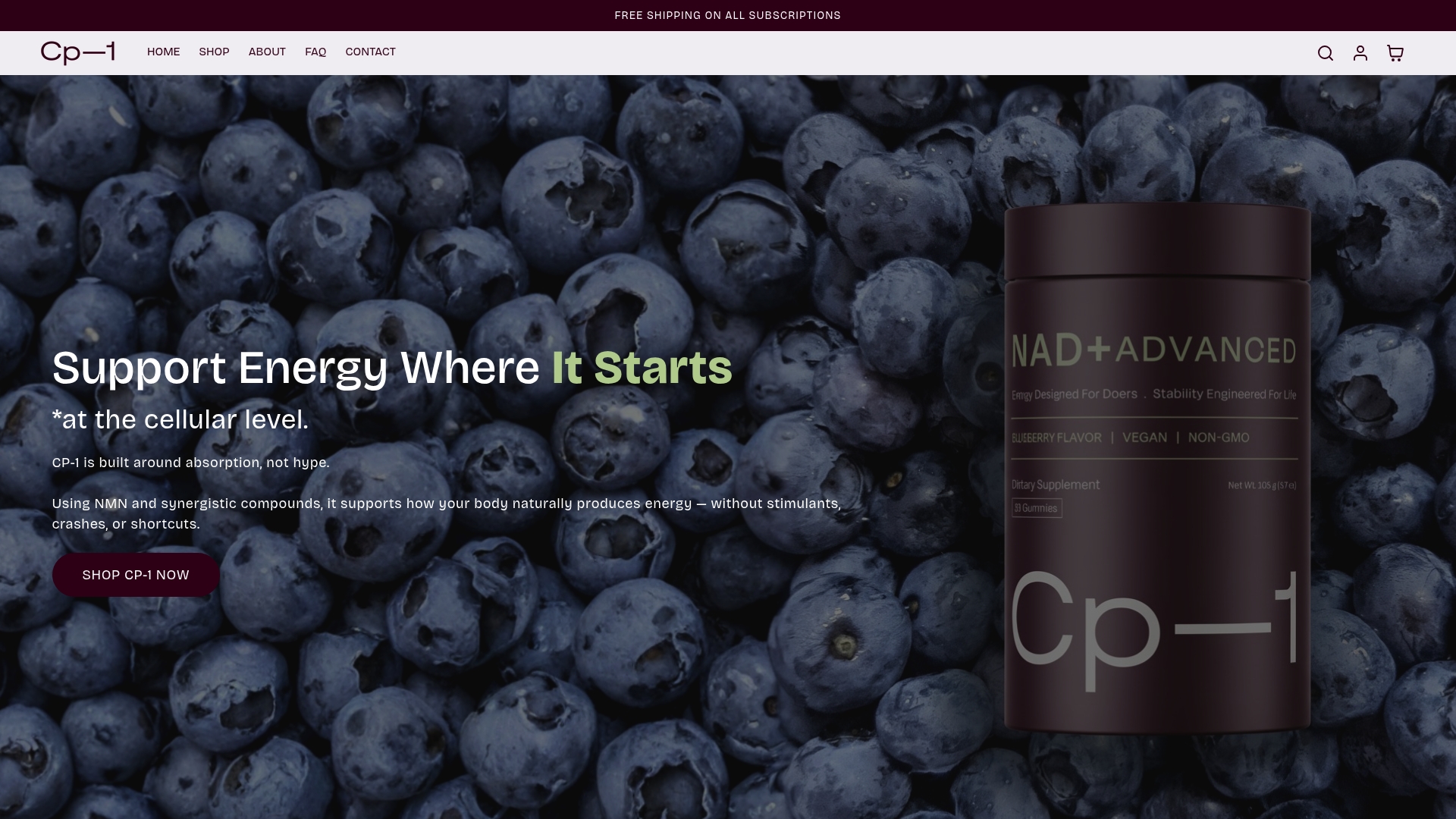
Cp-1 was built for people who are serious about natural energy and done with products that overpromise. The CP-1 supplement combines NMN, CoQ10, lion’s mane mushroom extract, reishi mushroom extract, and turkey tail mushroom extract. These ingredients target NAD+ production, mitochondrial function, and stress resilience at the cellular level. Every batch is third-party tested, vegan, non-GMO, and manufactured in the US.
If you want to go deeper on building your energy system, the Cp-1 blog covers energy optimization step by step and mitochondrial health in practical detail. When you are ready to add targeted cellular support to a solid lifestyle foundation, CP-1 is available at cp-1.com.
FAQ
What is natural energy support?
Natural energy support is the practice of maintaining physical and mental stamina through lifestyle habits like sleep, nutrition, hydration, movement, and stress management rather than artificial stimulants. The goal is to improve how your cells produce ATP, the body’s primary energy molecule.
How many hours of sleep do I need for natural energy?
The American Academy of Sleep Medicine recommends 7–9 hours of quality sleep per night for adults. Consistent sleep duration and a fixed wake time are the two most impactful factors for stable daily energy.
Can dehydration cause fatigue?
Yes. A fluid loss of just 1–2% of body weight produces symptoms that feel like fatigue and brain fog. Drinking water consistently throughout the day, starting with 16 oz upon waking, addresses this before it becomes a problem.
Should I take energy supplements without testing first?
No. Blind supplementation without blood testing for iron, B12, magnesium, and vitamin D often leads to wasted money or unintended complications. Testing first identifies actual deficiencies and makes supplementation targeted and effective.
How long does it take to see results from lifestyle changes?
Most people notice measurable improvements in energy within two to four weeks of consistent routine changes. Tracking energy daily on a simple scale helps you identify which habits are making the biggest difference.