
Most people assume all caffeine is basically the same. A cup of coffee, a pre-workout scoop, an energy drink — just pick your flavor, right? That assumption is costing athletes and biohackers real performance gains. Caffeine anhydrous is not the same compound you’re sipping from a mug. It’s a dehydrated, highly concentrated crystalline powder that absorbs faster, doses more precisely, and hits harder than anything you’d brew in a kitchen. Understanding what makes it different — and how to actually use it correctly — is the difference between strategic supplementation and just winging it.
Table of Contents
- What is caffeine anhydrous? Purity, absorption, and why it matters
- Dosing protocols: Fitness vs focus, safe limits, and real-world numbers
- Risks, side effects, and who should avoid caffeine anhydrous
- Performance: What actual studies show — endurance, strength, and limitations
- Our take: What most guides miss about caffeine anhydrous for natural energy
- Connect with effective energy solutions on cp-1.com
- Frequently asked questions
Key Takeaways
| Point | Details |
|---|---|
| Highly pure and potent | Caffeine anhydrous offers nearly 99% purity and rapid absorption for concentrated effects. |
| Precision dosing matters | Fitness and focus benefits depend on correct dosage, with safety risks if mismeasured. |
| Know limits and risks | Exceeding 400 mg daily or improper measurement can cause severe side effects and even overdose. |
| Personalize your intake | Genetic factors and health status should guide dosing, especially for sensitive individuals. |
What is caffeine anhydrous? Purity, absorption, and why it matters
Caffeine anhydrous is the dehydrated, powdered form of caffeine (1,3,7-trimethylxanthine), a central nervous system stimulant with roughly 99% bioavailability and a peak plasma concentration window of 30 to 60 minutes after ingestion. “Anhydrous” literally means “without water,” which is what distinguishes it from the caffeine you get in coffee, tea, or soft drinks. When caffeine is extracted from plant sources and then dehydrated, you’re left with a pure, white crystalline powder that packs an enormous amount of stimulant activity into a tiny physical volume.
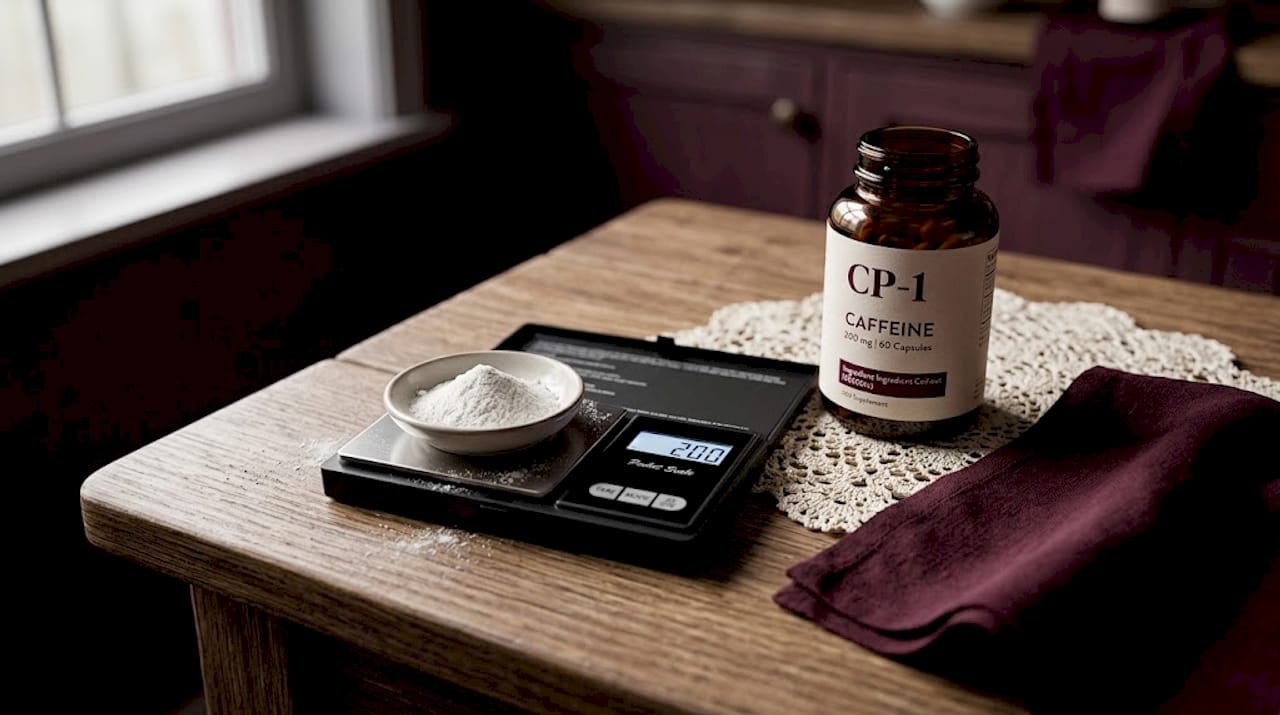
Why does that matter? Because the caffeine in your morning coffee comes bundled with water, acids, antioxidants, and hundreds of other plant compounds that influence how quickly and completely it absorbs. Caffeine anhydrous, by contrast, delivers a consistent, predictable hit. This makes it the go-to ingredient for formulated pre-workouts, nootropic stacks, and clinical research on caffeine performance.
The purity contrast is stark. Regular brewed coffee delivers somewhere around 70 to 140 mg of caffeine per cup depending on brew method, roast, and grind size, and the absorption curve is blunted by the other compounds in the drink. Caffeine anhydrous peaks faster (20 to 60 minutes), is more concentrated at 98 to 99% purity, and carries a significantly higher overdose risk if the raw powder is mishandled. One teaspoon of pure caffeine anhydrous powder contains roughly the equivalent of 28 cups of coffee. That’s not a warning to scare you off — it’s a warning to take precision seriously.
Advantages and risks at a glance
Key advantages of caffeine anhydrous:
- Highly precise dosing when using encapsulated or pre-measured forms
- Faster absorption compared to coffee or tea
- No confounding compounds that alter your baseline energy response
- Consistent, reproducible effects that support performance tracking
- Works synergistically with antioxidants and energy compounds in stacked formulas
Key risks to know:
- Raw powder is extremely dangerous without precise scales
- Narrow margin between an effective dose and a dangerous one
- Potential for tolerance buildup with daily use
- No natural buffer from other plant compounds like those in whole coffee
“Caffeine anhydrous in raw powder form is so concentrated that even a small measurement error can be life-threatening. Stick to encapsulated, pre-dosed products unless you’re using professional laboratory equipment.” — A critical reminder for anyone considering bulk powder purchases.
| Feature | Caffeine anhydrous | Brewed coffee |
|---|---|---|
| Purity | 98 to 99% | Variable (70 to 140 mg per cup) |
| Absorption peak | 20 to 60 minutes | 45 to 90 minutes |
| Dosing precision | Very high (encapsulated) | Low |
| Overdose risk | High (raw powder) | Very low |
| Additional compounds | None | Acids, antioxidants, oils |
Dosing protocols: Fitness vs focus, safe limits, and real-world numbers
Understanding the physical characteristics of caffeine anhydrous is step one. Step two is knowing how much to actually use, when to use it, and what “safe” looks like for your body weight, health status, and goals.
For fitness applications, the evidence-based range is 3 to 6 mg per kilogram of body weight taken 30 to 90 minutes before exercise. For a 70 kg (154 lb) person, that translates to roughly 210 to 420 mg per session. That’s a meaningful range. Someone starting at the low end of 210 mg will feel meaningfully different from someone throwing back 420 mg. Start at the low end and move up only after you know how you respond.
For cognitive enhancement, the dosing is different and typically lower. The sweet spot for focus, reaction time, and mental clarity sits between 50 and 200 mg. Higher doses don’t necessarily produce better cognitive results. In fact, beyond 200 mg for cognitive tasks, many people experience more anxiety and jitteriness than clarity. More is not smarter when it comes to supplementing for cognition.
The broader safety picture is established clearly. The daily safe limit recognized by the NIH, FDA, and EFSA for healthy adults is 400 mg per day. Single dose maximums are generally capped at around 200 to 210 mg (3 mg/kg). Pregnant individuals are advised to stay at or below 200 mg per day total from all sources. These are not suggestions. These are thresholds built from substantial clinical research.
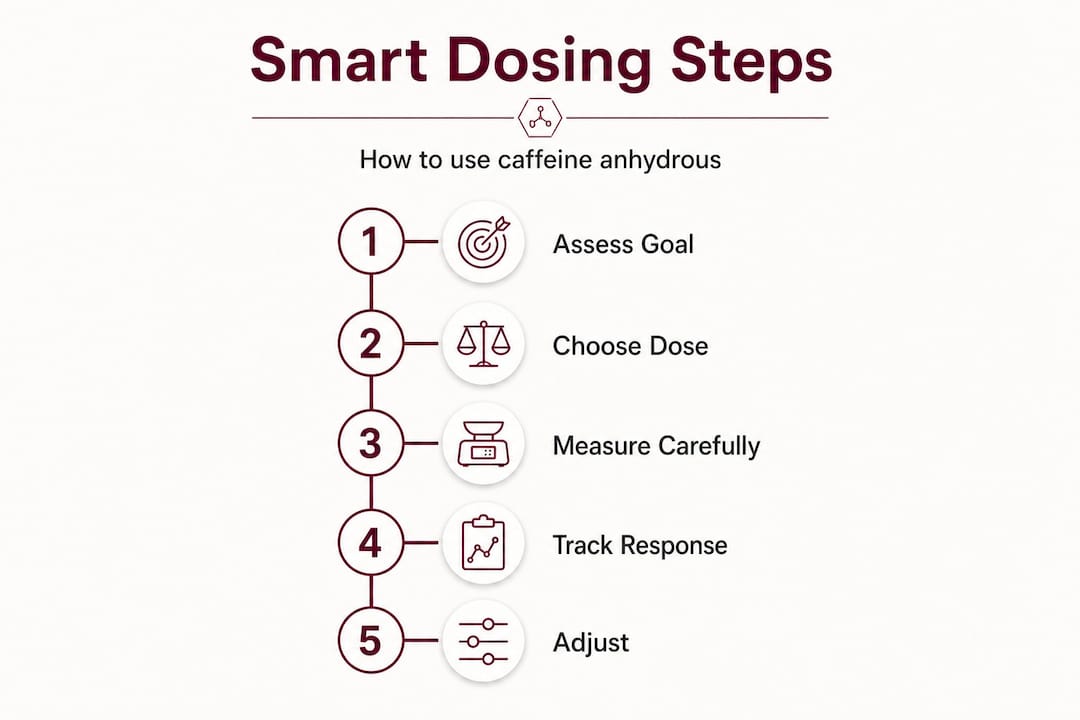
Practical dosing steps for beginners
- Start with a pre-dosed capsule. Never begin with raw powder. Capsules from reputable manufacturers contain a fixed, measured amount per serving.
- Determine your body weight in kilograms. Divide your weight in pounds by 2.2. A 165 lb person weighs 75 kg.
- Begin at 1 to 1.5 mg/kg. For that same 75 kg person, that means 75 to 112 mg as a starting dose.
- Time it correctly. Take your dose 30 to 60 minutes before exercise for pre-workout purposes, or 20 to 45 minutes before a cognitively demanding task.
- Track your response. Monitor energy, focus, heart rate, and any side effects over two to three sessions before adjusting upward.
- Stay within 400 mg total daily. Factor in any caffeine from other sources including coffee and pre-workouts.
Pro Tip: The research on supplements and cognitive performance consistently shows that precise, personalized dosing outperforms “one size fits all” protocols. Use a food scale that reads in 0.001g increments if you’re ever working with powder. Otherwise, stick to capsules.
Risks, side effects, and who should avoid caffeine anhydrous
Dosing protocols matter, but so does knowing when caffeine anhydrous is the wrong tool for the job. This isn’t about fear — it’s about making informed decisions with your own biology.
At typical doses under 400 mg, the side effects are manageable and well-documented: jitters, mild anxiety, elevated heart rate, and potential insomnia if taken too late in the day. These are uncomfortable but not dangerous for most healthy adults. The problems compound quickly above 400 mg. At higher doses, you enter territory that includes severe tachycardia (rapid heart rate), seizures, and at 5 to 10 grams total, potentially fatal toxicity. Pure powder misuse is what creates the most serious risk because a tablespoon of loose powder can easily contain 5,000 mg or more.
The FDA has issued formal warnings about pure caffeine anhydrous powder sold in bulk for exactly this reason. Measurement errors that look small on a spoon can be massive in terms of actual milligram content.
Common side effects at therapeutic doses (under 400 mg):
- Jitteriness or restlessness
- Increased heart rate
- Headache (especially when cutting back)
- Digestive discomfort
- Sleep disruption when taken in the afternoon or evening
- Mild anxiety, especially in sensitive individuals
High-dose warning signs to take seriously:
- Chest pain or palpitations
- Severe anxiety or panic
- Nausea and vomiting
- Confusion or disorientation
- Any symptom that feels alarming
“The FDA has explicitly warned consumers about pure caffeine anhydrous powder, noting that even small measurement errors can cause serious harm or death. Bulk powder is not a product for casual supplement users.”
Beyond the dose-dependent risks, there are specific populations who should avoid caffeine anhydrous or consult a physician before using it. Slow CYP1A2 metabolizers — a genetic variant that affects how quickly your liver processes caffeine — need significantly lower doses to avoid accumulation. People with heart arrhythmias, hypertension, or anxiety disorders are at heightened risk for adverse reactions. Pregnant individuals and children should avoid concentrated caffeine sources entirely.
For anyone who wants sustained energy without the stimulant risk profile, non-stimulant energy alternatives like NMN, CoQ10, and adaptogenic mushrooms offer a fundamentally different pathway to cellular vitality.
Performance: What actual studies show — endurance, strength, and limitations
Here’s where the science gets genuinely interesting. Caffeine anhydrous has a stronger research base behind it than almost any other ergogenic aid in the sports nutrition world. But the data has nuances that most people gloss over.
The broad consensus from meta-analyses is that caffeine anhydrous meaningfully improves endurance performance, time-to-exhaustion tests, power output in strength exercises, reaction time, and working memory under fatigue. These are consistent findings across a wide range of sports and protocols. The effects are real.
Documented performance benefits:
- Endurance: Significant improvement in time-to-exhaustion and time trial performance across cycling, running, and rowing
- Strength and power: Measurable increases in peak torque, repetitions to failure, and sprint power output
- Reaction time: Faster reaction speed, particularly relevant for team sports and combat sports
- Cognitive performance under fatigue: Reduced decline in working memory, attention, and vigilance during prolonged tasks
- Fat oxidation: Modest increase in fat burning during aerobic exercise, which may support body composition goals
The limitations are just as important to understand. Not every study shows benefit, and the Nutrients journal published a CrossFit-specific trial using a high dose of 7 mg/kg that showed no performance benefit and actually a slight decrement in sit-up performance. This matters because protocol sensitivity is real. The dose, timing, training status, and type of exercise all influence whether you see a response.
Pro Tip: Tolerance builds faster than most people realize. If you’re using caffeine anhydrous every training session, you’ll likely see diminishing returns within two to four weeks. Cycling use — such as five days on, two days off, or periodic full week breaks — helps preserve the performance response and keeps it working for natural energy solutions over the long term.
The anecdotal reports you see in fitness communities often inflate the effect size. Caffeine anhydrous will not turn a bad training block into a great one. It will, however, consistently give you a measurable edge when everything else is dialed in.
Our take: What most guides miss about caffeine anhydrous for natural energy
I’ve worked in and around the supplement industry long enough to be frustrated by how caffeine anhydrous is usually presented. Most guides either oversell it as a magic powder or bury the risks so deep that people walk away thinking it’s no different from a cup of coffee. Both approaches fail you.
Here’s what I think actually matters. Precision beats raw dose, every single time. Two people can take the same 300 mg dose and have completely different responses based on body weight, metabolic rate, stress levels, sleep status, and genetic variants. The person who tracks their response, adjusts based on real data, and treats caffeine anhydrous as one tool in a broader strategy will always outperform the person who just hammers their standard scoop.
Encapsulated forms are not a compromise. They’re the smarter choice. Bulk powder appeals to people who want to save money, but the risk-to-reward ratio makes no sense for recreational users or even most serious athletes. A well-formulated capsule from a reputable manufacturer gives you everything you need and eliminates the measurement error risk entirely.
The piece that almost no mainstream guide addresses is how caffeine anhydrous fits into a larger supplement strategy. Used alone, it’s a stimulant with a tolerance ceiling. Stacked thoughtfully with ingredients that support cellular energy strategies — like NMN for NAD+ production, CoQ10 for mitochondrial function, and adaptogens for stress resilience — you’re building actual capacity for energy rather than just borrowing against tomorrow’s reserves. That’s the difference between supplementation that serves you long-term and supplementation that just gets you through today.
Personalized dosing isn’t optional. It’s the foundation. Start at the low end of therapeutic ranges, pay attention to how your body responds, and treat any guide including this one as a starting framework rather than a fixed prescription.
Connect with effective energy solutions on cp-1.com
If this article clarified what caffeine anhydrous actually is and how to use it well, the next question worth asking is what else is supporting your energy and focus at the cellular level. Stimulants get you moving. What keeps the engine running cleanly over time is a different question entirely.
At cp-1.com, we’ve built our supplement lineup around that second question. CP-1 combines NMN, lion’s mane, reishi, turkey tail mushroom extracts, and coenzyme Q10 to support NAD+ production, mitochondrial energy, cognitive function, and immune resilience — all third-party tested, vegan, non-GMO, and manufactured in the US. It’s not a stimulant. It’s foundational support for people who want energy that doesn’t crash and clarity that doesn’t come with anxiety. If you’re serious about performance and longevity, it’s worth exploring what’s possible when your cellular engine is actually running well.
Frequently asked questions
How does caffeine anhydrous compare to coffee or energy drinks?
Caffeine anhydrous is significantly more concentrated and faster absorbed than coffee or energy drinks, allowing precise dosing — but pure powder misuse is far more dangerous, with one teaspoon equivalent to roughly 28 cups of coffee.
Is caffeine anhydrous safe for daily use?
For healthy adults, daily use up to 400 mg per day is within established safety thresholds, but using encapsulated forms and cycling use periodically is strongly advisable to manage tolerance.
Who should avoid caffeine anhydrous?
People with heart conditions, pregnant individuals, children, and slow CYP1A2 metabolizers who process caffeine slowly should avoid concentrated caffeine anhydrous or use substantially reduced doses under medical supervision.
Can caffeine anhydrous enhance workouts or focus?
Research broadly supports endurance, strength, and cognitive benefits at appropriate doses, though a CrossFit trial at 7 mg/kg showed no benefit, highlighting that results depend heavily on protocol, dose, and individual sensitivity.