
CoQ10 is generally safe and well tolerated. Most people who take it report only mild digestive upset, occasional insomnia, headache, or dizziness, and clinical reviews describe serious reactions as rare. The bigger concern isn’t the supplement itself but who takes it: anyone on warfarin, insulin, or blood pressure medication, or who is pregnant, breastfeeding, or undergoing chemotherapy, should talk to a clinician first.
TL;DR:
- CoQ10 is generally safe at doses of 100 to 300 mg daily, with side effects like digestive upset and mild sleep issues being most common and typically mild.
- People on warfarin, blood pressure medicines, or insulin should consult a clinician before use due to potential interactions that can affect medication efficacy or blood sugar levels.
- Pregnant, breastfeeding, young children, or individuals with liver or bile duct disease should avoid CoQ10 unless advised by a healthcare professional because of limited safety data.
- Doses above 300 mg daily may increase side effects such as insomnia and liver enzyme elevations, but toxicity remains unlikely below 1,200 mg per day.
- Taking CoQ10 with food, splitting doses, and checking supplement ingredients can help minimize mild side effects and improve tolerability.
Table of Contents
- What Are the Real CoQ10 Side Effects?
- What Drugs and Treatments Interact with CoQ10?
- Who Should Avoid CoQ10 or Use Extra Caution?
- How Much CoQ10 Is Too Much?
- How to Reduce CoQ10 Side Effects (And When to Stop)
- Where This Safety Information Comes From
- A Cautious Take on CoQ10 Risk and Benefit
- A CoQ10 Option Built on Absorption, Not Guesswork
- Sources
- FAQ
What Are the Real CoQ10 Side Effects?
I’ve spent enough time reading through supplement research to know that “natural” doesn’t mean “risk-free.” CoQ10 comes closer to that promise than most, but it’s not nothing.
The most common CoQ10 side effects are digestive. Nausea, upper stomach pain, heartburn, and diarrhea show up most often in clinical reports, usually within the first days of starting a new dose. Mayo Clinic lists these same symptoms, along with loss of appetite, as the most frequently reported reactions. They tend to fade as the body adjusts, and they respond well to a simple fix covered further down.
Sleep and nervous system effects come in second. Some people notice insomnia, fatigue, headache, or mild dizziness, particularly when they take CoQ10 later in the day or start at a higher dose than their body is used to.
Rarer reports include skin rash, sensitivity to light, and, in isolated cases, an increase in involuntary movements among people with pre-existing movement disorders. Genuine allergic reactions are uncommon, and when they happen, the culprit is often an excipient like silicon dioxide or a capsule dye rather than the CoQ10 molecule itself.
Here’s the short list worth remembering:
- Nausea, stomach pain, heartburn, or diarrhea (most common)
- Insomnia, headache, or dizziness (second most common)
- Rash or photophobia (uncommon)
- Rare increase in involuntary movements in people with existing movement disorders
The clinical consensus is reassuring. Reviews published on the NCBI Bookshelf describe CoQ10 as generally well tolerated, with toxicity considered unlikely even at daily intakes up to roughly 1,200 mg. That’s a wide safety margin above the 100 to 300 mg most people actually take.
What Drugs and Treatments Interact with CoQ10?
This is the section I want you to actually read, because interactions are where CoQ10 stops being a low-stakes decision.
Warfarin is the interaction that matters most. CoQ10 may reduce warfarin’s blood-thinning effect, according to Mayo Clinic, which raises the risk of clot formation if the two aren’t managed together. Anyone on warfarin needs a conversation with their prescriber before starting CoQ10, plus closer INR monitoring while the combination is in play.
A few other interactions deserve equal attention:
- Blood pressure medications: CoQ10 has a mild blood-pressure-lowering effect of its own, and stacking it with antihypertensives can push pressure lower than intended.
- Chemotherapy agents: data here is thin, and oncology teams should sign off before a patient adds CoQ10 during treatment.
- Insulin and diabetes medications: CoQ10 can lower fasting blood glucose in some people, which means hypoglycemia risk climbs when it’s combined with glucose-lowering drugs.
The NCCIH backs this pattern, noting that while no serious side effects have been widely reported, interactions with anticoagulants, insulin, and blood pressure medicines are real enough to flag for every patient.
Pro Tip: If you’re on any prescription medication, bring the CoQ10 bottle to your next appointment instead of just mentioning it. Pharmacists can catch interaction risks a rushed conversation might miss.
Who Should Avoid CoQ10 or Use Extra Caution?
Some groups simply don’t have enough safety data behind them, and “probably fine” isn’t good enough when the population in question includes a fetus or a child’s developing body.
- Pregnant or breastfeeding individuals: evidence is insufficient to confirm safety, so the standard advice is to avoid CoQ10 unless a clinician says otherwise.
- Children and adolescents: CoQ10 isn’t well studied in younger age groups, and it should only be used under pediatric guidance.
- Anyone on anticoagulants or undergoing chemotherapy: don’t start CoQ10 without explicit approval from the prescribing team, given the interaction risks covered above.
- People with liver or bile duct disease: CoQ10 is fat-soluble and processed through bile pathways, so those with liver conditions should use caution and consider periodic liver enzyme checks.
None of this means CoQ10 is dangerous for these groups. It means the research hasn’t caught up yet, and caution costs nothing.
How Much CoQ10 Is Too Much?
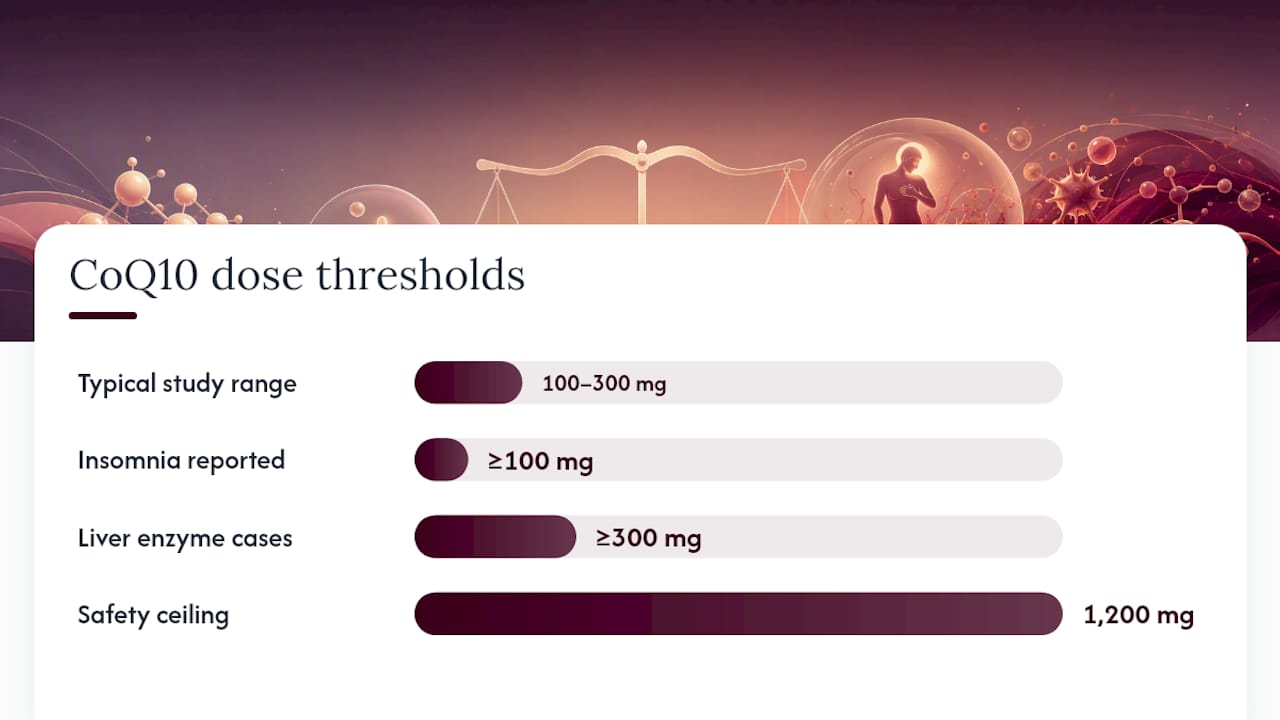
Most clinical studies use doses between 100 and 300 mg per day, which lines up with what you’ll find on most retail labels. That’s the range where the bulk of the safety and side-effect data was actually collected.
Higher doses have been studied too, and the findings are worth knowing before you assume “more is better.” The StatPearls review puts the safety ceiling around 1,200 mg per day, with toxicity considered unlikely below that threshold. But “unlikely to be toxic” isn’t the same as “free of side effects”:
- Insomnia has been reported in some studies at doses of 100 mg per day or more.
- Mild liver enzyme elevations have been observed in rare cases at doses of 300 mg per day or higher, without evidence of actual liver damage.
- Effects tend to scale with dose, so the practical middle ground for most healthy adults sits closer to the low end of the range.
If you’re considering anything above 300 mg daily, that’s a conversation for your clinician, not a decision to make solo based on a bottle label. Our CoQ10 dosage guide breaks down how studies arrived at these ranges in more detail.
How to Reduce CoQ10 Side Effects (And When to Stop)
Most of the mild side effects respond to small adjustments rather than quitting altogether.
- Take it with a fat-containing meal. CoQ10 is fat-soluble, and food improves absorption while cutting down on the stomach upset that shows up on an empty stomach.
- Split the daily dose. Taking half in the morning and half with dinner, instead of one large dose, often smooths out both GI and insomnia complaints.
- Consider switching formulation. Ubiquinol and ubiquinone absorb differently, and some people tolerate one better than the other.
- Check the label for excipients. Silicon dioxide, fillers, and capsule dyes are the more likely source of a hypersensitivity reaction than the CoQ10 itself.
Pro Tip: If insomnia shows up, move your dose to the morning before assuming CoQ10 isn’t for you. Timing solves more tolerability problems than switching brands does.
Stop and contact a clinician right away if you notice signs of an allergic reaction, symptoms suggestive of clotting while on anticoagulants, or anything that looks like severe liver trouble (yellowing skin or eyes, dark urine, persistent abdominal pain).
Where This Safety Information Comes From
The guidance here draws from clinical literature, not marketing copy. StatPearls on the NCBI Bookshelf, Mayo Clinic’s CoQ10 entry, and the NCCIH’s consumer page are the three sources every claim in this article traces back to.
On the product side, the supplement is manufactured using vegan and non-GMO ingredients, and undergoes third-party testing under GMP-certified standards. Those are quality signals about how the supplement is made, not claims about clinical superiority over other CoQ10 products. If you want the deeper research behind the ingredient itself, our CoQ10 benefits breakdown and energy-focused guide go further into the evidence.
A Cautious Take on CoQ10 Risk and Benefit
CoQ10 makes the most sense for people managing statin-related muscle symptoms, certain heart conditions, or migraines, where the potential upside is real and the downside is usually a mild stomach ache. It makes far less sense as a casual add-on for someone already juggling warfarin, chemotherapy, pregnancy, or liver disease, where the unknowns outweigh the benefit until a clinician weighs in. The smartest move isn’t skipping CoQ10 out of fear or taking it blindly. It’s pulling out your medication list before you pull out your wallet.
— Hugo
A CoQ10 Option Built on Absorption, Not Guesswork
If you’ve decided CoQ10 fits your routine, the next question is which product actually delivers it well. CP-1’s NAD+ Advanced Supplement combines CoQ10 with NMN, lion’s mane, reishi, and turkey tail extracts in a chewable gummy designed for cellular energy, cognitive clarity, and immune support, rather than a single-ingredient capsule that leaves you buying three other bottles to round out your stack.
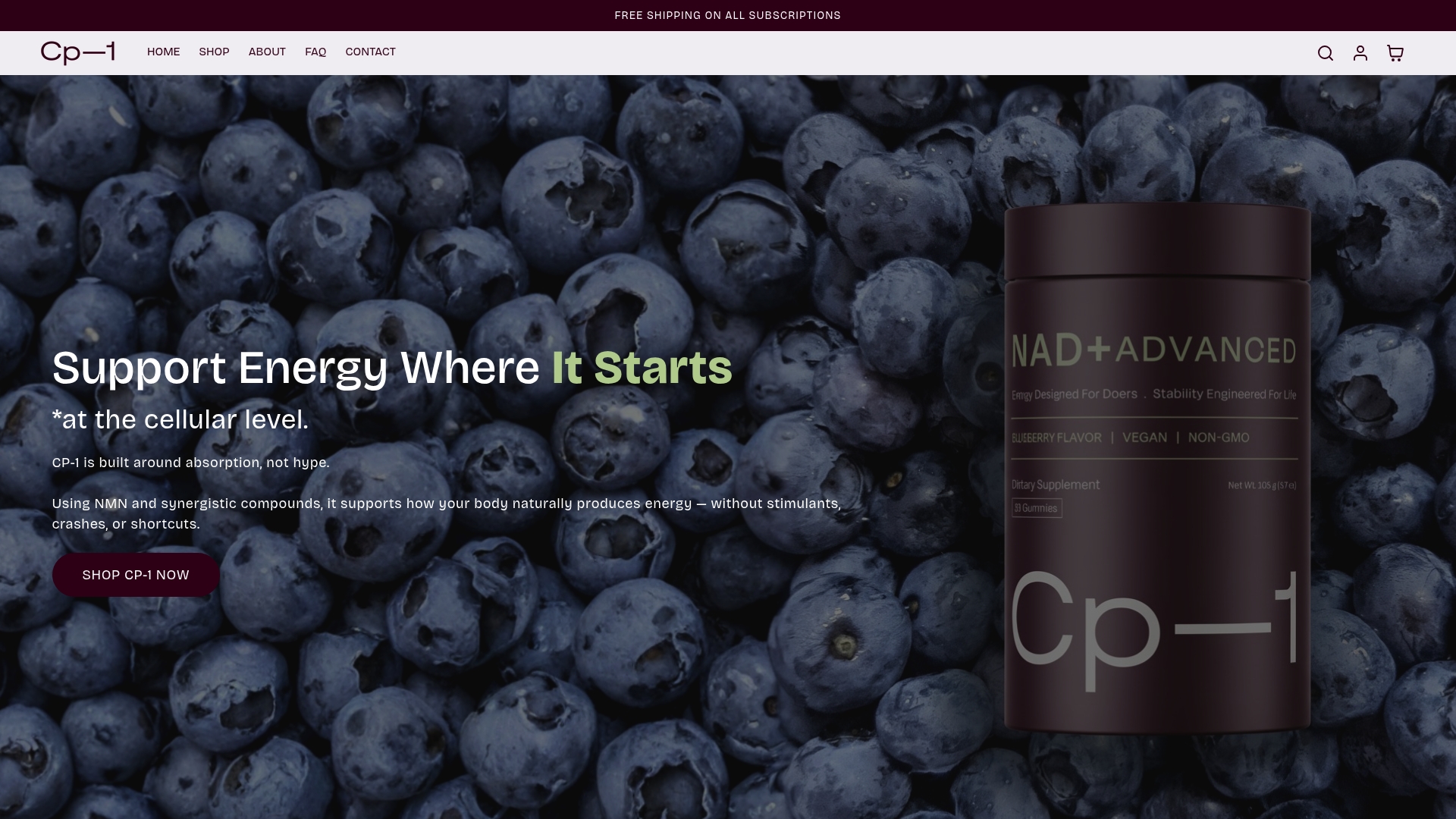
Every batch is made in the US under GMP-certified standards, using vegan, non-GMO ingredients and third-party testing to confirm what’s on the label matches what’s in the gummy. This formula is built around NMN as the NAD+ precursor specifically because it is absorbed intracellularly, rather than relying on oral NAD+ that tends to break down before it does much good. If you’re weighing CoQ10 side effects against the supplement’s actual benefits, take a look at the CP-1 NAD+ Advanced Supplement collection and decide whether a broader cellular-energy formula fits your goals better than a standalone CoQ10 pill.
This article is general information, not a substitute for advice from a qualified doctor. Consult a qualified healthcare professional about your own circumstances before acting on anything here.
Sources
FAQ
What happens if you take CoQ10 every day?
Most people tolerate daily CoQ10 well at typical doses of 100 to 300 mg, with occasional mild nausea, stomach discomfort, or insomnia. Clinical reviews report toxicity as unlikely even at daily intakes up to about 1,200 mg.
What should you not mix CoQ10 with?
The clearest concern is warfarin, since CoQ10 may reduce its anticoagulant effect and raise clotting risk. It can also interact with blood pressure medications and insulin or other diabetes drugs, so check with your clinician before combining them.
What do cardiologists say about CoQ10?
Clinical guidance generally treats CoQ10 as a reasonable adjunct for select heart conditions and statin-related muscle symptoms, while still stressing that anyone on cardiac medications, especially warfarin, needs medical oversight before starting it.
Who shouldn’t use CoQ10?
Pregnant or breastfeeding individuals, children without pediatric guidance, and people on anticoagulants or chemotherapy should avoid starting CoQ10 without clinician approval, given the limited safety data in these groups.