
Most healthy adults do well with 100–200 mg of CoQ10 per day for general maintenance, according to consumer-facing synthesis from Healthline. That range covers the bulk of people using it for energy support, antioxidant protection, or general wellness. But here is the honest caveat: raw milligrams only tell part of the story. Formulation, your specific health context, and whether you are on certain medications can shift what dose actually makes sense for you.
A few things to know upfront:
- Maintenance range: 100–200 mg/day for most healthy adults
- Therapeutic contexts: Clinical trials use 50 mg twice daily up to 600 mg/day depending on the condition, per StatPearls on NCBI
- Formulation matters: A lower-mg, high-bioavailability product can match or beat a higher-mg, poorly absorbed one in plasma exposure
- Safety ceiling: Human tolerability has been reported up to higher doses in trials, with mild GI side effects being the most common complaint at higher supplemental doses.
Key Takeaways
Most adults get the best results from 100–200 mg of CoQ10 per day in a high-bioavailability formulation taken with a fat-containing meal, with therapeutic conditions and drug interactions requiring clinician input before adjusting the dose.
| Point | Details |
|---|---|
| Maintenance dose range | 100–200 mg/day covers most healthy adults seeking general support. |
| Therapeutic doses vary by condition | Trials use 50 mg twice daily up to 600 mg/day; migraine and SAMS evidence is strongest. |
| Formulation beats milligrams | Crystal-free and lipid-based forms show significantly higher absorption than dry-powder at the same dose. |
| Drug interactions require clinician review | Warfarin, statins, blood pressure drugs, and diabetes medications all warrant a conversation before starting. |
| Cp-1 CoQ10 formula | CP-1 NAD+ Advanced pairs CoQ10 with NMN and mushroom extracts in a GMP-certified, third-party tested chewable gummy. |
Table of Contents
- What does the CoQ10 dosage evidence actually say?
- Why formulation changes everything about CoQ10 absorption
- How to take CoQ10 to get the most out of it
- Side effects, safety limits, and drug interactions
- Dosing for special populations and clinical contexts
- How to track whether CoQ10 is actually working
- What to look for when choosing a CoQ10 supplement
- My honest take on CoQ10 dosing
- Cp-1 includes CoQ10 in a formula built for real absorption
- Sources
What does the CoQ10 dosage evidence actually say?
The clinical literature does not point to one universal dose. What it shows is a range tied to purpose, and that distinction is worth understanding before you buy anything.
Maintenance and general support sits at 100–200 mg/day. This is the range most commonly cited for healthy adults who want mitochondrial support, antioxidant coverage, or energy-related benefits. Some practitioners start patients at 50–100 mg/day and titrate up based on response.
Therapeutic doses are a different story. StatPearls summarizes trial doses across conditions:
| Condition | Typical Trial Dose | Evidence Note |
|---|---|---|
| Migraine prevention | 100–600 mg/day | Multiple RCTs show reduced attack frequency |
| Statin-associated muscle symptoms (SAMS) | Varied doses studied | Meta-analyses report reduced muscle pain scores |
| Heart failure (adjunct) | 300 mg/day | Trials show modest functional improvement |
| General anti-inflammatory endpoints | Moderate to high doses studied | Supported by systematic review evidence |
| Primary CoQ10 deficiency | High, weight-based dosing as used clinically | Requires specialist supervision |
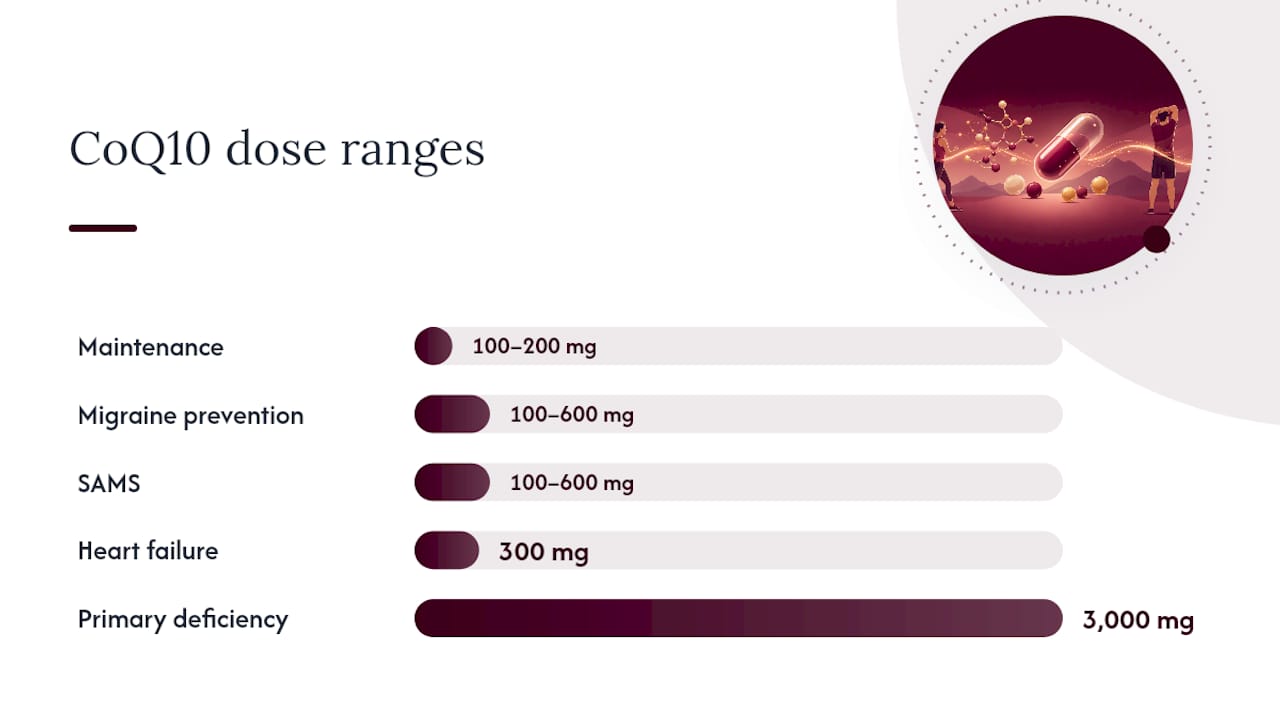
Meta-analyses of RCT data confirm benefit signals for statin-associated muscle symptoms and migraine across the 100–600 mg/day range, while also noting that side-effect incidence tends to climb with larger doses.
On safety: Human trials have reported tolerability up to approximately 1,200 mg/day. Some studies in primary deficiency syndromes have used doses up to 3,000 mg/day under clinical supervision. At standard supplemental doses, CoQ10 has a strong safety record. GI discomfort and occasional insomnia are the most commonly reported issues, typically at doses above 300 mg/day.
Why formulation changes everything about CoQ10 absorption
This is the part most supplement labels gloss over. Two products with identical 200 mg labels can produce very different plasma CoQ10 levels, purely because of how they are made.
CoQ10 is highly lipophilic, meaning it does not dissolve in water. Standard dry-powder or crystalline CoQ10 has notoriously poor oral bioavailability. A controlled pharmacokinetic study published in PMC found that crystal-free (CF) and certain lipid-based softgel formulations produced significantly higher single-dose absorption and steady-state bioavailability than crystalline or dry-powder forms.
Water-soluble or specially formulated products can push that advantage further. In a randomized crossover study in healthy elderly adults, a water-soluble CoQ10 formulation produced approximately 2.4-fold higher ΔAUC48 compared to a standard ubiquinone capsule after a single 100 mg dose. That is not a marginal difference.
Ubiquinone vs. ubiquinol is a common debate. Both forms are legitimate. After absorption, ubiquinone is largely converted to ubiquinol in the body anyway, so the distinction matters less than the delivery system. What matters more is whether the product uses a lipid-based, crystal-free, or microencapsulated matrix that actually gets CoQ10 into your bloodstream.
One nuance worth knowing: microencapsulated formulations can show higher single-dose AUC and Cmax versus standard forms, but chronic multi-week steady-state differences may be smaller due to interindividual absorption limits. Single-dose PK data is a useful signal, but steady-state data is the stronger evidence when you can find it.
The practical takeaway is simple: a 100 mg dose in a high-bioavailability lipid-based softgel can deliver comparable or greater plasma exposure than 300 mg in a dry-powder capsule. Choose formulation, not just milligrams.
Pro Tip: Before buying, look for published pharmacokinetic comparisons or a certificate of analysis (CoA) from the manufacturer. “Enhanced absorption” on a label means nothing without published AUC or Cmax data to back it up.
How to take CoQ10 to get the most out of it
CoQ10 is fat-soluble, so the single most effective thing you can do is take it with a meal that contains fat. The Linus Pauling Institute at Oregon State University confirms this: fat co-ingestion meaningfully improves absorption, and doses above 100 mg/day are often divided into two or three smaller doses to improve tolerability and produce steadier plasma levels.
Here is a practical starting framework:
- Starting dose: 50–100 mg once daily with your largest meal
- Scaling up: If moving to 200 mg or more, split into two doses (e.g., 100 mg with breakfast, 100 mg with dinner)
- Higher therapeutic doses: Split into 2–3 doses across the day to reduce GI side effects and maintain steadier blood levels
- Steady-state timing: Expect plasma levels to plateau after approximately two weeks of consistent dosing
- Trial window: Most clinical trials assess outcomes over 4–12 weeks; give yourself at least that long before deciding whether it is working
For optimizing supplement absorption generally, the same principle applies: fat-soluble compounds need fat to cross the gut wall efficiently.
Pro Tip: Pair CoQ10 with your largest meal of the day, or at minimum a snack that contains some fat (avocado, nuts, olive oil). This is the simplest, zero-cost way to improve CoQ10 bioavailability regardless of which product you use.
A note on CoQ10 and caffeine: there is no established direct pharmacokinetic interaction between CoQ10 and caffeine. Taking CoQ10 with coffee is generally fine, though coffee alone is not a fat-containing vehicle and will not optimize absorption the way a fat-containing meal does.
Side effects, safety limits, and drug interactions
CoQ10 has a genuinely good safety profile at standard doses. That said, a few interactions and side effects deserve your attention.
Common adverse effects at higher doses include nausea, GI upset, appetite changes, and occasional insomnia. These are typically mild and dose-dependent, appearing more often above 300 mg/day.
Drug interactions to know:
- Statins: Statins reduce endogenous CoQ10 synthesis. Supplementing CoQ10 is often discussed in this context, and trial evidence supports 50–200 mg/day for statin-associated muscle symptoms. Coordinate with your prescriber.
- Warfarin and anticoagulants: CoQ10 has structural similarity to vitamin K and may reduce warfarin’s effectiveness. If you are on an anticoagulant, clinician review before starting is non-negotiable.
- Blood pressure medications: CoQ10 can have mild antihypertensive effects. If you are already on blood pressure drugs, monitor for additive lowering.
- Diabetes medications: Some evidence suggests CoQ10 may affect blood glucose regulation. People on insulin or oral hypoglycemics should monitor accordingly.
Stop and contact your clinician if you experience: new or unusual bleeding, severe GI symptoms, arrhythmia-like sensations, or signs of an allergic reaction (rash, swelling, difficulty breathing).
Dosing for special populations and clinical contexts
Standard maintenance dosing does not apply equally to everyone. A few groups need a different approach.
- Statin users: Trials typically use 50–200 mg/day; many clinicians recommend 100–200 mg/day as a practical range for people experiencing statin-associated muscle symptoms. The evidence base here is among the strongest for any CoQ10 application.
- Pregnancy: Some trials have used 100 mg twice daily in specific pregnancy-related contexts, but evidence in lactation is limited. Clinician consultation is required before use during pregnancy or breastfeeding.
- Children and pediatric dosing: Weight-based (mg/kg) guidance is used in pediatric contexts, particularly for primary CoQ10 deficiency. This is not a self-managed situation.
- Primary CoQ10 deficiency: This is a rare genetic condition requiring pharmacologic, high-dose, weight-based therapy under specialist supervision. Standard OTC supplementation is not appropriate as the sole management strategy.
- General aging and mitochondrial support: Adults over 50 often benefit from the higher end of the maintenance range (150–200 mg/day) in a high-bioavailability form, given the natural age-related decline in endogenous CoQ10 synthesis.
How to track whether CoQ10 is actually working
Give it a real trial. Four to twelve weeks is the window most clinical studies use, and that is a reasonable benchmark for you too.
What to track during your trial:
- Baseline symptom severity before you start (migraine frequency, muscle pain scores, fatigue level)
- Date you started and the dose you are using
- Weekly notes on energy, muscle comfort, or the specific symptom you are targeting
- Any side effects, even mild ones
- Blood pressure readings if that is relevant to your situation
When to get labs or clinician follow-up: If you are on warfarin, get an INR check after starting CoQ10. If you are using doses above 300 mg/day for an extended period, periodic check-ins with your provider make sense. Unexpected bleeding, new symptoms, or no improvement after 12 weeks are all reasons to reassess with a clinician.
For a broader natural energy booster checklist that pairs well with a CoQ10 trial, tracking multiple lifestyle variables alongside supplementation gives you a cleaner read on what is actually driving change.
What to look for when choosing a CoQ10 supplement
Most of the CoQ10 products on shelves are dry-powder capsules with no published bioavailability data. That is not a reason to panic, but it is a reason to be selective.
Quality signals worth checking:
- CoQ10 form clearly stated (ubiquinone or ubiquinol)
- Dose per serving listed explicitly
- Administration instructions included (with food, fat co-ingestion)
- Third-party testing seals: USP, NSF International, or ConsumerLab verification
- GMP-certified manufacturing, ideally US-based
- Published pharmacokinetic data or a certificate of analysis available from the manufacturer
Red flags: vague “enhanced absorption” claims with no published data, proprietary blends that obscure CoQ10 dose, no manufacturing location listed.
Pro Tip: Email the manufacturer and ask for a certificate of analysis or published PK comparison data. A company that makes real bioavailability claims should be able to provide it. If they cannot, that tells you something.
Cp-1’s CoQ10 is formulated as part of the CP-1 NAD+ Advanced supplement, which is vegan, non-GMO, US-manufactured, and GMP-certified. The product pairs CoQ10 with NMN and functional mushroom extracts for a combined approach to mitochondrial energy and longevity. That combination reflects the same principle this article keeps coming back to: the delivery system and the surrounding formula matter as much as the milligram count.
My honest take on CoQ10 dosing
Here is what I keep coming back to after reading through the clinical literature on this: the supplement industry has trained people to chase higher milligram numbers, and CoQ10 is one of the clearest examples of why that instinct leads people astray.
The research is consistent. A 100 mg dose in a crystal-free or lipid-based formulation can outperform 300 mg in a dry-powder capsule on actual plasma exposure. Yet most products compete on label dose, not on published bioavailability data. That gap between what is marketed and what is measured is exactly the kind of thing that frustrates me about this industry.
My practical stance: start at 100–150 mg/day in a high-bioavailability form, take it with a fat-containing meal, and give it a genuine 8–12 week trial before drawing conclusions. If you are on statins, warfarin, or blood pressure medications, loop in your clinician before you start. And if a product cannot show you published PK data or a CoA when you ask, spend your money elsewhere. There is no shortage of well-formulated options, and the dietary strategies that support CoQ10 absorption are just as important as the supplement itself.
Cp-1 includes CoQ10 in a formula built for real absorption
If you have read this far, you already know that milligrams alone do not tell the full story. Cp-1’s CP-1 NAD+ Advanced supplement pairs CoQ10 with NMN, Lion’s Mane, Reishi, and Turkey Tail in a chewable gummy format designed for actual absorption, not just a compelling label. It is vegan, non-GMO, manufactured in the US under GMP-certified conditions, and third-party tested.
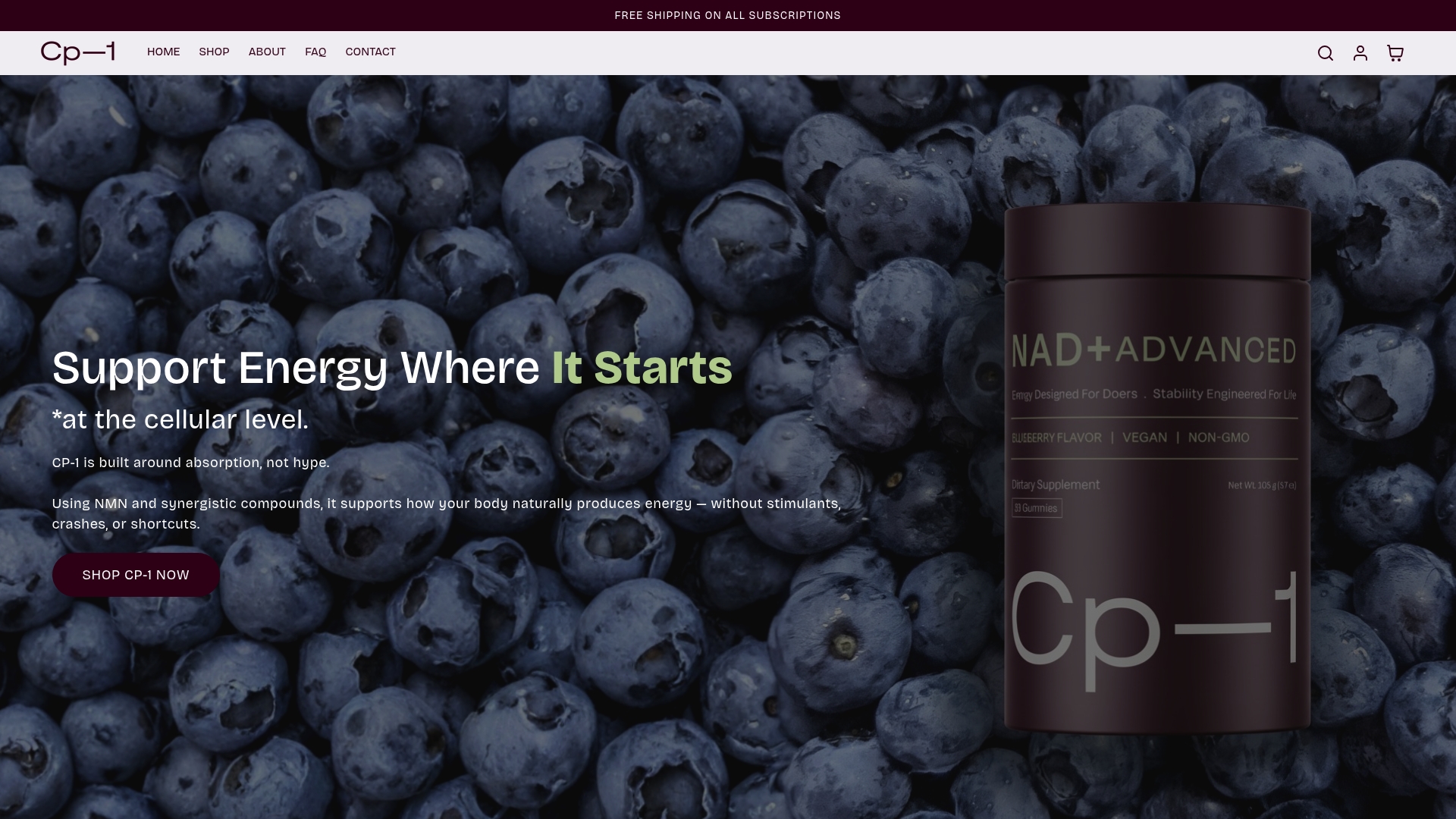
Full disclosure: we make this product. We recommend it because it reflects the same evidence-based principles this article covers: honest dosing, quality manufacturing, and a formulation designed for the person taking it, not for a marketing deck. If you want CoQ10 as part of a broader mitochondrial and NAD+ support stack, see the full CP-1 formula here.
Sources
- Coenzyme Q10 | Linus Pauling Institute | Oregon State University
- Coenzyme Q10 - StatPearls - NCBI Bookshelf
- Efficacy and Optimal Dose of Coenzyme Q10 …
- Comparative Bioavailability of Different Coenzyme Q10 Formulations in Healthy Elderly Individuals
- Comparative study of the bioavailability of two coenzyme Q10 products following single-dose and 3-week oral administration in healthy adults | Future Journal of Pharmaceutical Sciences
- Pmc
- CoQ10 (Coenzyme Q10) Dosage | Healthline
This article is general information, not a substitute for advice from a qualified doctor. Consult a qualified healthcare professional about your own circumstances before acting on anything here.