
The three highest-leverage moves you can make right now: choose an absorbable chemical form, time each supplement correctly with or without food, and separate minerals that compete for the same transporters. Most people are doing none of these three things, which means they’re swallowing real money and getting a fraction of the benefit.

TL;DR: Better form + right food pairing + smart spacing = dramatically more of what you paid for actually reaching your bloodstream.
Here’s what to apply today:
- Take fat-soluble vitamins (A, D, E, K) and CoQ10 with your largest meal. Research estimates vitamin D3 absorption is 30–50% higher when taken with a fat-containing meal versus fasting.
- Take iron on an empty stomach with vitamin C, away from coffee, tea, and calcium. Tannins in coffee and tea can substantially reduce iron absorption in some settings.
- Separate calcium and iron by a couple of hours to improve absorption. They share intestinal transporters and directly compete.
- Take magnesium, B vitamins, and probiotics with or after meals to reduce GI discomfort and improve uptake.
- Water-soluble vitamins (B complex, vitamin C) are best split across the day since excess is excreted rather than stored.
The American Heart Association is clear that supplements work best as a gap-filler alongside a nutrient-dense diet, not as a replacement for one. That framing matters because food provides co-factors and fiber that make supplements work better.
Table of Contents
- What’s the best timing and pairing for common supplements?
- Does supplement form actually change what your body absorbs?
- Which nutrient pairings help absorption, and what blocks it?
- How does your gut health, lifestyle, and age affect absorption?
- How do you know if your supplements aren’t being absorbed?
- What are the practical safety rules for dosing, storage, and quality?
- How CP-1’s formulation choices address real absorption problems
- Key Takeaways
- The real trade-off between perfect timing and actually doing it
- CP-1 puts these absorption principles into the formula itself
- Useful sources and references
What’s the best timing and pairing for common supplements?
These are the rules that matter most, stripped of the noise. One line per supplement, based on what the evidence actually supports.
Fat-soluble vitamins and CoQ10
- Vitamin D3: Take with your largest, fattiest meal. No fat in the meal means significantly lower uptake.
- Vitamins A, E, K: Same rule. These fat-soluble vitamins integrate into micelles in the small intestine and require dietary fat for absorption.
- CoQ10: Fat-soluble. Take with a meal containing healthy fats. Ubiquinol form absorbs better than ubiquinone, especially in adults over 40.
Iron and vitamin C
- Iron (non-heme): Take on an empty stomach if tolerated, with 250–500 mg of vitamin C. Avoid coffee, tea, dairy, and calcium supplements within 2 hours. If stomach upset is an issue, take with a small, low-phytate meal.
- Vitamin C: Works as an absorption enhancer for iron. Also fine split across the day since excess is excreted.
Magnesium, calcium, and zinc
- Magnesium: Take with food or at night (many find it supports sleep). Choose glycinate or citrate over oxide. Magnesium oxide has roughly 4% absorption in some analyses; glycinate and citrate absorb substantially better.
- Calcium: Take with meals, split into doses under 500 mg. Do NOT take with iron or zinc.
- Zinc: Take away from calcium and iron. With food if it causes nausea.
B vitamins and folate
- B12: Take in the morning, ideally as methylcobalamin rather than cyanocobalamin. If you’re on a proton pump inhibitor (PPI), discuss B12 testing with your doctor.
- Folate: Choose methylated folate (5-MTHF) over folic acid if you have an MTHFR gene variant. Take with food.
- B complex: Morning, with breakfast. Water-soluble, so split dosing across the day is fine for high-dose formulas.
Omega-3s, curcumin, and probiotics
- Omega-3s: Take with a fat-containing meal. Triglyceride-form fish oil absorbs better than ethyl ester form.
- Curcumin: Essentially useless without a bioavailability enhancer. Look for piperine (BioPerine), phytosome, or liposomal formulations. Plain curcumin powder has extremely low baseline absorption.
- Probiotics: Take with or just before a meal. Food buffers stomach acid and improves bacterial survival through the GI tract.
Collagen and creatine
- Collagen: Take with vitamin C, ideally 30–60 minutes before exercise. A 2019 study found collagen + vitamin C pre-workout increased collagen synthesis markers.
- Creatine: Timing matters less than daily consistency. Post-workout with carbohydrates shows a small advantage, but taking it at the same time every day is the bigger variable. For more on sports nutrition timing, the evidence is nuanced.
Pro Tip: Daily adherence consistently outperforms perfect timing. If optimizing every supplement’s window feels like a part-time job, pick your two highest-priority supplements and nail those rules first. Consistency beats precision every time. If you’re taking iron, B12, or any supplement that interacts with a prescription medication, loop in your clinician before adjusting your regimen.
Does supplement form actually change what your body absorbs?
Yes, and the gap between forms is often larger than people expect. Bioavailability is the percentage of a nutrient that actually reaches your bloodstream and tissues. The milligrams on a label tell you the dose; they say nothing about how much of that dose you’ll actually use.
The clearest example: magnesium oxide has roughly 4% absorption in some analyses, while magnesium glycinate and citrate absorb at substantially higher rates. A 400 mg magnesium oxide tablet may deliver less usable magnesium than a 200 mg glycinate capsule. Bigger number on the label, worse outcome in the body.
This principle applies across the board. Better forms can be more effective than larger doses of poorly absorbed alternatives, which means shopping by milligrams alone is a flawed strategy.
| Nutrient | Lower-absorption form | Higher-absorption form | Buyer takeaway |
|---|---|---|---|
| Magnesium | Magnesium oxide (~4% absorption in some analyses) | Glycinate, citrate, malate | Avoid oxide; pay for the form, not the mg count |
| Iron | Ferrous sulfate (can cause GI issues) | Ferrous bisglycinate (chelated) | Chelated iron is gentler and better absorbed |
| Curcumin | Plain curcumin powder | Phytosome, piperine-enhanced, liposomal | Never buy plain curcumin; form is everything here |
| Folate | Folic acid | Methylfolate (5-MTHF) | Critical for anyone with MTHFR variants |
| B12 | Cyanocobalamin | Methylcobalamin | Methylcobalamin is the active form the body uses directly |
| CoQ10 | Ubiquinone | Ubiquinol | Ubiquinol absorbs better, especially over age 40 |
When does form matter most?
Form matters most when baseline bioavailability is very low (curcumin, CoQ10), when you have a genetic variant affecting conversion (MTHFR and folate), or when GI tolerance is a concern (iron, magnesium). For nutrients like vitamin C or most B vitamins, the form difference is smaller and consistency matters more than the specific salt used.
Liposomal and phytosome formats are genuinely useful for fat-soluble or poorly absorbed compounds. They wrap the active ingredient in a lipid layer that survives the GI tract better. The technology is real, but the marketing often outpaces the evidence. Before paying a premium for a “liposomal” product, ask whether the brand can point to human pharmacokinetic data showing higher blood levels, not just in vitro lab results.
Pro Tip: When a brand claims “enhanced absorption,” ask for human PK or clinical outcome data. In vitro (cell culture) results and animal studies do not reliably predict what happens in a person’s gut. If the brand can’t produce that data, treat the claim as marketing.
For a deeper look at reading labels and spotting quality claims, the supplement label checklist at CP-1 breaks down exactly what to look for.
Which nutrient pairings help absorption, and what blocks it?
Your gut uses shared transport proteins for several minerals, which means what you take together matters as much as what you take. Iron, zinc, and calcium all compete for overlapping intestinal transporters. Stack them in one dose and you’re guaranteeing that at least one of them loses.
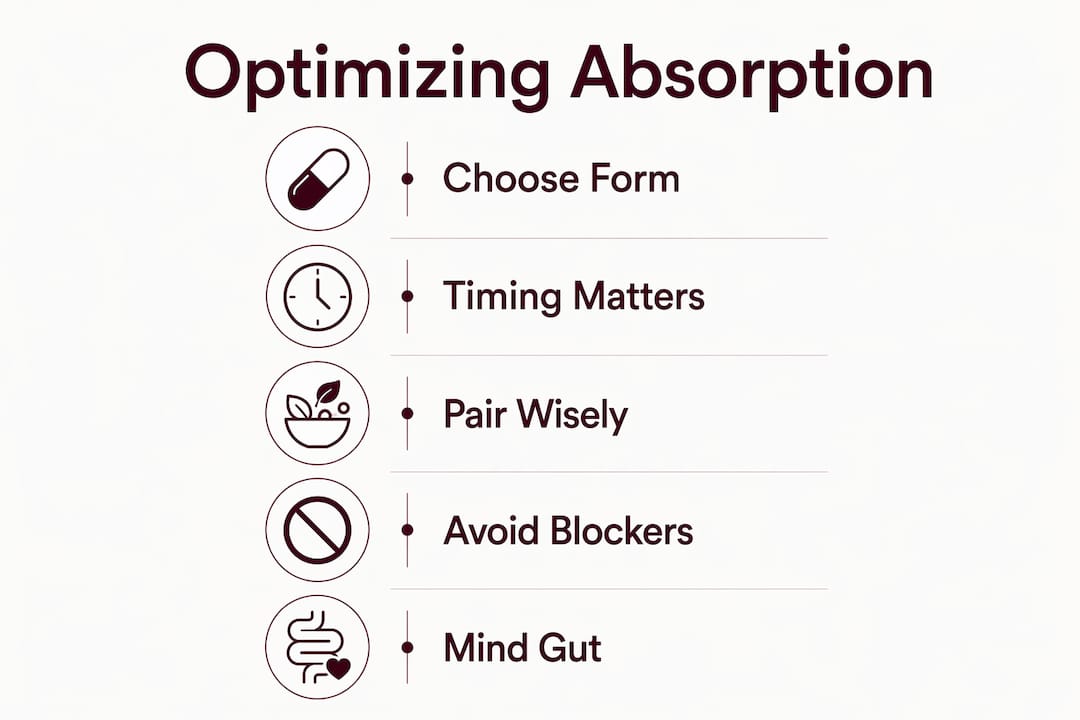
| Pairing or blocker | Effect | Practical rule |
|---|---|---|
| Vitamin C + non-heme iron | Vitamin C can roughly double non-heme iron absorption | Always pair iron with vitamin C; take together |
| Calcium (500 mg+) + iron or zinc | Reduces iron and zinc uptake | Separate by at least 2 hours |
| Coffee/tea + iron | Tannins and polyphenols can slash iron absorption by up to 90% in some settings | Take iron 1–2 hours away from any caffeinated beverage |
| Fat + vitamins A, D, E, K | Fat is required for absorption via micelles | Always take fat-soluble vitamins with a fat-containing meal |
| Phytate-rich foods + iron/zinc | Phytates bind minerals and reduce uptake | Avoid taking iron or zinc with high-bran cereals or legumes |
| Antacids/PPIs + iron, B12, magnesium | Reduced gastric acid impairs mineral and B12 separation | Discuss supplement timing with your prescriber |
The everyday blockers most people ignore
Coffee is the biggest one. Most people take their morning supplements with coffee, which is exactly wrong for iron. The same applies to tea. Even a cup of black tea consumed within an hour of an iron supplement can dramatically cut what you absorb.
High-fiber meals are another underappreciated blocker. Phytates in whole grains and legumes bind to iron and zinc in the gut and carry them out before absorption. This doesn’t mean avoiding fiber. It means timing iron and zinc supplements away from your highest-fiber meals.
Antacids and PPIs reduce stomach acid, which the body needs to free B12 from food proteins and to ionize minerals for transport. If you’re on a PPI long-term, you’re likely absorbing less B12, iron, and magnesium than your labs suggest you need.
- Separate iron and calcium by at least 2 hours.
- Take iron 1 hour before or 2 hours after coffee or tea.
- Avoid pairing zinc and copper at high doses without medical guidance.
- Take fat-soluble vitamins with a meal that contains at least some fat.
Pro Tip: If you’re taking three or more minerals daily, write out your timing windows before you start. A simple two-column list (supplement / time + food context) takes five minutes and prevents months of wasted money. Retest relevant labs after 90 days to confirm the changes are working.
How does your gut health, lifestyle, and age affect absorption?
The most absorbable supplement form in the world still has to survive your gut. Gastric acid, digestive enzymes, gut transit time, and the composition of your microbiome all shape how much of any nutrient actually crosses the intestinal wall and reaches your blood.

Nutrient absorption is a dynamic process influenced by gut health, transit time, and individual metabolism. Disruptions to any of these layers, whether from disease, medication, stress, or age, compound into real deficiencies over time.
Gut health and gastric acid
Low stomach acid is more common than most people realize, especially in adults over 50 and anyone on long-term acid suppression. PPIs impair B12 separation from food proteins and reduce absorption of iron, magnesium, and zinc. Metformin, commonly prescribed for type 2 diabetes, also reduces B12 absorption over time. Bariatric surgery alters the anatomy of absorption so significantly that lifelong supplementation and monitoring are standard of care.
Gut microbiome diversity supports absorption by producing short-chain fatty acids that maintain intestinal lining integrity. Chronic antibiotic use, a low-fiber diet, and high stress all reduce that diversity. Practical interventions: eat a variety of fiber sources, consider a multi-strain probiotic if you’ve had recent antibiotic exposure, and avoid long-term PPI use unless medically necessary.
Sleep, stress, and exercise
- Sleep deprivation slows gut motility and alters cortisol rhythms, both of which affect nutrient uptake. Poor sleep is also linked to increased inflammatory markers that can impair intestinal barrier function.
- Chronic stress elevates cortisol, which suppresses digestive enzyme output and reduces blood flow to the gut. The role of supplements in stress management is real, but stress itself undermines the absorption of the supplements you’re taking to manage it.
- Regular exercise increases metabolic demand for B vitamins, magnesium, and antioxidants. It also improves gut motility and insulin sensitivity, both of which support nutrient transport. Athletes and highly active adults often need higher baseline intakes.
Age and gender
Absorption efficiency declines with age. Older adults produce less intrinsic factor (needed for B12 absorption), less stomach acid, and fewer digestive enzymes. Women of reproductive age have higher iron needs and are more likely to be deficient. Postmenopausal women need to watch calcium and vitamin D more carefully as bone remodeling accelerates. For women navigating sleep and recovery, these absorption factors are especially relevant.
Pro Tip: Before spending money on premium supplement formats, fix the lifestyle variables first. Chronic sleep deprivation, high stress, and a low-fiber diet will undermine even the most bioavailable supplement on the market. These are free interventions that amplify everything else.
How do you know if your supplements aren’t being absorbed?
Symptoms alone are unreliable. Fatigue, brain fog, and muscle weakness overlap with dozens of conditions. The only way to know whether a specific nutrient is actually reaching therapeutic levels is to test.
| Nutrient | Key lab marker | Suggested retest interval |
|---|---|---|
| Vitamin D | 25-hydroxyvitamin D (25-OH D) | 3 months after changing dose or timing |
| Iron | Ferritin, serum iron, TIBC, hemoglobin | 3 months after protocol change |
| B12 | Serum B12 + methylmalonic acid (MMA) | 3 months; MMA is more sensitive than B12 alone |
| Omega-3s | Omega-3 index (EPA + DHA as % of RBC fatty acids) | 4 months |
| Magnesium | RBC magnesium (more accurate than serum) | 3 months |
| Zinc | Plasma zinc | 3 months |
Common signs by nutrient
- Low vitamin D: Fatigue, bone aches, low mood, frequent illness. Confirmed only by 25-OH D below 30 ng/mL.
- Low iron / ferritin: Fatigue, pale skin, shortness of breath, restless legs, hair loss. Serum ferritin below 30 mcg/L is a common clinical threshold for functional deficiency.
- Low B12: Tingling in hands or feet, memory issues, fatigue, elevated MMA on labs. Serum B12 can look normal while MMA is elevated, which is why MMA is the more sensitive marker.
- Low magnesium: Muscle cramps, poor sleep, anxiety, constipation. Serum magnesium is often normal even when intracellular stores are depleted; RBC magnesium is more informative.
- Low omega-3 index: Dry skin, joint stiffness, poor mood, cardiovascular risk markers.
Seek medical testing if you’re on a PPI, metformin, or any medication that affects GI absorption; if you’ve had bariatric surgery; if you’re pregnant or planning to be; or if symptoms persist despite 90 days of consistent supplementation with a quality product. Retesting after a protocol change gives you real data instead of guesswork.
What are the practical safety rules for dosing, storage, and quality?
Dose splitting
Water-soluble vitamins (B complex, vitamin C) are excreted when intake exceeds what tissues can use at one time. Splitting a high-dose B complex across morning and midday meals keeps blood levels steadier and reduces the amount lost to urinary excretion. Magnesium is the same: two smaller doses are better tolerated and absorbed than one large dose, especially at higher amounts.
Fat-soluble vitamins (A, D, E, K) accumulate in adipose tissue, so dose splitting matters less for absorption, but it matters a great deal for safety. Never exceed the tolerable upper intake level for fat-soluble vitamins without medical supervision. Toxicity from fat-soluble vitamins is real and takes time to reverse.
Storage rules
Heat, light, and humidity degrade most supplements faster than the expiration date suggests. Practical rules:
- Store in a cool, dry location away from direct sunlight. A kitchen cabinet away from the stove is better than the counter next to it.
- Probiotics often require refrigeration; check the label.
- Fish oil oxidizes when exposed to air and heat. Rancid fish oil smells strongly and provides no benefit. Keep it refrigerated after opening.
- Never store supplements in a bathroom medicine cabinet. Humidity from showers accelerates degradation.
Third-party testing and GMP
The supplement industry in the United States is not pre-approved by the FDA the way pharmaceuticals are. That means quality control falls on the manufacturer and the consumer. Look for products manufactured in a GMP-certified facility and tested by an independent third party (NSF International, USP, or Informed Sport are the recognized certifiers). Third-party testing confirms that what’s on the label is actually in the bottle, and that the product is free from heavy metals and contaminants.
Pro Tip: When evaluating a new supplement, check the label reading checklist before you buy. GMP certification and third-party testing are non-negotiable signals. A product without them is a gamble, regardless of how good the marketing looks.
How CP-1’s formulation choices address real absorption problems
Most supplements are designed for a marketing deck, not for the person swallowing them. The form is cheap, the dose looks impressive on the label, and the actual absorbed amount is an afterthought. CP-1 was built around the opposite premise.
The CP-1 NAD+ Advanced Supplement is a chewable gummy, which matters more than it sounds. Chewable formats begin mechanical breakdown in the mouth and bypass the dissolution step that capsules and tablets require. For adults with reduced stomach acid or slower GI transit, that head start on breakdown is a real advantage.
The ingredient selection also reflects the absorption principles in this guide:
- NMN (Nicotinamide Mononucleotide): A direct NAD+ precursor. The chewable format supports faster mucosal absorption compared to a hard tablet that has to dissolve first.
- CoQ10: Fat-soluble. Taking CP-1 with a meal that contains fat aligns directly with the fat-soluble absorption rules covered above.
- Lion’s mane, reishi, and turkey tail mushroom extracts: Standardized extracts in a chewable format improve consistency of dose delivery. For more on how these immune-supporting mushroom extracts work, CP-1’s evidence-based guide covers the research.
Manufacturing and quality controls that map directly to the guide’s rules:
- US-based manufacturing in a GMP-certified facility: Confirms production standards and batch consistency.
- Third-party tested: Independent verification that the label matches the contents.
- Vegan and non-GMO certified: Removes common excipient concerns that can affect GI tolerance.
- Honest dosing: No proprietary blends that hide how much of each ingredient you’re actually getting.
For adults focused on cognitive function and longevity, these manufacturing choices aren’t marketing. They’re the baseline for a supplement that actually does what it claims.
Key Takeaways
Supplement absorption comes down to three variables you control: the chemical form you choose, when and with what you take it, and whether your gut and lifestyle are working with you or against you.
| Point | Details |
|---|---|
| Form beats milligrams | Magnesium glycinate absorbs far better than oxide; always choose the higher-bioavailability form. |
| Fat-soluble vitamins need fat | Vitamin D3 absorption is estimated 30–50% higher with a fat-containing meal versus fasting. |
| Separate competing minerals | Calcium (500 mg+) reduces iron and zinc uptake; space them at least 2 hours apart. |
| Test, don’t guess | Use 25-OH D, ferritin, MMA (for B12), and RBC magnesium to confirm absorption is working. |
| CP-1 formulation | CP-1’s chewable gummy format, GMP certification, and third-party testing align directly with these absorption rules. |
The real trade-off between perfect timing and actually doing it
Here’s my honest take: the supplement industry has overcomplicated this. There are entire apps, protocols, and premium products built around the idea that you need to optimize every variable simultaneously. Most people who try that approach quit within a month because it’s exhausting.
What I’ve seen work, consistently, is a much simpler framework. Pick your two or three highest-priority supplements. Apply the one or two rules that matter most for each (fat with D3, vitamin C with iron, glycinate over oxide for magnesium). Anchor them to an existing habit, whether that’s breakfast, a pre-workout routine, or your evening meal. Then leave it alone for 90 days and test.
The food-first principle from the American Heart Association isn’t just a disclaimer. Whole foods provide co-factors, fiber, and bioactive compounds that isolated supplements can’t replicate. A diet built around vegetables, quality protein, and healthy fats will do more for your absorption baseline than any premium liposomal format. Supplements fill real gaps. They don’t replace the foundation.
For busy adults, the realistic routine looks like this: fat-soluble vitamins and CoQ10 with dinner (the largest, most reliable fat-containing meal of the day), B complex and any water-soluble vitamins with breakfast, and iron or any mineral that needs separation taken mid-morning away from coffee. That’s it. Three anchor points, no spreadsheet required.
Premium formats like liposomal or methylated vitamins are worth the cost when you have a confirmed absorption issue, a genetic variant, or a condition that impairs uptake. For everyone else, consistency with a quality, well-formulated product beats chasing the latest delivery technology.
CP-1 puts these absorption principles into the formula itself
You’ve just read the rules. CP-1 was built around them.
The CP-1 NAD+ Advanced Supplement uses a chewable gummy format that starts breakdown before the stomach, pairs CoQ10 with a fat-containing meal for maximum uptake, and uses standardized mushroom extracts at honest doses. Every batch is manufactured in a US-based GMP-certified facility and independently third-party tested, so you know the form you’re paying for is actually in the product.
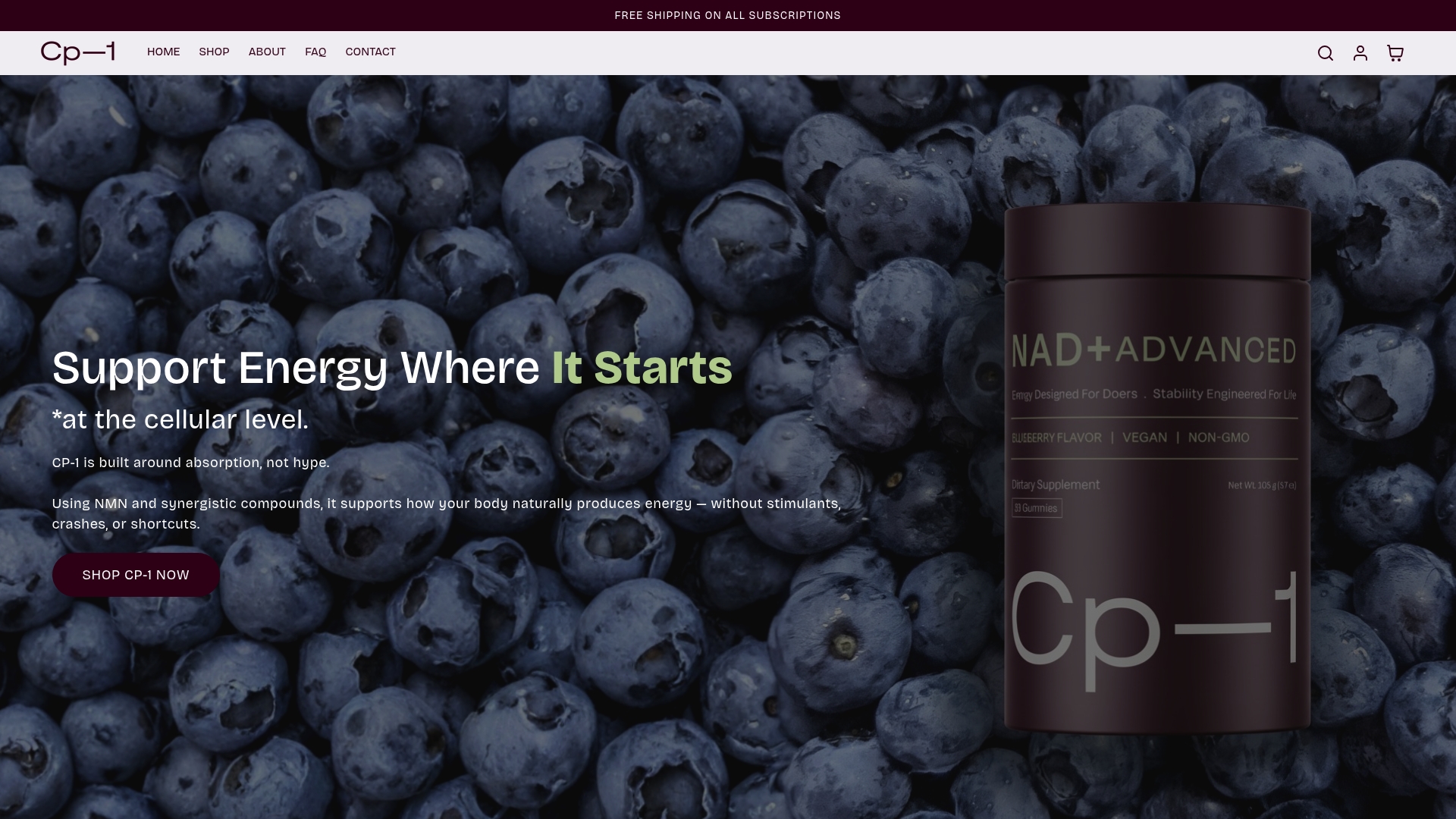
No proprietary blends. No inflated label numbers hiding a useless form. Just ingredients chosen for how well they absorb, not how impressive they look on a label.
If you’re ready to stop guessing whether your supplements are working, explore CP-1 and see how the formulation choices map to everything covered in this guide.
Useful sources and references
These are the primary sources behind the claims in this guide.
- Physiology, Nutrient Absorption — StatPearls, NCBI Bookshelf: Primary clinical reference for how the small intestine absorbs fat-soluble and water-soluble vitamins, minerals, and macronutrients.
- American Heart Association — Dietary Supplements: Hype or Help?: Supports the food-first framing and the role of supplements as gap-fillers under clinical guidance.
- Supplement Bioavailability Explained — Supplement Scored: Explains why chemical form determines absorbed dose, with the magnesium oxide vs. glycinate comparison.
- Supplement Absorption: What Blocks and What Helps — Prova: Source for vitamin D fat-pairing data, curcumin bioavailability, vitamin C + iron pairing, and collagen + vitamin C timing study.
- Best Time to Take Supplements — SupplementScience.ai: Source for coffee/tea tannin data on iron absorption and mineral separation windows.
- Supplement Timing Guide — Formulate Health: Practitioner guidance supporting daily adherence as the primary driver of supplement outcomes.
- How Supplements Are Absorbed — Dietary Habit: Covers PPI and medication effects on B12, iron, magnesium, and zinc absorption.
- How Do Vitamins Work? — UF Medical Physiology: University of Florida physiology resource on fat-soluble vs. water-soluble vitamin absorption pathways.
- CP-1 NAD+ Advanced Supplement: Product formulation details, manufacturing standards, and third-party testing information for the CP-1 EEAT example.
- Energy Boosting Supplement Tips — CP-1 Blog: Author (Hugo) content on practical supplement regimens and adherence strategies.
This article is general educational information, not medical advice. For personalized guidance on supplementation, especially if you take prescription medications, have a diagnosed condition, or are pregnant, consult a qualified healthcare provider and verify current recommendations with primary sources.