

Ectomorph Diet: Build Muscle Without Burning Out
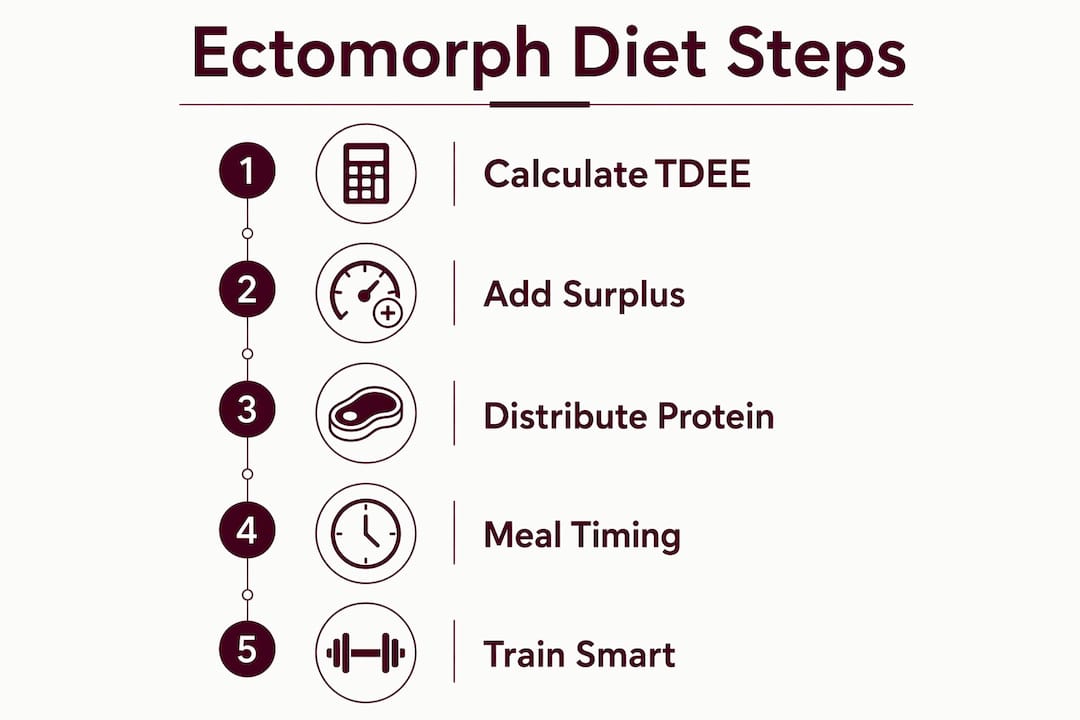
If you’re a hardgainer, the single best thing you can do today is eat 300–500 kcal above your maintenance level, hit 1.6–2.2 g/kg protein, lift heavy compound movements, and protect your cellular energy so your brain and body can actually recover. That’s the whole plan. Everything below is how to execute it.
Start here — your 48-hour checklist:
- Calorie surplus: Add a calorie surplus above your estimated maintenance (TDEE) today
- Protein target: Aim for a protein intake spaced roughly every three hours
- Training cue: Schedule a heavy compound session (squat, deadlift, press) within 48 hours
- Liquid calories: Prep one high-calorie smoothie to use post-workout or between meals
- Supplement cue: Consider a mitochondrial support formula like Cp-1 NAD+ Advanced if energy crashes are limiting your training consistency
Table of Contents
- What does “ectomorph” actually mean for your diet?
- How to set your calories and macros
- Meal strategies that get you to a surplus without feeling stuffed
- Training and recovery that supports lean mass gain
- Evidence-backed supplements for hardgainers
- One-day sample menus at three calorie levels
- What to measure and when to adjust
- Common ectomorph mistakes and how to fix them
- Key Takeaways
- The part most hardgainer guides skip
- Cp-1 NAD+ Advanced: cellular energy support built for hardgainers
- Selected sources and further reading
What does “ectomorph” actually mean for your diet?
The ectomorph label describes a lean frame, longer limbs, a faster metabolic rate, and a lower appetite than most people. NASM frames somatotypes as useful starting points for programming, not rigid categories, and recommends adjusting based on your actual metabolic response and recovery. That’s the right framing.
What matters practically: your body burns through calories efficiently, your hunger signals are weak, and you likely need more food than feels comfortable. Higher insulin sensitivity means carbohydrates work well for you, but that advantage disappears if you’re not eating enough total calories to support muscle protein synthesis.
Tracking your weight weekly and your key lifts every session tells you far more than any body-type quiz. Use the somatotype label to set your starting targets, then let the data drive every adjustment.
How to set your calories and macros
Estimate your TDEE using your body weight, activity level, and a standard multiplier (most active adults land between 14–17 calories per pound). Then add your surplus.
| Profile | Body Weight | Est. Maintenance | +300 kcal Target | +500 kcal Target |
|---|---|---|---|---|
| Male, moderately active, estimate maintenance caloric intake with added surplus | ||||
| Female, moderately active, estimate maintenance caloric intake with added surplus |
For macros, the research is consistent: carbohydrates should make up a substantial portion of your calories, protein at appropriate levels, and fats covering a moderate portion. Ectomorphs benefit from a higher carbohydrate intake because of their carbohydrate tolerance and the fuel demand of heavy training.
Target weight gain: 0.25–0.5% of total body weight per week is the sweet spot for lean mass gain. For a 155-pound person, that’s roughly 0.4–0.8 lbs per week. Faster than that and you’re adding more fat than muscle.
If the scale doesn’t move after two weeks, add 150–200 kcal per day from carbs and fats. If you’re gaining faster than 1% of body weight per week, pull back by 100–150 kcal.
Meal strategies that get you to a surplus without feeling stuffed
The biggest practical hurdle for ectomorphs isn’t knowing what to eat. It’s physically getting enough food in when your appetite shuts off early. Liquid calories and calorie-dense, low-volume foods are the most reliable fix.
High-calorie smoothie recipe (post-workout or between meals):
- 2 cups whole milk (~300 kcal)
- 2 scoops whey protein (~240 kcal)
- ½ cup rolled oats (~150 kcal)
- 2 tbsp almond butter (~190 kcal)
- 1 banana (~100 kcal)
- Total: ~980 kcal | ~60g protein | ~100g carbs | ~30g fat
Calorie-boosting tactics that work without adding much volume include adding healthy fats, using whole milk, and snacking on nuts and dried fruit.
- Add 1 tbsp olive oil to cooked meals (+120 kcal, zero bulk)
- Use whole milk instead of water in oats and shakes
- Snack on trail mix, macadamia nuts, or dried fruit between meals
- Eat 4–6 smaller meals rather than 3 large ones to avoid digestive overload
- Include fatty fish (salmon, sardines) at least twice a week for omega-3s and calorie density.
Pro Tip: If you hit a calorie plateau, drink your biggest calorie load within 30 minutes post-workout. Your appetite is lowest then, but your muscles are most receptive. A shake goes down when a full meal won’t.
Spreading meals across the day also supports protein distribution every three hours, which keeps muscle protein synthesis elevated throughout the day. A slow-digesting protein like casein or cottage cheese before bed reduces overnight catabolism.
Training and recovery that supports lean mass gain
For ectomorphs, the goal is maximum hypertrophic stimulus with minimum unnecessary calorie burn. Long cardio sessions work against you in early bulking phases.

3-day full-body split (beginner to intermediate): Squat, bench press, row, overhead press, deadlift. Three sets of 6–12 reps per exercise. Rest 2–3 minutes between sets.
4-day upper/lower split (intermediate): Upper A (push focus), Upper B (pull focus), Lower A (quad focus), Lower B (hinge focus). Same 6–12 rep range, 3–4 sets per movement.
Training each muscle group twice per week produces meaningfully better hypertrophy than once-weekly sessions. Aim for 10–20 total sets per muscle group per week, progressing load or reps each session.
Recovery checklist:
- Sleep sufficiently to support recovery; this is when growth hormone peaks.
- Schedule at least two full rest days per week
- Keep steady-state cardio under 20 minutes during active bulking phases
- Manage stress actively — cortisol competes directly with muscle-building hormones
Evidence-backed supplements for hardgainers
Most of the supplement industry is garbage. A few things actually work.
- Creatine monohydrate: 3–5 g daily, taken consistently. Supports ATP regeneration and muscle cell volumization. No loading phase required.
- Whey protein: 20–40 g post-workout to hit daily protein targets when whole food falls short
- Casein or cottage cheese: 20–40 g before bed to reduce overnight muscle breakdown
- Calorie-dense mass gainer: useful when real-food calories consistently fall short; check the label for whole-food carb sources, not just sugar
For cellular energy and cognitive support during a demanding bulk, mitochondrial support supplements are worth understanding. NMN (Nicotinamide Mononucleotide) is an NAD+ precursor that supports mitochondrial energy production. CoQ10 supports the electron transport chain. Functional mushrooms like lion’s mane, reishi, and turkey tail contribute to cognitive resilience and immune function.
“When whole-food intake plateaus due to satiety, targeted mitochondrial and cognitive support ingredients can help maintain training energy and mental performance during a bulk.” Cp-1 NAD+ Advanced combines NMN, lion’s mane, reishi, turkey tail, and CoQ10 in a chewable gummy format, manufactured in the US under GMP standards, third-party tested, vegan, and non-GMO.
Always consult a clinician before adding new supplements if you take medications or have a medical condition.
One-day sample menus at three calorie levels
| Meal | Maintenance (~2,700 kcal) | +300 kcal (~3,000 kcal) | +500 kcal (~3,200 kcal) | Vegan Alternative |
|---|---|---|---|---|
| Breakfast | Oats + 2 eggs + banana | Oats + 2 eggs + banana + 2 tbsp peanut butter | Same + whole milk instead of water | Oats + soy protein + banana + almond butter |
| Lunch | Chicken thigh + brown rice + broccoli | Same + ½ avocado + olive oil drizzle | Same + extra cup of rice | Tempeh + quinoa + broccoli + avocado |
| Post-workout | Whey shake + water | Whey shake + whole milk | Smoothie recipe above | Pea protein shake + oat milk + banana |
| Dinner | Salmon + sweet potato + greens | Same + side of whole grain bread | Same + 2 tbsp olive oil on greens | Lentil stew + sweet potato + spinach |
| Bed snack | Cottage cheese | Cottage cheese + mixed nuts | Cottage cheese + nuts + honey | Soy yogurt + walnuts |
| Approx. totals | ~2,700 kcal / 160g protein | ~3,000 kcal / 170g protein | ~3,200 kcal / 180g protein | Similar macros, plant sources |
What to measure and when to adjust
Tracking doesn’t need to be complicated. These are the only metrics that matter:
- Body weight: Weigh yourself three mornings per week (post-bathroom, pre-food). Average the three readings.
- Key lifts: Log your squat, bench, and deadlift every session. Strength gains confirm muscle is being built.
- Energy and sleep quality: Rate both on a simple 1–5 scale each morning. Consistent low scores signal under-recovery.
- Two-week check-in: After two weeks, review your weight average. If you’re not gaining 0.25–0.5% of body weight per week, add 150–200 kcal per day.
- Four-week review: Reassess training volume and macro split. If strength is stalling alongside weight, increase carbs on training days.
- Eight to twelve weeks: Full body composition check. Adjust surplus or introduce a short maintenance phase if fat gain is outpacing muscle.
A structured 4–12 week timeline with objective check-ins consistently outperforms intuition-based adjustments.
Common ectomorph mistakes and how to fix them
- Dirty bulking: Filling your surplus with processed food adds fat and tanks cognitive energy. Swap chips and fast food for oats, rice, nut butters, and fatty fish. The risks of low-nutrient bulking go beyond aesthetics — poor nutrient density drives energy crashes that hurt training quality. Supporting metabolic health during a bulk matters more than most people realize.
- Too much cardio: More than 20 minutes of steady-state cardio per session during a bulk burns calories you need for muscle. Cut it or replace with short conditioning work.
- Ignoring protein timing: Eating all your protein in one or two meals is less effective than spacing it every three hours. Set a phone reminder if needed.
- Skipping progressive overload: Adding reps or weight each week is non-optional. Without it, no amount of food produces muscle.
- Under-recovering: Sleeping six hours and skipping rest days while eating 3,000+ calories is a recipe for fat gain and cognitive fog, not muscle.
Key Takeaways
An ectomorph diet works when you combine a consistent 300–500 kcal surplus, protein spaced across the day at 1.6–2.2 g/kg, heavy compound training twice per week per muscle group, and targeted cellular support to protect energy and focus.
| Point | Details |
|---|---|
| Calorie surplus | Add 300–500 kcal above maintenance daily; target 0.25–0.5% body weight gain per week. |
| Protein distribution | Hit 1.6–2.2 g/kg daily, spaced every three hours, with casein before bed. |
| Training frequency | Train each muscle group twice per week using compound lifts in the 6–12 rep range. |
| Liquid calories | Use a high-calorie smoothie post-workout when appetite limits whole-food intake. |
| Cp-1 NAD+ Advanced | Supports mitochondrial energy and cognitive focus during demanding bulks; GMP-certified, third-party tested, US-made. |
The part most hardgainer guides skip
The conventional advice for ectomorphs is “just eat more.” That’s technically correct and practically useless. The real challenge is sustaining a surplus week after week without burning out mentally, crashing your energy mid-afternoon, or losing focus in the gym.
What actually moves the needle is treating your cellular energy as a training variable, not an afterthought. When you’re pushing 3,000+ calories a day, lifting heavy four times a week, and trying to perform at work or in life, your mitochondria are under real demand. Protecting that system with NAD+ precursors, functional mushrooms, and CoQ10 isn’t biohacker theater. It’s addressing a real bottleneck.
The other thing I’d push back on: don’t wait until you’re “consistent” to start tracking. Track from day one, even imperfectly. A rough log beats no log every time. Small, consistent wins compound faster than you expect.
Cp-1 NAD+ Advanced: cellular energy support built for hardgainers
Eating 3,000+ calories a day while training hard is a real metabolic load. Cp-1 NAD+ Advanced is designed for exactly this situation: a chewable gummy combining NMN (an NAD+ precursor for mitochondrial energy), lion’s mane (cognitive focus and nerve support), reishi and turkey tail (immune resilience and stress adaptation), and CoQ10 (mitochondrial electron transport support). Every batch is third-party tested, manufactured in the US under GMP standards, and certified vegan and non-GMO.
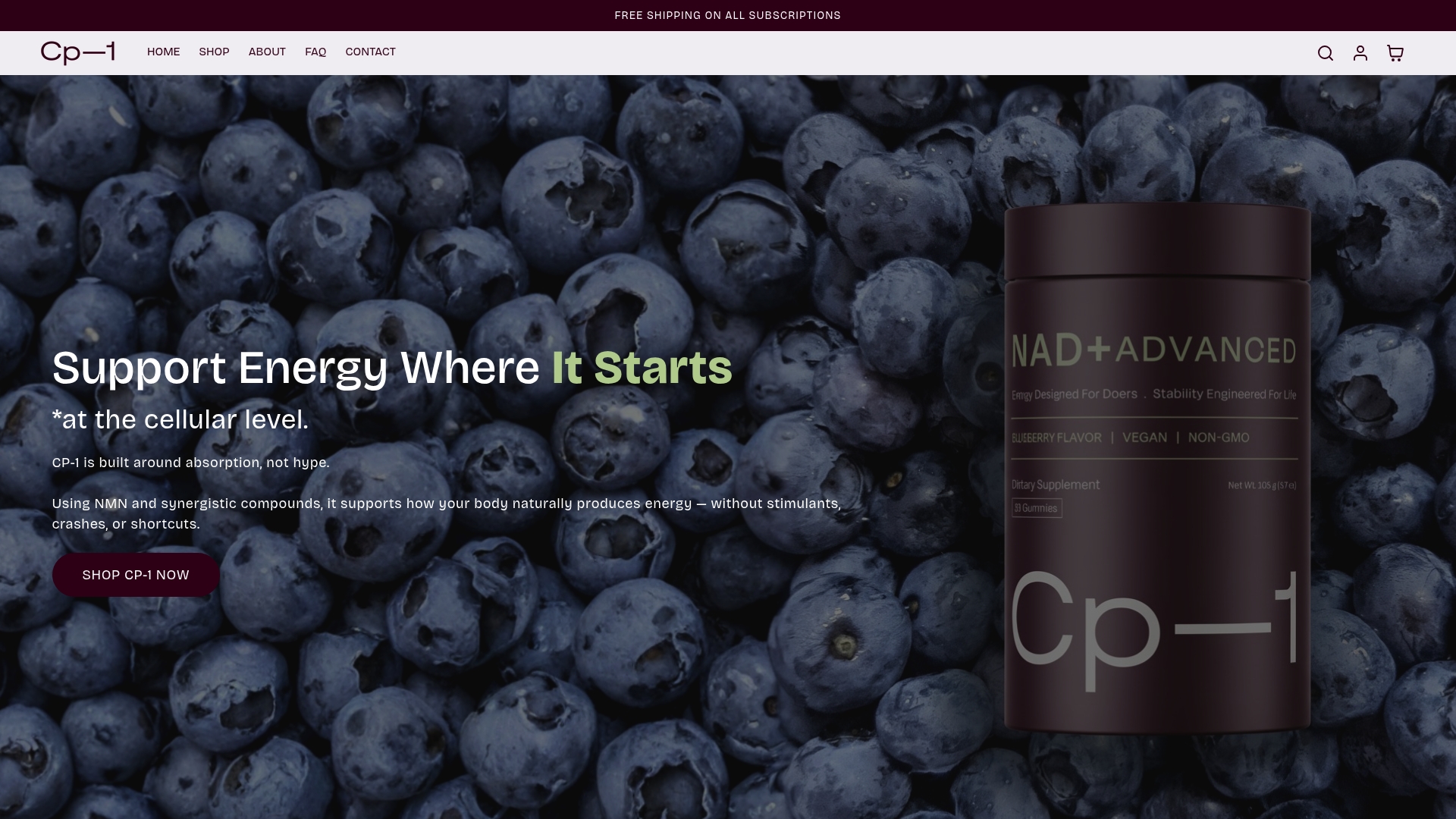
The use case is straightforward: take it daily to support the cellular energy and mental clarity that a demanding bulk requires. It’s not a meal replacement or a magic muscle builder. It’s the layer of support that keeps your mitochondria and your brain running cleanly when everything else is pushing hard. This is general information, not medical advice. Consult your clinician before adding any supplement if you take medications or have existing health conditions.
Try Cp-1 NAD+ Advanced and see what consistent cellular support feels like during a real bulk.
Selected sources and further reading
- NASM: Body Types — How to Train and Diet for Your Body Type — authoritative guidance on somatotypes, protein spacing, and individualized programming
- Gaspari Nutrition: Ectomorph Workout and Diet Plan — practical surplus, training frequency, and dirty-bulking warnings
- HumanFuelGuide: Ectomorph Bulking Strategy — macro percentages and structured timeline protocols
- Cp-1: Mitochondrial Support Supplements — What Actually Works — evidence-oriented review of NMN, CoQ10, and functional mushrooms
- Cp-1: How to Build Lean Muscle — Science-Backed Guide — muscle-building fundamentals with supplement timing
- Plant-Based Inflammation Support Practices — useful for vegan ectomorph alternatives and anti-inflammatory food choices
When reviewing any supplement page, look for a Certificate of Analysis (COA) from a third-party lab and a clear GMP manufacturing statement. If those aren’t visible, keep looking.