

Free Supplements: How to Get Safe No-Cost Samples
The fastest legitimate ways to get free supplements in the U.S. right now are manufacturer trial programs, state public-health vitamin distributions, charity pharmacy partnerships, and brand-run sample campaigns. Most deliver within a short period, typically within a few weeks. The real tradeoff is your contact information, and sometimes a nominal shipping fee.
Before you chase any offer, here are the four moves worth your time:
- Check your state’s public-health vitamin programs. Arizona’s Power ME A2Z program, for example, uses a short eligibility quiz to send free vitamins to qualifying residents.
- Visit a participating Walgreens for the Vitamin Angels prenatal multivitamin program, which provides free prenatal vitamins and nutrition education at no cost.
- Request single-serve packets directly from brands at gyms, health expos, or via email.
- Search ClinicalTrials.gov for university or sponsor-funded studies that provide supplements to participants.
One non-negotiable before you sign up for anything: read the fine print for auto-enroll language. A “free” sample that rolls into a $60/month subscription on day 15 is not free.
Table of Contents
- Where can you find legitimate free supplement samples in the U.S.?
- How do you actually claim a free sample or trial?
- What should you expect from a sample: size, timeline, and costs?
- How do you spot scams, auto-subscribe traps, and counterfeit products?
- How do you evaluate a sample during a short trial?
- Are there higher-value alternatives to hunting for free samples?
- Key Takeaways
- Why samples help, and where they fall short
- Cp-1 offers a transparent, tested trial path worth considering
- Useful sources and primary references
Where can you find legitimate free supplement samples in the U.S.?
Real, no-cost supplement options exist, but they come from specific channels. Knowing which ones are worth your time saves a lot of frustration.

Manufacturer sample programs and brand trial campaigns are the most common source. Some niche brands offer a one-week free supply so you can evaluate efficacy and tolerance before committing to a full purchase. Single-serve packets and small sachets are the standard format, especially for pre-workout and performance products.

Charity and pharmacy partnership programs are often overlooked. The Vitamin Angels and Walgreens partnership distributes free prenatal multivitamins through in-store pickup at participating locations. Good Neighbor Pharmacy runs a similar free vitamin program for children through its member pharmacies nationwide.
State public-health programs are worth a look if you qualify. Arizona’s Power ME A2Z program is a clear example of how eligibility-based quiz flows can connect specific demographic groups with no-cost vitamins.
Sample-box services occasionally include trial-size supplements, but vet them carefully. Look for boxes that disclose every brand and ingredient upfront, not just a mystery assortment.
Clinical and university trials sometimes provide supplements free in exchange for participation and data collection. Eligibility requirements and informed consent apply, and protocols vary widely.
Pro Tip: Local gyms, nutrition clinics, and health expos are underrated. Brand reps hand out single-serve packets on the spot, no credit card required.
How do you actually claim a free sample or trial?
Follow this sequence and you will avoid most of the traps.
- Find a verified offer. Use the sources above. Avoid third-party “free sample aggregator” sites that collect your data and redirect you to unverified vendors.
- Confirm eligibility and terms. Read the full offer page before entering any information. Look for trial duration, shipping cost, and cancellation terms.
- Use minimal personal information. Provide only what the form requires. Set up a dedicated email address for supplement sign-ups.
- Uncheck every marketing box. Most sign-up forms pre-check “receive promotional offers.” Uncheck them.
- Opt out of subscriptions explicitly. If there is a subscription checkbox, uncheck it. If the form does not allow you to opt out, that is a red flag.
- Track your shipping window. Note the claim date and expected delivery. If a sample does not arrive within the stated window, follow up once, then move on.
For direct brand outreach, a short email works well. Something like: “Hi, I’m interested in trying [product name] before purchasing. Do you offer sample sizes or a trial pack? I’m happy to share feedback.” Most brands with legitimate sample programs respond within a few business days.
At a pharmacy counter or health expo, ask directly: “Do you have any sample packets available?” Event staff almost always have them.
What should you expect from a sample: size, timeline, and costs?
Set your expectations before you commit time to any offer.
| Sample Type | Typical Size | Typical Delivery |
|---|---|---|
| Single-serve packet | 1 dose | Immediate (in-store/event) |
| One-week supply | — | 5–10 business days |
| Trial-size sachet | 3–5 doses | 5 business days |
| Clinic/charity program | — | Varies by program |
Shipping is often free for charity programs. Brand trial offers frequently charge a nominal handling fee, typically a few dollars. The red flag is when a “free” offer requires full credit card details with no clear cancel mechanism. That is not a sample program. That is a subscription with a free first shipment.
Most subjective effects, like taste, digestion, and energy response, show up within one to two weeks. Clinical benefits from ingredients like NMN or medicinal mushrooms take longer to assess, which is why a one-week sample is useful for tolerance testing, not for proving long-term efficacy.
How do you spot scams, auto-subscribe traps, and counterfeit products?
The supplement sample space has real garbage in it. Here is how to filter it out fast.
Red flags to walk away from:
- No ingredient list or proprietary blend with no dosing breakdown
- Mandatory credit card entry for a “free” product with no visible cancel terms
- Auto-enroll language buried in fine print below the submit button
- No mention of third-party testing, GMP certification, or manufacturing location
- Pressure tactics like countdown timers or “only 3 left” messaging on a sample page
Trust signals worth looking for:
- Third-party testing certificates (NSF, Informed Sport, or USP verification)
- GMP-certified, U.S.-based manufacturing
- Transparent ingredient list with actual dosing per serving
- Clear trial duration, shipping cost, and cancellation steps stated before checkout
- A real company address and customer service contact
Before you hand over your email or payment details, run this 60-second check: Does the page show a full ingredient list? Is there a GMP or third-party testing claim you can verify? Are the trial terms (duration, cost, cancel steps) written in plain language above the fold? If any answer is no, close the tab.
Use a dedicated email address for all sample sign-ups. Free samples are primarily customer-acquisition tools — companies collect your contact data for future marketing. That is the real transaction happening.
How do you evaluate a sample during a short trial?
Samples are best for testing subjective tolerability, not proving clinical effectiveness. Structure your one to two week trial so you get reliable impressions.
Track these daily:
- Taste and palatability (would you take this consistently?)
- Digestion and GI tolerance (any bloating, nausea, or discomfort?)
- Energy and alertness patterns (time of day, duration, crash or no crash?)
- Sleep quality (any disruption, especially with stimulant-containing formulas?)
- Mood or cognitive clarity (subjective, but worth noting)
- Any adverse effects (headache, elevated heart rate, jitteriness)
Simple daily log format:
| Day | Dose Taken | Energy (1–5) | Digestion | Sleep | Notes |
|---|---|---|---|---|---|
| 1 | Full serving | 3 | Fine | Normal | No issues |
| 2 | Full serving | 4 | Fine | Slightly restless | Check stimulant content |
For stimulant or energy formulas, start with half the recommended serving. Proprietary blends can cause unpredictable responses in sensitive people. If you notice elevated heart rate, jitteriness, or sleep disruption, stop and reassess the formula’s ingredient list.
Subjective improvements in energy or focus during a short trial may reflect real effects, placebo response, or normal daily variability. A structured daily log helps you separate signal from noise. For cognitive supplement evaluation specifically, two weeks is a minimum baseline, not a conclusion.
Are there higher-value alternatives to hunting for free samples?
Chasing free samples one by one is time-consuming and often yields low-quality products. These options frequently deliver more value.
- Free nutrition coaching paired with a targeted trial. Puritan’s Pride, for example, offers complimentary 20-minute nutrition coaching appointments alongside supplement bundle promotions. A coach who matches a supplement to your specific goals eliminates a lot of wasted sampling.
- Evidence-based product-matching quizzes. Tools that analyze your goals against published research databases rank supplement relevance before you spend a dollar. That is a smarter filter than grabbing whatever sample is available.
- Money-back guarantees. A 30-day money-back guarantee on a full-size product gives you more evaluation time than any free sample, with the same financial protection.
- Small retail purchases. Buying the smallest available retail size from a brand with transparent labeling and GMP certification is often cheaper than the time spent hunting free samples.
- Pairing nutrition guidance with a wellness-focused food approach can also sharpen what you actually need. Brands like Wellnosh combine nutrition-forward products with practical guidance worth exploring alongside any supplement trial.
Pro Tip: When a coach or quiz narrows your options to one or two products, a single short paid purchase usually saves more money than cycling through five free samples of things that were never right for you.
Key Takeaways
Legitimate free supplement samples exist, but the safest and most valuable path combines verified sources, privacy protection, and a short structured evaluation window.
| Point | Details |
|---|---|
| Use verified sources | State programs, charity pharmacy partnerships, and direct brand trials are the most reliable no-cost options. |
| Protect your data | Use a dedicated email, uncheck marketing boxes, and never provide payment details without clear cancel terms. |
| Track your trial | Log energy, digestion, sleep, and tolerance daily for one to two weeks to separate real effects from placebo. |
| Watch for red flags | No ingredient list, mandatory credit card entry, and buried auto-enroll language are reasons to walk away. |
| Cp-1 as a verified option | Cp-1 NAD+ Advanced Supplement is U.S.-made, GMP-certified, third-party tested, and built on transparent dosing. |
Why samples help, and where they fall short
Free samples solve one real problem: they let you test taste and tolerance before spending money on a full bottle. That is genuinely useful. What they do not do is prove a supplement works for you. One week of a nootropic gummy tells you whether your stomach handles it and whether you like the flavor. It does not tell you whether your NAD+ levels are moving or whether your mitochondria are running more efficiently.
The supplement industry has a habit of using sample programs as a hook for subscriptions, not as a genuine service to consumers. A lot of the “free” offers out there are formulas designed for a marketing deck, not for the person swallowing them. The ones worth your time are backed by real manufacturing standards, disclosed ingredients, and honest trial terms.
My honest take: the most underused option in this space is pairing a short trial with a structured log and some basic nutrition guidance. That combination tells you far more than five random sample packets ever will. When you know what you are looking for and why, even a two-week trial of a well-formulated product gives you real signal. Without that framework, you are just collecting packets.
Cp-1 offers a transparent, tested trial path worth considering
Most free sample programs make you work for something uncertain. Cp-1 NAD+ Advanced Supplement takes a different approach: a clearly stated offer, U.S.-made in a GMP-certified facility, third-party tested, with a full ingredient list and honest dosing on every label. The formula combines NMN, Lion’s Mane, Reishi, Turkey Tail, and CoQ10 in a chewable gummy designed for absorption, not just label appeal.
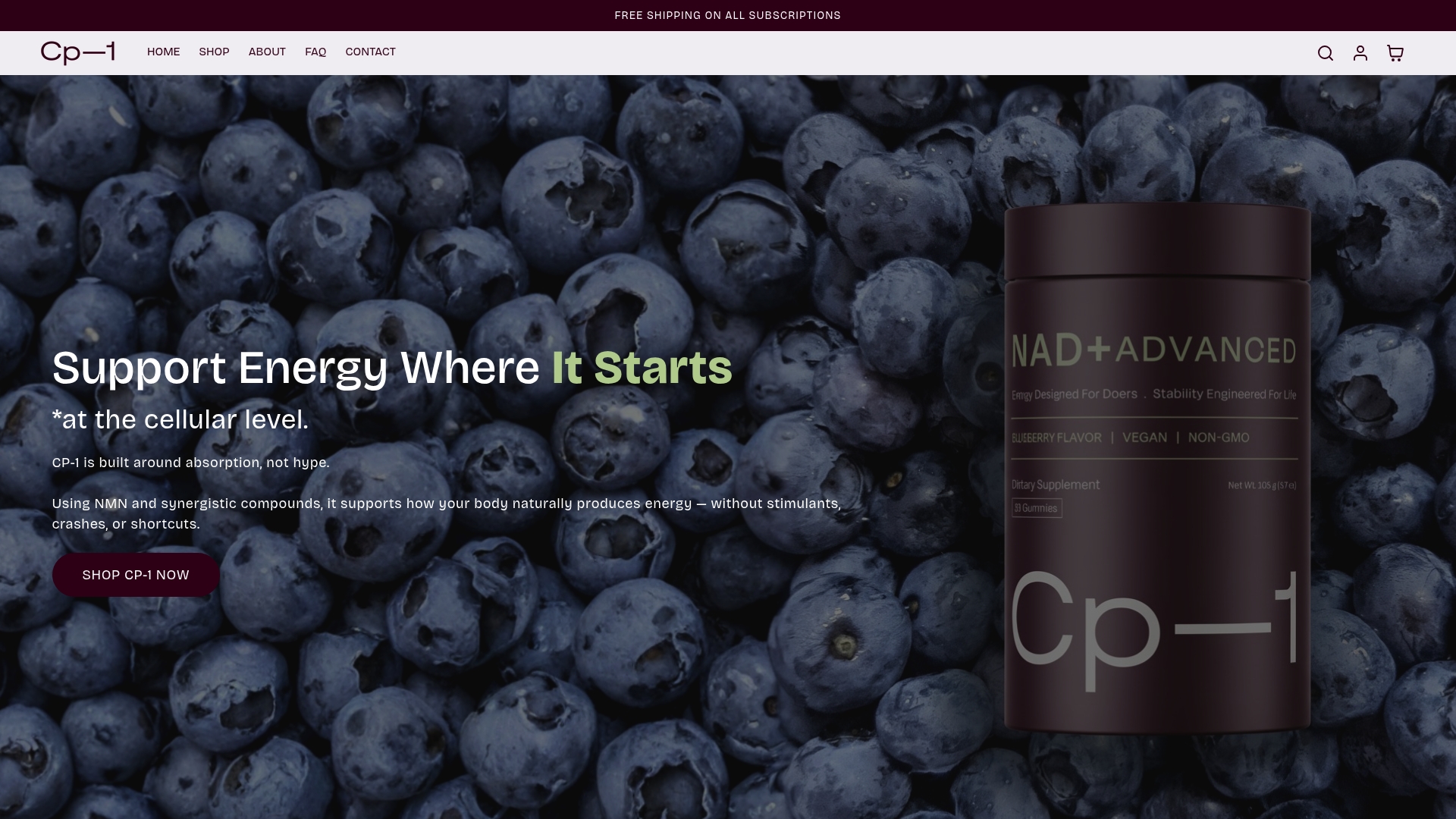
There are no proprietary blends hiding underdosed ingredients. No auto-enroll traps buried in fine print. If you want to evaluate a supplement that meets the trust signals this article describes, Cp-1 is built to that standard. Check the current trial details, shipping terms, and subscription options directly at cp-1.com and decide with full information in front of you.
Useful sources and primary references
- Vitamin Angels x Walgreens Prenatal Program — verify in-store availability and eligibility for free prenatal multivitamins.
- Power ME A2Z, Arizona Department of Health Services — state-run eligibility quiz for free vitamins; check your state’s equivalent program.
- Puritan’s Pride Nutrition Coaching Launch, Nutraceuticals World — example of coaching-plus-sample bundled offers.
- ClinicalTrials.gov — search for university or sponsor-funded supplement studies open to participants in your area.
- Supplement label reading checklist — step-by-step guide to verifying ingredient lists and dosing before you try any product.