
Non-GMO supplements are defined as dietary supplements made without ingredients derived from genetically engineered organisms. That definition sounds simple, but the real-world non-GMO supplements meaning runs deeper than a label on a bottle. It covers ingredient origin, supply chain controls, third-party verification, and a set of standards that separate a credible claim from a marketing phrase. If you care about what goes into your body, understanding this distinction is the first step toward making smarter choices.
What does non-GMO supplements meaning actually cover?
A non-GMO supplement excludes ingredients produced through genetic engineering, the laboratory process of altering an organism’s DNA in ways that do not occur naturally. The action threshold for GMO presence in certified products is typically below 0.9%. That number matters because trace contamination can occur during farming or processing, so a threshold sets a measurable, enforceable standard rather than an impossible zero.
The claim also extends beyond the active ingredients. Fillers, binders, and excipients in supplement capsules often come from commodity crops like corn, soy, or sugar beets, and many of those additives derive from genetically modified varieties. A genuine non-GMO supplement addresses the entire formulation, not just the headline ingredient. That supply chain scope is what separates a meaningful certification from a sticker.
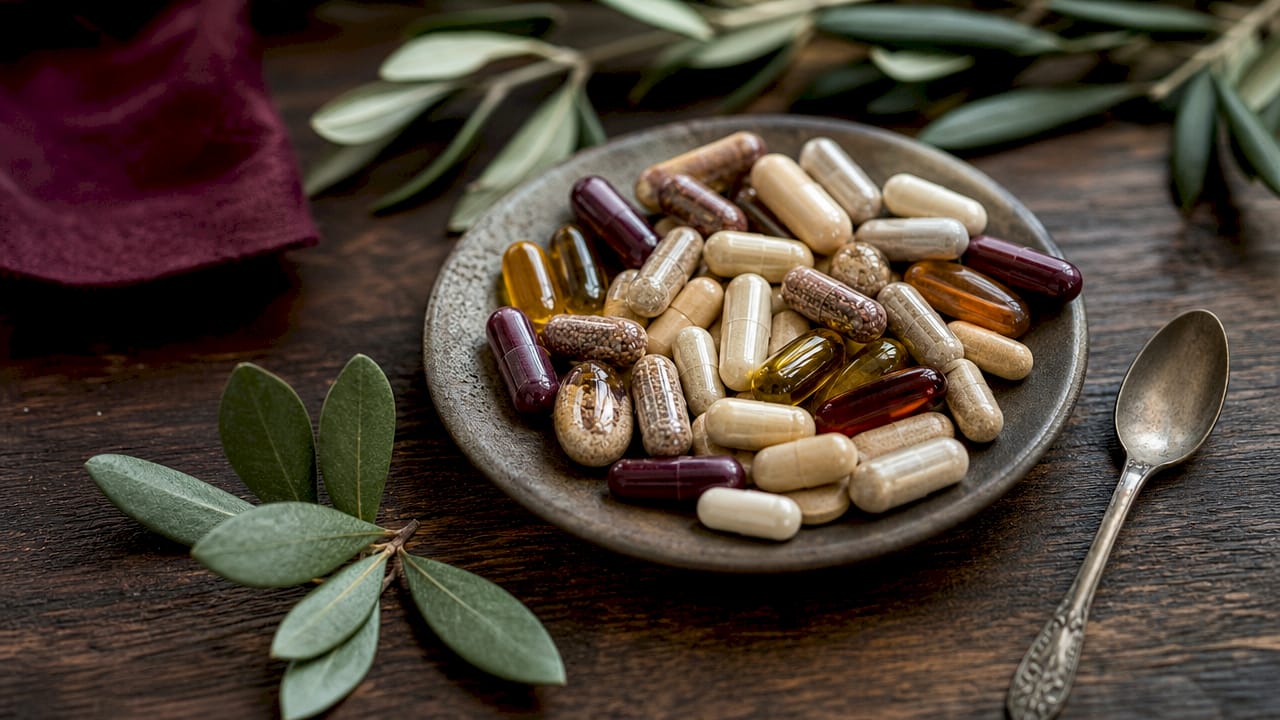
The FDA and WHO both consider current GMO foods safe, yet consumers choose non-GMO as a signal of transparency and tighter supply chain scrutiny. The preference is not primarily about documented health risk. It is about trust, sourcing values, and knowing exactly where your ingredients come from.
What standards and certifications define non-GMO supplements?
Certifications vary widely in rigor, and that gap matters when you are reading a label.
- Non-GMO Project Verified. This is the most recognized independent standard in the United States. The Non-GMO Project Verified label requires independent audits, supplier documentation, ingredient testing, and annual renewal. It is the gold standard for third-party verification.
- Self-claimed non-GMO. A brand can print “non-GMO” on its label without any external audit. Self-claimed labels lack standard regulatory enforcement. No third party checks the supply chain, and no testing protocol is required.
- USDA Bioengineered (BE) disclosure. Starting in 2026, federal law requires mandatory BE labeling on products containing detectable genetically engineered material. This is a government-mandated disclosure, not a quality certification. A product can carry a BE label and still be sold legally. It tells you what is present, not whether the brand has done anything to avoid it.
The critical distinction is this: independent verification requires a brand to prove its claim. Self-declaration requires nothing. The FDA’s oversight of GMOs relies on voluntary consultation, with no mandatory pre-market approval process. That gap is exactly why independent third-party verification carries real weight for consumers who want accountability.
Pro Tip: When you see “non-GMO” on a label, look for the Non-GMO Project Verified butterfly logo or another named certifying body. If no certifier is listed, the claim is self-declared and unverified.
Why do consumers choose non-GMO supplements?
The reasons people seek out non-GMO dietary supplements are practical, not just philosophical. Here are the four most common motivations:
-
Supply chain transparency. Supplement ingredients travel through multiple countries and processing facilities before reaching a capsule. Supply chain complexity is one of the largest unknowns for consumers. Non-GMO certification requires documentation at each step, which forces brands to actually know where their ingredients come from.
-
Avoiding GMO commodity crop derivatives. Corn starch, soy lecithin, and sugar beet-derived dextrose appear in hundreds of supplements as fillers and binders. These crops are among the most widely genetically modified in the United States. Choosing a certified non-GMO supplement reduces your exposure to these derivatives throughout the entire formula.
-
Agricultural and environmental values. Refining processes can remove detectable genetic material from an ingredient, but non-GMO certification provides assurance beyond what a lab test alone can confirm. It covers residues, farming practices, and the broader agricultural integrity of the supply chain.
-
Trust as a quality signal. Non-GMO status signals that a brand has submitted to external scrutiny. That scrutiny often correlates with better overall manufacturing practices, even when the GMO question itself is not the primary health concern.
Pro Tip: Non-GMO status is a sourcing preference, not a potency guarantee. A supplement can be certified non-GMO and still contain an ineffective dose. Always check that active ingredients are dosed at clinically studied levels.
How do non-GMO, USDA Organic, and BE labels compare?
These three labels are often confused, but they answer different questions.
| Label | Who issues it | What it covers | What it does not cover |
|---|---|---|---|
| Non-GMO Project Verified | Independent nonprofit | Genetic engineering avoidance, supply chain audits | Pesticide use, synthetic fertilizers, efficacy |
| USDA Organic | Federal government | Non-GMO status plus limits on synthetic pesticides and fertilizers | Specific GMO testing thresholds, supplement dosing |
| Bioengineered (BE) | Federal government (mandatory from 2026) | Disclosure of detectable GMO material | Quality, sourcing values, or avoidance of GMOs |
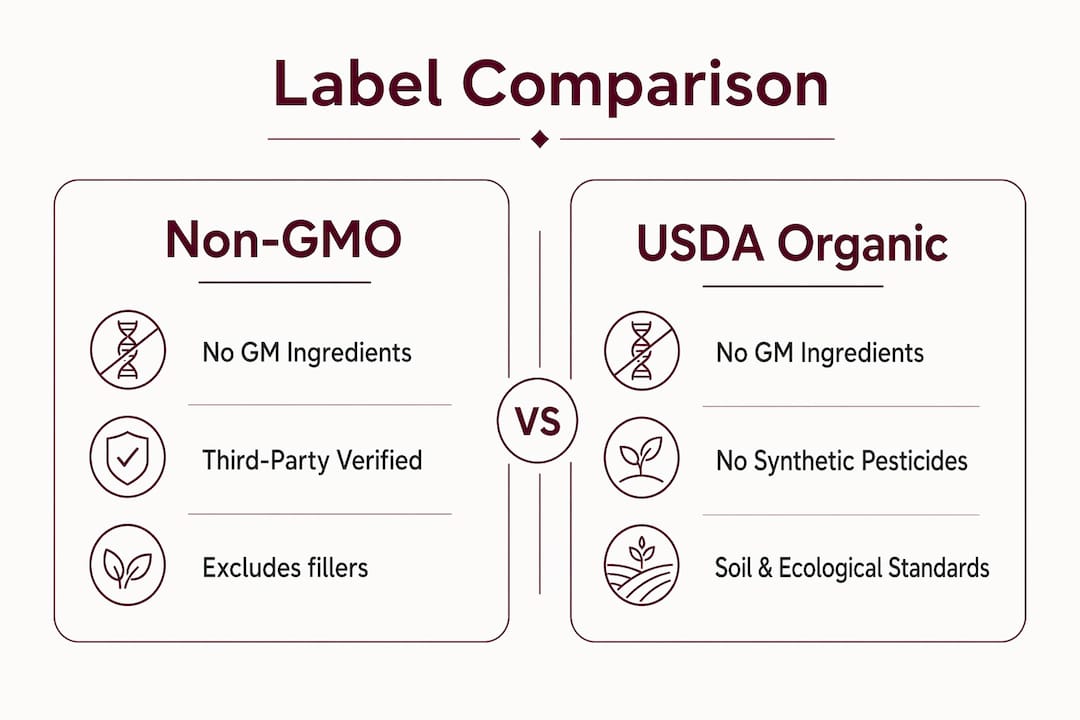
USDA Organic guarantees non-GMO status and goes further by restricting synthetic pesticides and fertilizers. Non-GMO certification is narrower. It targets genetic engineering specifically, without the broader agricultural restrictions that organic requires. A product can be non-GMO certified and still use conventional farming methods.
The BE disclosure is the most misunderstood of the three. It is a federal transparency requirement, not a quality mark. A product labeled “Contains Bioengineered Food Ingredient” has not failed any safety standard. The label simply tells you that a GMO ingredient is present. Brands that want to signal avoidance still need a voluntary non-GMO certification to make that case credibly.
Understanding supplement transparency across these three systems helps you read labels accurately instead of assuming all three mean the same thing.
What should you look for when choosing non-GMO supplements?
The non-GMO label is one piece of a larger quality picture. Here is what to check beyond the claim itself:
- Named certifying body. Look for the Non-GMO Project Verified seal or another identified third-party certifier. A logo without a named organization is not meaningful verification.
- Annual renewal. Legitimate certifications require annual renewal and supply chain re-examination. Ask whether the brand’s certification is current, not just historical.
- Additional third-party testing. Programs like NSF International or USP add label accuracy and contaminant testing that go beyond GMO concerns. Multiple certifications together create a much stronger quality signal than any single label alone. Learning about third-party testing is one of the most useful things you can do as a supplement buyer.
- Clinically effective dosing. Non-GMO status says nothing about whether the active ingredient is dosed at a level shown to work. Non-GMO is a sourcing preference; effective dosing is what drives health outcomes. Check that the milligrams on the label match published research on that ingredient.
- Manufacturing location. US-based manufacturing operates under FDA Current Good Manufacturing Practice (cGMP) regulations, which set facility standards that many overseas manufacturers do not meet. US-made supplements carry a different baseline of regulatory accountability.
- Full ingredient transparency. Proprietary blends hide individual ingredient doses. A brand committed to non-GMO sourcing should also be willing to list every ingredient and its exact amount.
Key Takeaways
Non-GMO supplements are a sourcing and transparency claim, not a health outcome guarantee, and independent third-party verification is the only reliable way to confirm that claim.
| Point | Details |
|---|---|
| Definition of non-GMO | Supplements made without genetically engineered ingredients, with a GMO contamination threshold below 0.9%. |
| Verification matters | Non-GMO Project Verified requires audits and annual renewal; self-claimed labels have no regulatory enforcement. |
| Covers the full formula | Non-GMO certification applies to fillers and binders, not just active ingredients, addressing GMO commodity crop derivatives. |
| Distinct from organic and BE labels | Organic adds pesticide restrictions; BE is a mandatory federal disclosure, not a quality or avoidance certification. |
| Pair with effective dosing | Non-GMO status does not guarantee potency; always verify that active ingredients are dosed at clinically studied levels. |
The part most supplement articles skip
I have spent years looking at supplement labels, and the non-GMO conversation frustrates me because it gets flattened into a binary. Either people treat it as a magic health claim, or they dismiss it entirely because the FDA says GMOs are safe. Both positions miss the real point.
The actual value of a non-GMO certification is what it forces a brand to do. To earn and keep that verification, a company has to map its supply chain, document its ingredient sources, and submit to external audits. That process catches problems that have nothing to do with genetic engineering. It catches contamination, mislabeled ingredients, and suppliers who cut corners. The non-GMO label is, in practice, a proxy for how seriously a brand takes its sourcing overall.
What I find genuinely useful is pairing the non-GMO claim with other quality markers. A brand that holds Non-GMO Project Verification, manufactures in a cGMP facility in the United States, and publishes third-party test results is a brand that has built real accountability into its process. That combination tells you far more than any single label. The role of supplement quality in your actual health outcomes depends on all of those factors working together, not just one checkbox on the front of the bottle.
The evolving regulatory picture, especially with mandatory BE disclosures now in effect, will push more brands to clarify their positions publicly. That is good for consumers. But it also means more labels, more claims, and more confusion. Your best defense is knowing exactly what each label requires and who is doing the checking.
— Hugo
CP-1’s approach to clean, verified supplements
If you have read this far, you already know that a non-GMO label is only as good as the verification behind it.
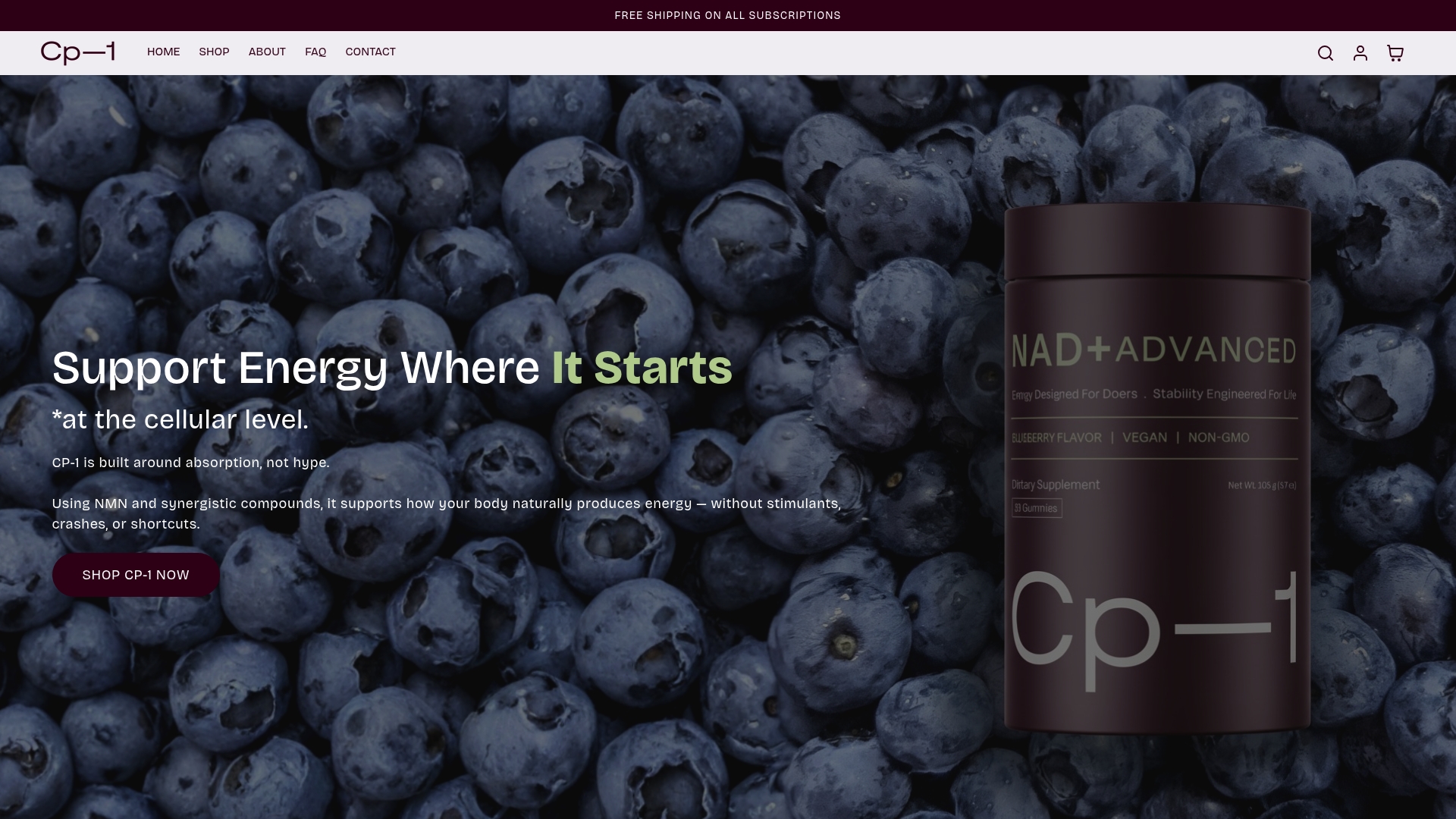
CP-1 is built on that exact principle. Every product is non-GMO certified, vegan, and manufactured in the United States under cGMP standards. The formula includes NMN, lion’s mane mushroom extract, reishi mushroom extract, turkey tail mushroom extract, and coenzyme Q10, all sourced with full ingredient transparency and no proprietary blends hiding the doses. Third-party testing is not optional at CP-1. It is part of the process. If you want a supplement that backs its claims with real verification, explore CP-1’s product page and see exactly what goes into every capsule.
FAQ
What does non-GMO mean in a supplement?
A non-GMO supplement contains no ingredients derived from genetically engineered organisms, with a GMO contamination threshold typically below 0.9% under certified standards.
Are non-GMO supplements safer than regular supplements?
The FDA and WHO consider GMO ingredients safe, so non-GMO status is not a direct safety upgrade. It is a transparency and sourcing signal that reflects tighter supply chain scrutiny.
What is the difference between non-GMO and USDA Organic?
USDA Organic guarantees non-GMO status and also restricts synthetic pesticides and fertilizers. Non-GMO certification targets genetic engineering specifically, without the broader agricultural requirements that organic demands.
Is the Bioengineered (BE) label the same as non-GMO?
No. The BE label is a mandatory federal disclosure that tells you a GMO ingredient is present. A non-GMO certification is a voluntary claim that a brand has actively avoided genetically engineered ingredients.
How can I tell if a non-GMO claim is verified?
Look for a named third-party certifier like the Non-GMO Project on the label. A claim without a certifier is self-declared and carries no independent verification.