
Most adult dosing typically ranges within a broad spectrum each day, but the right number depends entirely on the product you’re holding, as detailed in this guide to adaptogen dosing strategies. Whole mushroom powder, basic extract, and concentrated extract all measure “dose” differently, so the same gram amount can mean wildly different exposure. If you take blood thinners, blood pressure medication, or are pregnant or breastfeeding, talk to your doctor before starting. Read your label carefully, start on the low end, and watch for side effects for the first two weeks.
TL;DR:
- Choosing the right reishi dosage depends on the product form, with whole mushroom powder requiring higher amounts than concentrated extracts, which vary by standardization.
- Starting with low doses, closely reading label details, and gradually increasing helps prevent side effects, especially when combining reishi with other blood pressure or blood-thinning medications.
- Reishi’s safety profile is generally acceptable, but it can lower blood pressure, increase bleeding risk, or cause liver concerns with prolonged use, requiring medical supervision.
- Human studies mainly use up to 5.4 grams of extract daily for about 12 weeks, making extended use of whole mushroom limited to around 16 weeks.
- Proper label reading involves assessing extraction type, standardization percentage, and third-party testing results to accurately gauge active compound exposure.
Table of Contents
- Reishi Dosage by Product Form: Why the Numbers Vary So Much
- How to Find Your Right Reishi Dose
- Reishi Safety, Side Effects, and Drug Interactions
- How Long Should You Take Reishi?
- Reading Reishi Extract Labels the Right Way
- Who’s Behind This Guide
- What Reishi Can Realistically Do for You
- Where Reishi Fits in Your Supplement Routine
- Sources
Reishi Dosage by Product Form: Why the Numbers Vary So Much
The reishi dosage on a label only means something once you know what form it’s describing. Whole dried mushroom, basic extract, and specialty extracts all pack a different concentration of active compounds into the same gram weight, which is why two “1,000 mg” products can behave completely differently in your body.
Here’s how the ranges typically break down:
- Whole dried mushroom powder: Often dosed at several grams daily, since it’s the least concentrated form.
- Basic dehydrated extract: Roughly 10 times more potent than whole mushroom, according to Examine’s dosage analysis, so 5 grams of extract is comparable to about 50 grams of whole fruiting body.
- Ethanolic extract: Concentrated further around the triterpenoid fraction, which means effective doses are often listed in far smaller milligram amounts than basic extracts.
- Water-soluble extract: Optimized for polysaccharide content, with dosing that tracks closer to basic extract ranges but varies by manufacturer standardization.
Most reference sources land on a working range of roughly 500 milligrams to 5,400 milligrams daily for extracts, usually split into divided doses rather than taken all at once. One of the more commonly cited patterns in supplement research is about 5.2 grams a day broken into three doses of roughly 1,800 milligrams each. That three-times-daily rhythm shows up often enough in study design that it’s worth treating as a reasonable template rather than a coincidence.
Here’s the part most labels don’t explain: a “500 mg extract” capsule and a “500 mg extract, 10% polysaccharide” capsule are not the same product. Standardization percentage changes the real dose you’re getting, which is exactly why we’ll cover label reading next.
How to Find Your Right Reishi Dose
Guessing your dose from a bottle without a plan is how people either waste money on too little or push into side-effect territory without meaning to. Here’s a straightforward way to work it out.
- Start conservative. Begin at the low end of the form you’re using, roughly 1 to 1.5 grams for basic extract or the lowest labeled serving for standardized products.
- Read the Supplement Facts panel closely. Look for the extract type (basic, ethanolic, water-soluble) and any standardization percentage for polysaccharides or triterpenes. This tells you whether the milligram number reflects a concentrated or diluted product.
- Hold your starting dose for 5 to 7 days. Watch for digestive upset, dizziness, or unusual bruising before changing anything.
- Increase gradually if tolerated, moving up in small increments every one to two weeks rather than jumping straight to the top of a range.
- Track blood pressure and bleeding signs throughout, especially if you’re combining reishi with any other supplement that thins blood or lowers pressure.
Stop and call your doctor if you notice unusual bruising, persistent lightheadedness, or gastrointestinal symptoms that don’t settle within a few days.
Pro Tip: Keep a simple log with the date, product form, dose in milligrams, and how you felt. Reishi’s effects are subtle, and without notes it’s easy to lose track of what dose actually did what.
Reishi Safety, Side Effects, and Drug Interactions
Reishi has a reasonable safety record in the research available, but “generally well tolerated” doesn’t mean risk-free for everyone. The most common side effects are mild: dry mouth, stomach upset, and occasional dizziness. The more serious concerns involve blood pressure and bleeding.
Merck Manual is direct on this point: reishi can lower blood pressure and increase bleeding risk, so people with low blood pressure, bleeding disorders, or who are pregnant or breastfeeding should avoid it unless a clinician says otherwise. There’s also a documented signal worth taking seriously.
Case reports have linked prolonged use of whole powdered reishi to potential liver concerns, which is one reason clinicians recommend monitoring liver symptoms during extended use of that specific form, according to LiverTox.
Drug interactions matter just as much as dose:
- Anticoagulants and antiplatelet drugs: Combined bleeding risk compounds quickly, so this pairing needs clinician oversight.
- Antihypertensives: Reishi’s own blood pressure lowering effect can stack with medication, risking hypotension.
- Antidiabetic medications: Blood sugar effects can compound unpredictably.
- Chemotherapy drugs: Interaction potential is significant enough that oncology teams should be told about any reishi use before treatment starts.
If surgery is scheduled, stop reishi at least two weeks beforehand to reduce bleeding risk during the procedure. For more on how reishi interacts with blood pressure treatment specifically, this breakdown of reishi and BP medication walks through the mechanism in plain terms.
How Long Should You Take Reishi?
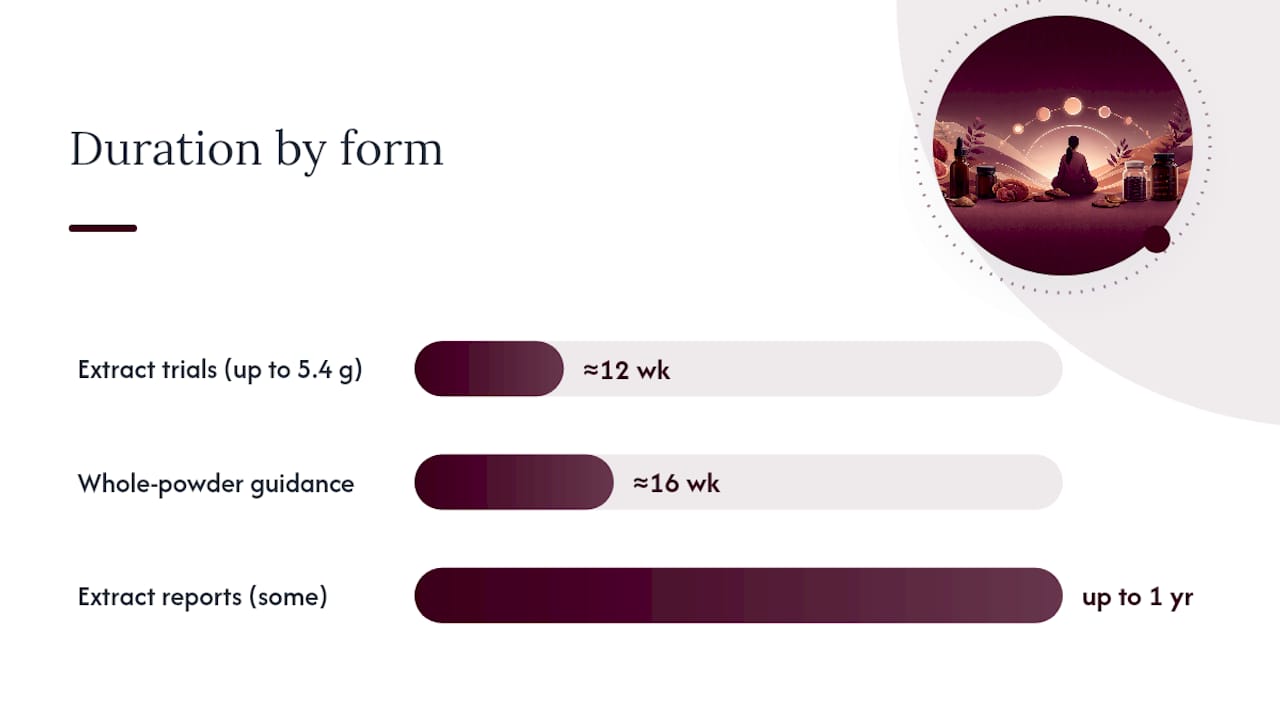
Duration depends heavily on form. Human trials using extract doses up to 5.4 grams daily have run for about 12 weeks, while broader safety guidance suggests powdered whole reishi is best limited to around 16 weeks, with extracts having a longer track record of use up to a year in some reports.
Practical timing tips:
- Split your daily total into two or three doses rather than one large serving.
- Take with food if you notice stomach upset on an empty stomach.
- Take a break after several months of continuous use, especially with whole powder, to give your body a reset and reassess whether it’s still doing anything for you.
Reading Reishi Extract Labels the Right Way
Potency claims only mean something when you know how they’re measured. Water-soluble extracts concentrate polysaccharides, ethanolic extracts concentrate triterpenoids, and whole powder gives you the full, unconcentrated spectrum. The same milligram number can represent very different actual compound exposure depending on which extraction method was used.
Practical rules for label reading:
- Look for a stated standardization percentage (e.g., “30% polysaccharides”), not just a raw milligram figure.
- Prefer products that disclose third-party testing results rather than relying on marketing language alone.
- Be wary of dramatic price differences between products claiming the same dose. Supplier variability is real, and cheap concentrated extract claims deserve skepticism.
For a deeper look at how extraction method changes what you’re actually getting, this guide to mushroom extract types covers the science behind the different processing methods.
Who’s Behind This Guide
This guide was written by Hugo for CP-1, drawing on clinical references including the Merck Manual, WebMD, and NCCIH rather than opinion or guesswork. The NAD+ Advanced Supplement, which includes reishi extract alongside lion’s mane, turkey tail, NMN, and CoQ10, is made in facilities with GMP certification and emphasizes quality control and ingredient standards.
For related reading on dosing safety, see the guide on reishi side effects and the broader science-backed guide to mushrooms in wellness.
What Reishi Can Realistically Do for You
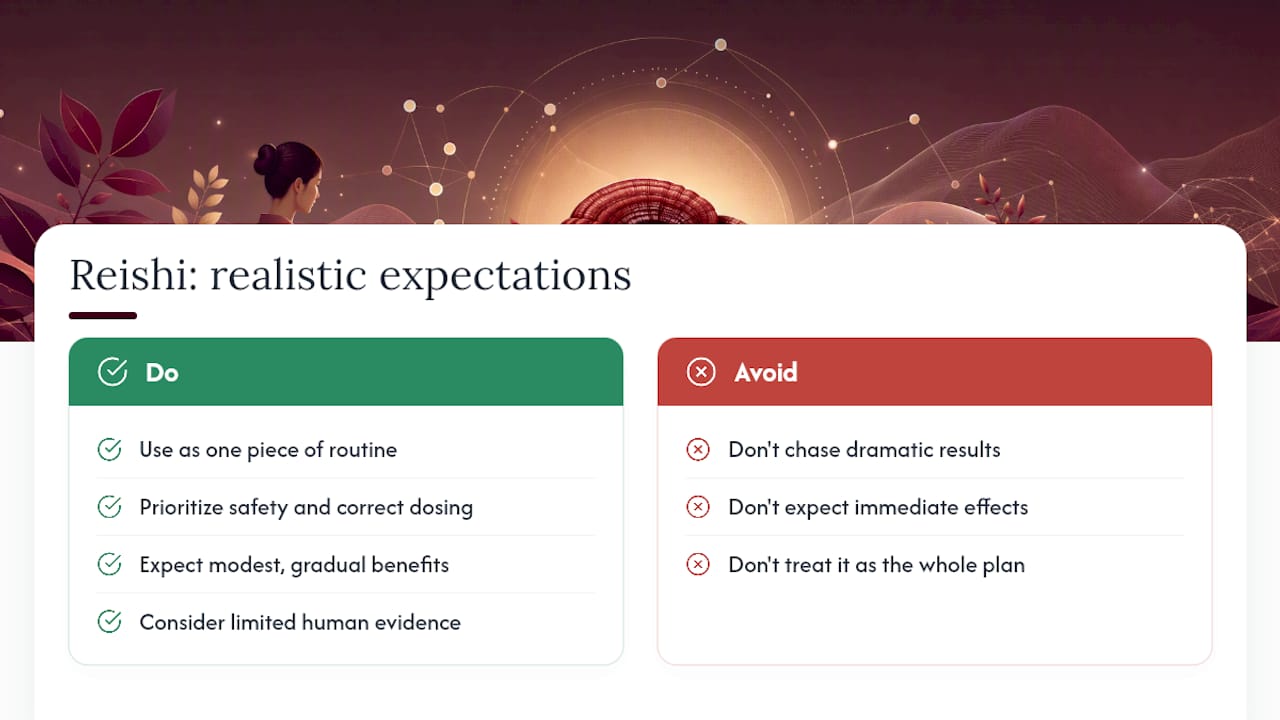
Reishi isn’t a switch you flip and feel immediately. The honest read of the evidence is that benefits, where they show up, tend to be modest and gradual: some support for stress resilience, some signal around immune function, nothing close to a guaranteed outcome. NCCIH itself notes the human evidence base remains limited, built mostly on small, short trials rather than large definitive ones.
That’s not a reason to dismiss it. It’s a reason to treat reishi as one piece of a wellness routine rather than the whole plan, and to prioritize safety and correct dosing over chasing dramatic results that the research doesn’t actually promise.
— Hugo
Where Reishi Fits in Your Supplement Routine
If you’ve been trying to piece together the right reishi dosage from scattered product labels, you already know the frustration: every brand measures potency differently, and most say nothing about testing. The NAD+ Advanced Supplement includes reishi extract alongside lion’s mane, turkey tail, and CoQ10 in a chewable format, manufactured under GMP certification with third-party testing.
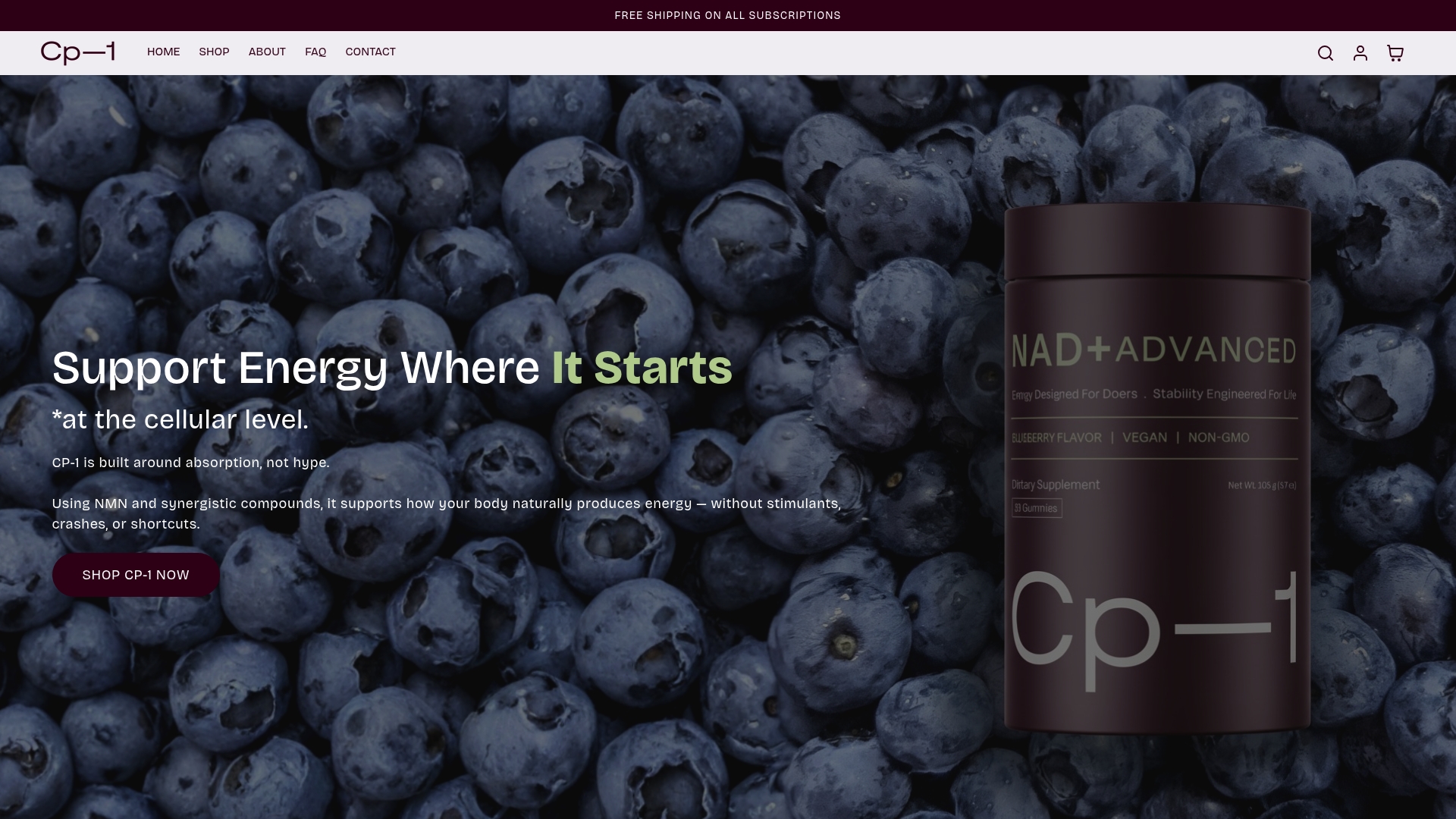
It’s built for people who want mushroom extracts they can trust without cross-referencing five different studies first. Compare the reishi amount on the label against the ranges covered above before you decide it’s right for your routine. If it lines up with what you’re looking for, you can check the full ingredient breakdown on the CP-1 product page and see whether it fits your current supplement stack.
Sources
Key references to include the Merck Manual, WebMD, NCCIH, and PMC clinical trial data.
This article is general information, not a substitute for advice from a qualified doctor. Consult a qualified healthcare professional about your own circumstances before acting on anything here.